
Retail Industry in Washington
The retail industry in Washington operates within one of the most internationally connected economies on the west coast of the United States. Seattle provides the state with a major consumer and corporate centre, while Tacoma, Bellevue, Spokane and other cities create additional commercial markets across a geographically diverse region. Technology, international trade, agriculture, aerospace, food production and outdoor culture all influence the businesses and products that eventually connect with retail.

Washington is particularly interesting because the state participates in retail from several directions simultaneously. Consumers shop through sophisticated physical and digital channels, manufacturers produce products and components for domestic and international markets, ports connect the Pacific Northwest with global trade and technology businesses influence how retailers manage everything from e-commerce to inventory and customer experience. Agricultural production and food manufacturing add another major supply chain extending from farms and processors toward supermarkets, restaurants and international consumers.
For the Global Retail Directory, Washington demonstrates exactly why retail needs to be understood as a wider commercial ecosystem. Retail Installation Companies, Manufacturers & Suppliers, Transport & Logistics businesses and Iconic Brands all contribute to the market in different ways. The visible store is only the final stage of a network that can begin with manufacturing or agriculture, pass through ports and warehouses, incorporate technology and eventually reach customers throughout the United States or on another continent.
Seattle Combines Retail, Technology and International Commerce
Seattle is the dominant commercial centre of Washington and one of the most economically significant cities in the Pacific Northwest. Its metropolitan economy supports fashion, technology, food, supermarkets, shopping destinations, independent businesses and hospitality alongside major corporate activity. The wider region also contains substantial professional employment and consumer purchasing power, creating opportunities across both premium and everyday retail.
Seattle’s physical environment creates several different retail formats. Central urban locations operate within dense commercial buildings, neighbourhood districts support independent stores and restaurants, and suburban communities throughout the wider metropolitan area provide shopping centres, supermarkets and larger-format retail. A retailer expanding through the region therefore needs to understand several property and customer environments rather than treating Seattle as one uniform market.
For businesses supporting physical stores, this diversity creates recurring requirements around surveys, furniture, lighting, graphics, technology, delivery and installation. A global concept can remain visually consistent while the practical method of delivering it changes according to the building. Washington Retail Installation Companies capable of managing these variations become an important link between centrally developed brand concepts and the actual environments customers experience.
Technology Has Changed What Retailers Expect from Physical Stores
Washington’s technology economy has influenced commerce far beyond the state itself. The Seattle region is associated with major technology businesses and a workforce accustomed to digital services, creating consumer expectations around convenience, information and connectivity that increasingly influence physical retail as well.
Customers can research products while standing inside stores, compare prices immediately and move between online and physical purchasing without viewing the channels as separate businesses. Retailers therefore need accurate inventory information and digital systems capable of supporting the customer journey regardless of where the original product discovery or final transaction occurs.
This changes physical store design as well. Displays can require screens, connectivity, power and access for maintenance, while checkout technology and inventory systems become integrated with conventional furniture. For Manufacturers & Suppliers, modern retail increasingly requires collaboration between furniture fabrication, electronics, electrical infrastructure and software rather than treating each as an isolated discipline.
Washington Has Helped Shape Modern E-Commerce
The Pacific Northwest has played an important role in the development of modern online commerce, making Washington particularly relevant when considering how digital retail interacts with physical infrastructure. From the customer’s perspective, purchasing online can take only seconds, but everything that follows depends on warehouses, inventory, packaging, transportation and delivery networks.
The growth of e-commerce therefore creates more physical infrastructure rather than eliminating it. Fulfilment facilities need products positioned where orders can be processed efficiently, warehouse systems need accurate inventory and packaging needs to survive distribution to individual customers. Returns create another flow moving products back through the same network.
Physical stores can participate through collection, returns and local inventory, further reducing the distinction between digital and conventional retail. For GRD’s Transport & Logistics businesses, Washington demonstrates an important principle: the digital storefront may exist online, but customer satisfaction still depends heavily on physical supply-chain performance.
Seattle and Tacoma Connect Washington with Pacific Trade
The ports and maritime infrastructure around Seattle and Tacoma provide Washington with direct connections to international trade across the Pacific. Containers carrying consumer products, components, machinery and materials enter the region, while American agricultural and manufactured goods move outward toward international customers.
For retailers, ports form part of a largely invisible infrastructure. Products manufactured in Asia can travel across the Pacific before entering warehouses and distribution networks serving stores and e-commerce customers throughout the Pacific Northwest and farther inland. Commercial furniture, displays and specialist equipment can move through similar international supply chains when American retailers source from overseas manufacturers.
The reverse opportunity matters equally. Washington producers can use Pacific trade routes to reach Asian and other international markets. This gives Transport & Logistics companies an important position within the retail ecosystem because freight forwarding, customs, warehousing and inland distribution connect international manufacturing with the final customer.
Washington Can Serve Markets Far Beyond the State
Washington’s location gives it a commercial role extending beyond its own consumers. Distribution networks can connect the state with Oregon, Idaho and other western markets, while rail and road networks move goods farther across the United States. Canadian markets sit immediately to the north, adding another international dimension to regional commerce.
For manufacturers and retailers, this means Washington facilities do not necessarily need to depend solely on local demand. A distribution centre can serve a wider Pacific Northwest network, while manufacturers can supply customers throughout the western United States and internationally.
This regional reach creates opportunities for logistics businesses capable of combining port movements, warehousing and inland distribution. A product can arrive internationally, be processed through a Washington facility and continue toward a customer hundreds or thousands of miles away without ever being sold within the state itself. Washington’s relevance to retail therefore extends beyond the size of its domestic consumer market.
Aerospace and Advanced Manufacturing Create Transferable Capabilities
Washington’s manufacturing identity is strongly connected with aerospace and advanced engineering. Although these industries may appear distant from conventional retail, the capabilities surrounding them can have much broader commercial applications. Precision fabrication, composites, electronics, metalwork and quality-control systems are useful across many industries.
Retail environments increasingly require technically sophisticated components. Displays can incorporate metal structures, precision parts, lighting, screens and connected systems, while warehouses use automated equipment and advanced material-handling technology. A manufacturer does not need to identify itself primarily as a retail supplier for its capabilities to become relevant to retail projects.
This is why GRD’s interpretation of Manufacturers & Suppliers remains deliberately broad. Washington contains businesses with engineering and production knowledge that may be useful to retailers, designers and commercial project organisations even when retail represents only a small part of their existing customer base. International visibility can help reveal these overlaps.
Washington’s Outdoor Culture Supports Distinctive Consumer Brands
The state’s mountains, forests, coastline and outdoor lifestyle create strong consumer demand around clothing, footwear, equipment and lifestyle products designed for recreation and changing weather conditions. This gives Washington a distinctive retail identity compared with states where outdoor activity plays a smaller role in everyday consumer culture.
Outdoor products also create substantial manufacturing and supply networks. Fabrics, waterproof materials, footwear components, packaging and specialist equipment can involve businesses operating across several countries before the finished product reaches the customer. Product testing and technical performance can be particularly important because consumers expect equipment to work under demanding conditions rather than simply look attractive.
Brands developing within this environment can eventually reach international customers because outdoor recreation is not unique to Washington. Successful Iconic Brands can use e-commerce, wholesale distribution and physical stores to expand beyond their home market, creating opportunities for manufacturers, logistics providers and retail project businesses as their networks grow.
Food and Agriculture Connect Washington with Global Retail
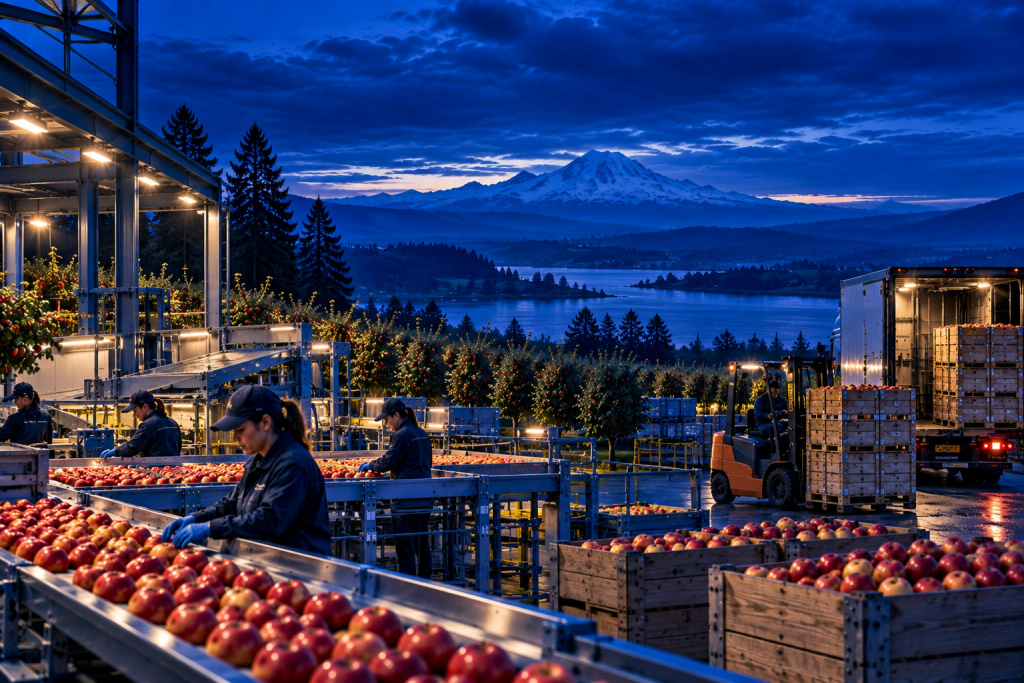
Washington’s agricultural economy provides another major connection with domestic and international retail. Apples, cherries, potatoes, wheat, wine and other products move through processing, packaging and distribution systems before reaching supermarkets, specialist stores, restaurants and export markets.
Fresh products create particular logistics requirements because quality changes with time and handling. Temperature management, packaging and transportation can influence the value of the product when it finally reaches the customer. A supermarket display therefore represents only the final stage of a supply chain beginning much earlier at farms, packing facilities and regional distribution operations.
For GRD, these agricultural businesses form part of the wider Manufacturers & Suppliers ecosystem when products are processed, packaged or developed into consumer brands. Food manufacturing can capture additional value beyond raw agricultural production, while successful Washington products can build international recognition around regional origin and quality.
Washington Wine Shows How Agriculture Can Become a Retail Brand
Washington’s wine industry demonstrates how agricultural production can evolve into a consumer-facing retail proposition. Grapes begin as an agricultural product, but winemaking, bottling, packaging, branding, distribution and hospitality transform them into products and experiences capable of reaching customers far beyond the original growing region.
Wineries can also operate physical consumer environments through tasting rooms, shops and hospitality, creating direct relationships between production and retail. Customers encounter the story of the product where it is made, while e-commerce and distribution allow the relationship to continue after they return home.
International expansion introduces additional businesses into the supply chain. Packaging, freight, importers, distributors and retailers all become involved before a bottle reaches a customer overseas. Wine therefore provides a clear example of how Washington agriculture can become an Iconic Brand opportunity supported by manufacturing, logistics and physical retail.
Seattle’s Food and Coffee Culture Demonstrates the Power of Experience
Seattle has an internationally recognised relationship with coffee and a broader food culture supporting cafés, restaurants, specialist retailers and independent producers. Coffee provides a particularly interesting example because a relatively simple agricultural product can become the centre of a sophisticated consumer brand and physical retail environment.
A café sells more than the drink itself. Furniture, lighting, equipment, graphics, packaging and customer service create the environment around the product. Once a concept expands to multiple locations, these components need increasing levels of consistency and project management. Equipment needs to arrive on schedule, furniture specifications need repeatability and maintenance needs to function across the network.
This demonstrates how Iconic Brands create opportunities throughout the B2B supply chain. A successful Washington consumer concept can generate demand for manufacturers, packaging suppliers, logistics companies and installation businesses far beyond the original location as the brand expands into additional cities and countries.
Retail Installation Across Washington Requires Geographic Planning
Washington contains very different geographic environments, from the densely populated Puget Sound region to eastern cities, agricultural areas and smaller regional communities. A statewide retail programme therefore requires more than simply assigning stores to one installation team and assuming travel between them will be straightforward.
Seattle, Tacoma and Bellevue can be grouped relatively efficiently within metropolitan programmes, while Spokane and other eastern locations introduce much greater travel distances. Equipment deliveries need to follow the same geographic logic. Sending installers to a regional store before the complete fixture package has arrived can create unnecessary travel, accommodation and labour costs.
For Retail Installation Companies, effective project planning becomes part of the service itself. Routes, accommodation, access, delivery sequence and completion reporting all need coordination, particularly when a retailer is updating many stores within a short programme. Installation is therefore not simply the physical act of assembling fixtures; it is the final operational stage of a much larger rollout system.
Warehousing Connects Manufacturing with Store Rollouts
Retail project warehousing performs a different function from conventional consumer-product storage. Fixtures and equipment can arrive from several manufacturers before being inspected, grouped according to individual locations and released in the sequence required by installation teams.
This becomes particularly valuable when a retailer is completing a large rollout. Stores rarely have enough back-of-house space to receive weeks of equipment in advance, while delivering every component directly from multiple factories can make project coordination unnecessarily complicated. A warehouse creates a controlled point between manufacturing and site delivery.
Spare parts can also remain available after the rollout is completed. Instead of manufacturing a replacement every time a component is damaged, retailers can hold frequently required items centrally and distribute them as needed. This connects Transport & Logistics directly with maintenance and retail installation, reducing downtime across the store estate.
Spokane and Eastern Washington Add Another Commercial Market
Seattle dominates Washington’s international image, but the eastern side of the state operates within a different commercial environment. Spokane serves as an important regional centre for eastern Washington and surrounding areas, supporting supermarkets, shopping centres, healthcare, services and consumer businesses without the same property conditions found around central Seattle.
Regional markets can support larger-format retail where land and access conditions differ from dense western urban centres. Distribution routes also connect with agricultural production and neighbouring states, giving eastern Washington a role extending beyond local consumer spending.
For national retailers, this demonstrates why statewide coverage requires flexibility. A store concept can maintain consistent branding while adapting its physical scale, inventory and operating model to different regional conditions. Manufacturers and project businesses able to support both metropolitan and regional locations become more useful as networks expand.
Climate and Geography Influence Store and Supply-Chain Design
Washington contains substantial environmental variation. Western areas are associated with a relatively wet maritime climate, while conditions east of the Cascade Range can be significantly different. Mountain routes can also influence transportation during severe winter weather.
Retailers and logistics businesses need to consider these conditions when planning inventory and project movements. Weather disruption can affect deliveries, while exterior equipment and signage need materials appropriate to the location. Regional warehouses and realistic programme allowances can reduce the risk that one disruption affects an entire store network.
Store design also needs to respond to local conditions. Entrances, flooring and building systems experience different demands according to climate and customer behaviour. International concepts can remain visually consistent while technical specifications adapt to Washington’s environment, reinforcing the value of local manufacturers and project specialists.
Physical Stores Remain Important in a Highly Digital Market
Washington’s strong technology economy does not make physical stores unnecessary. Instead, digital commerce changes what customers expect stores to provide. A location can function as a showroom, collection point, service centre, returns facility and local inventory hub while still supporting conventional purchases.
For products requiring demonstration or physical evaluation, stores remain particularly valuable. Technology, outdoor equipment, fashion and home products all benefit when customers can see or handle merchandise before deciding how to purchase. Staff expertise can provide another advantage that a purely digital transaction may not reproduce.
This broader role makes store quality increasingly important. If customers can purchase anywhere, the physical environment needs to justify the visit through convenience, service or experience. Manufacturers, designers and installation companies therefore remain central to retail even within one of America’s most digitally connected regional economies.
Sustainability Can Connect Washington’s Retail and Outdoor Identity
Washington’s environmental culture makes sustainability particularly relevant to brands and retailers operating within the state. Packaging, transportation, materials, store energy use and the lifecycle of fixtures all contribute to the environmental footprint of commerce.
Retail equipment offers practical opportunities for improvement. Metal structures can remain in use while graphics change, furniture can be refinished and modular displays can accept new technology without requiring complete replacement. Warehouses can hold reusable components between projects rather than sending every removed fixture directly into the waste stream.
These approaches can provide financial advantages as well. Manufacturing and transporting new equipment across a geographically large state costs money, so extending the useful life of existing assets can reduce both expenditure and material use. Sustainability becomes most effective when it is integrated with operational efficiency rather than treated solely as a marketing message.
International Brands Need Washington Partners
International retailers entering Washington still require local execution even when their store concepts have been developed elsewhere. Furniture needs transportation, site conditions need surveying, building requirements need understanding and equipment eventually requires maintenance after the opening project has finished.
Local manufacturing can provide additional flexibility. Specialist components, graphics or replacement items can sometimes be produced domestically even when the main fixture programme originates overseas. This can reduce downtime and provide a practical alternative to international freight when only a small quantity is required.
Through Global Retail Directory, international retailers can identify Washington Manufacturers & Suppliers, Transport & Logistics businesses and Retail Installation Companies capable of supporting their operations. Local capability allows international standards to function within real American properties rather than requiring every problem to be solved from another state or country.
Washington Businesses Can Use Pacific Connections to Expand Internationally
Washington’s relationship with Pacific trade creates opportunities in the opposite direction as well. Manufacturers, food producers, consumer brands and technology businesses can reach international customers through commercial networks connecting the state with Asian and other global markets.
International expansion nevertheless requires more than putting a product onto a ship. Packaging needs to survive transportation, documentation must meet destination requirements and local distribution needs to place products where customers can actually purchase them. Consumer brands opening physical locations abroad require an additional network of property, manufacturing, installation and maintenance partners.
This is where the international structure of GRD becomes particularly relevant. A Washington company can remain headquartered and manufactured within the state while working with businesses in destination countries to complete the parts of the retail process that need local knowledge.
Connecting Washington Through Global Retail Directory
Washington contains businesses relevant to nearly every part of the retail ecosystem. Technology companies support digital commerce, manufacturers provide specialist production, farms and food businesses create consumer products, ports connect the state with international trade and installation companies physically deliver stores across the region.
The Global Retail Directory is designed to make these capabilities easier to discover. Washington Retail Installation Companies can demonstrate geographic coverage, Manufacturers & Suppliers can present specialist production capabilities, Transport & Logistics businesses can connect with companies moving goods through the Pacific Northwest and Iconic Brands can become visible within a wider international industry network.
The same platform can help Washington companies look outward. A manufacturer can become visible to overseas buyers, a growing consumer brand can identify project partners abroad and a retailer can discover specialist suppliers in other countries. The objective is to connect businesses according to what they can contribute rather than limiting discovery to companies already known within existing networks.
Washington Connects American Retail with the Pacific Economy
The future of the retail industry in Washington will continue to be influenced by technology, e-commerce, international trade, changing consumer behaviour and the evolution of physical stores. Seattle will remain the state’s dominant commercial centre, while Tacoma’s trade infrastructure, Spokane’s regional importance and agricultural areas throughout Washington add very different components to the wider economy.
What makes Washington particularly interesting is the combination behind the storefront. Advanced manufacturing and technology create technical capability, ports connect the state with international supply chains, agriculture and food production create products capable of becoming consumer brands, and warehouses and logistics networks move inventory across the Pacific Northwest and beyond.
For Global Retail Directory, Washington therefore represents far more than another American consumer market. It is a place where technology, manufacturing, agriculture, brands, international logistics and physical retail intersect. Connecting those capabilities with retailers, suppliers and project organisations elsewhere can strengthen Washington’s role not only within American retail but within the wider commercial network linking North America with the Pacific and the global retail industry.