
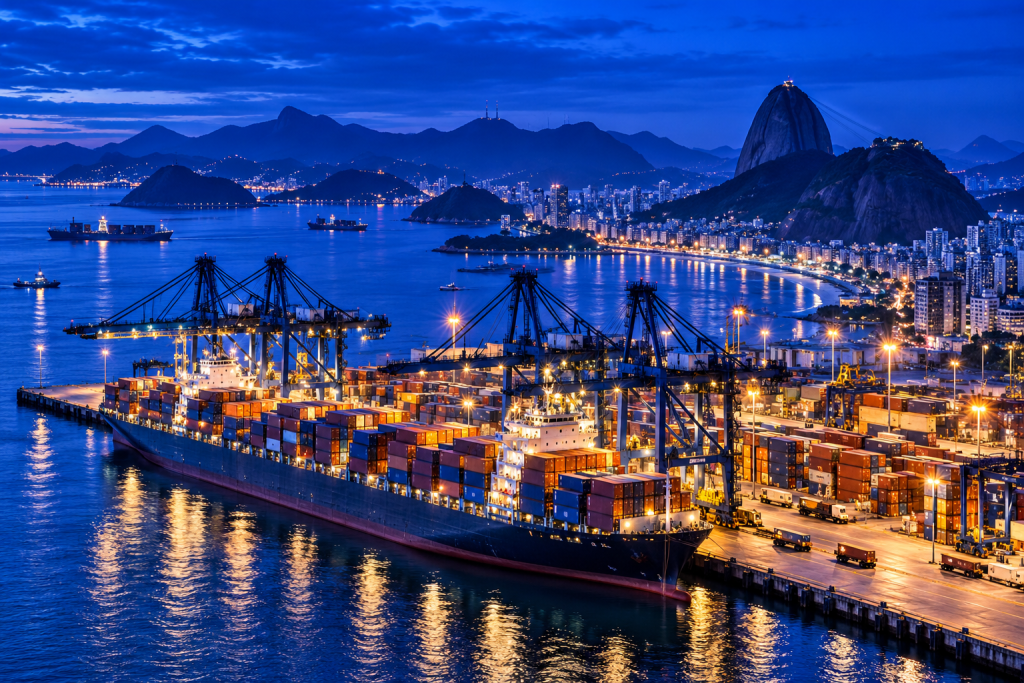
Retail Industry in Brazil
The retail industry in Brazil operates within one of the largest consumer markets in the world and the largest national economy in Latin America, creating a substantial commercial ecosystem that extends far beyond the stores visible to consumers. Brazil combines enormous metropolitan areas, major shopping centres, supermarkets, hypermarkets, convenience retail, fashion, beauty, electronics, home improvement, automotive retail, luxury stores and rapidly developing digital commerce. São Paulo sits at the centre of much of this activity as the country’s principal business and commercial hub, while Rio de Janeiro, Brasília, Belo Horizonte, Curitiba, Porto Alegre, Recife, Salvador, Fortaleza and numerous other cities support major regional retail markets. Behind these environments is an extensive B2B network of retail installation companies, transport and logistics providers, manufacturers, suppliers, warehouse operators, technology businesses and specialist contractors responsible for developing and maintaining physical retail environments across a country of continental scale.

Brazil presents particular opportunities and challenges because of its geography. A national retailer operating from southern Brazil to the Northeast and across interior markets may need to coordinate stores separated by thousands of kilometres. Fixtures manufactured in one industrial region can require long-distance transportation, regional warehousing and carefully scheduled final delivery before installation teams can begin work. International equipment arriving through Brazilian ports or airports introduces additional stages involving customs, freight forwarding and domestic distribution. The physical store therefore represents the final point in a considerably larger supply chain connecting design, manufacturing, international trade, logistics and installation.
The Brazilian market is also characterised by significant differences between regions and retail formats. Premium shopping destinations in São Paulo operate within a very different environment from regional supermarkets, shopping centres or specialist stores in smaller cities, while retailers expanding nationally need to adapt their operations to local property, consumer and logistics conditions. These differences create demand for businesses capable of delivering both specialist expertise and geographic coverage.
The wider retail industry in Brazil should consequently be understood as an interconnected commercial network rather than simply a collection of retailers. Manufacturers need reliable logistics and installation partners, retailers need suppliers capable of maintaining consistent standards across multiple locations, and international companies entering Brazil need ways to understand and identify specialist businesses operating within the local market. These relationships make Brazil an important country within the international retail ecosystem represented by the Global Retail Directory.
The Brazilian Economy and Retail Market
Brazil has a diversified economy supported by services, manufacturing, agriculture, natural resources, construction, financial services, technology and international trade. Its population exceeds 200 million people, providing retailers with a domestic consumer base considerably larger than most individual national markets. This scale has helped create substantial national and regional retail organisations alongside the international brands operating throughout the country.
Consumer activity is concentrated heavily within urban areas, and Brazil contains numerous metropolitan regions capable of supporting extensive retail infrastructure. Shopping centres are particularly important, combining retail, restaurants, entertainment and services within managed commercial environments. Supermarkets, pharmacies, fashion chains, department-store formats, electronics businesses, home-improvement retailers and specialist stores add further depth to the market, while independent businesses continue to form an important part of local commerce.
Economic conditions can nevertheless change the way retailers invest. Inflation, interest rates, exchange rates and consumer confidence can influence expansion, refurbishment and purchasing decisions, particularly where fixtures or technology are imported. For businesses supplying the sector, understanding these conditions is important because investment can shift between new-store development, refurbishment, efficiency improvements and technology upgrades according to the wider commercial environment.
Brazil’s scale also means there is no single national retail experience. Consumer behaviour, climate, transport distances and commercial property conditions differ between regions. Retailers operating nationally may therefore maintain consistent branding while adapting store formats, product ranges and operational requirements to individual markets. Manufacturers, logistics companies and installation specialists supporting these businesses need sufficient flexibility to accommodate those differences without compromising overall programme standards.
São Paulo and Brazil’s Major Retail Cities
São Paulo is the dominant business and commercial centre within the retail industry in Brazil. The metropolitan area contains an enormous concentration of consumers, corporate headquarters, shopping centres, premium retail districts, warehouses, manufacturers and logistics operations. International companies entering Brazil frequently establish their principal commercial operations in São Paulo, while Brazilian retailers and suppliers use the city as a base for national and international expansion.
The city contains a broad spectrum of retail environments. Premium districts and major shopping centres accommodate international luxury and fashion brands, while large-scale mainstream retail serves the wider metropolitan population. Avenida Paulista and surrounding commercial districts combine retail with offices, hospitality and entertainment, while areas such as Jardins are associated with premium stores and international brands. São Paulo’s numerous shopping centres create further opportunities for store openings, refurbishments, promotional installations and technology deployment.
Rio de Janeiro represents another internationally recognised retail market, combining a large resident population with domestic and international tourism. Shopping centres, high-street locations and commercial districts support fashion, beauty, hospitality, luxury and mainstream retail, while the character of individual districts creates different requirements for store design and logistics.
Other metropolitan markets are equally important to businesses pursuing national coverage. Brasília provides substantial consumer demand around the federal capital, Belo Horizonte serves one of Brazil’s largest metropolitan economies, and Curitiba and Porto Alegre are important southern markets. Salvador, Recife and Fortaleza provide major commercial centres in the Northeast, while cities across the interior continue to develop as regional economies and populations expand. A national retail programme can therefore involve projects across a geographic area comparable to an entire continent, making planning and regional partnerships particularly important.
Shopping Districts, Shopping Centres and Retail Parks
Shopping centres are a major feature of Brazilian retail and provide structured environments for domestic and international brands. Large centres can contain hundreds of stores alongside restaurants, cinemas, entertainment and services, creating substantial commercial destinations rather than simply collections of shops. For retailers, these environments provide established customer traffic and professional property management, but they can also impose detailed requirements governing deliveries, contractor access and work outside trading hours.
Retail installation within a shopping centre therefore needs careful coordination. Large displays or bespoke furniture may have to move through designated loading areas, service corridors and goods lifts before reaching the store. Delivery vehicles can be restricted to particular times, and disruptive work may need to take place overnight. Installation teams need to understand these requirements before arriving because a missed access window can affect the entire programme.
Street retail remains important as well, particularly within dense urban districts and traditional commercial areas. These locations can introduce different logistical challenges because dedicated loading facilities may not exist. Equipment may need to be transferred from vehicles through public areas or narrow entrances, making accurate information about access and dimensions essential.
Larger retail parks, supermarkets, home-improvement stores and destination formats create another operational environment. Vehicle access may be easier, but individual projects can involve considerably greater quantities of fixtures and equipment. For manufacturers and suppliers, understanding the final store format is therefore important when deciding how products should be packaged, transported and prepared for installation.
Retail Installation and Store Development
Professional retail installation supports every stage of Brazil’s physical retail lifecycle, from opening new locations to refurbishing existing stores and deploying new displays across national estates. Installation projects can involve shelving, counters, furniture, promotional units, graphics, signage, digital screens, kiosks, technology equipment and specialist branded fixtures manufactured either domestically or internationally.
National rollouts can be particularly complex because equipment and installation teams need to cover significant distances. A retailer introducing a new concept across São Paulo, Rio de Janeiro, Brasília, Recife and Porto Alegre is not simply repeating the same installation in neighbouring cities. Each location can require separate transport planning, regional accommodation, site access coordination and potentially different local teams.
Accurate surveys and installation information become increasingly important under these conditions. A manufacturing error or incorrect site measurement can create expensive delays when replacement components need to travel hundreds or thousands of kilometres. Conversely, well-designed modular equipment, consistent labelling and clear installation instructions can make national programmes considerably more efficient.
Refurbishment creates continuing opportunities after stores have opened. Fixtures become worn, technology changes and brands introduce new visual identities or merchandising concepts. Existing equipment may need to be dismantled before replacement components can be installed, while reusable fixtures can potentially be transferred between locations. Coordinating installation with transport and reverse logistics can therefore reduce unnecessary handling and keep working areas clear during refurbishment programmes.
Transport and Logistics Infrastructure
The transport and logistics sector is fundamental to Brazilian retail because the country’s enormous geography creates substantial distances between manufacturing centres, distribution facilities and consumer markets. Road freight carries a particularly important share of domestic goods movement, making highways and trucking operations central to national retail supply chains.
For retailers, this creates a different planning environment from geographically smaller markets. Long-distance transport can require additional lead time, while traffic congestion around major metropolitan regions can affect final delivery schedules. Equipment travelling from São Paulo to a distant regional market needs to be planned differently from a local metropolitan delivery.
Specialist retail transport adds another layer because store fixtures are not always conventional freight. Bespoke furniture, glass, graphics, digital equipment and finished display components may require careful loading, protection and securing. Equipment can arrive technically intact but still be unsuitable for installation if visible surfaces have been scratched or components have been mixed between different stores.
Coordination between logistics and installation therefore becomes particularly valuable. Equipment should ideally arrive according to the sequence in which teams need it rather than simply according to when it leaves the factory. For multi-site programmes, tracking equipment by individual store can reduce allocation mistakes and allow project managers to identify problems before installers arrive.
Ports, Airports and International Trade
Brazil’s ports provide essential connections between its domestic economy and international manufacturing networks. The Port of Santos, serving the wider São Paulo region, is particularly significant and forms a major gateway for containerised trade. Other ports distributed along Brazil’s extensive Atlantic coastline provide additional connections supporting different industrial and consumer markets.
Imported retail equipment may arrive from Europe, Asia, North America or elsewhere in Latin America before moving through customs and into domestic warehousing and distribution networks. International retailers can also import specialised fixtures or technology produced by approved global suppliers when establishing Brazilian stores.
This creates several stages between manufacturing and installation. Equipment needs to be packaged for international freight, correctly documented, cleared through the appropriate import procedures, transported to a warehouse and subsequently allocated for final delivery. Delays at any stage can affect opening dates if project schedules do not contain sufficient contingency.
Brazil’s major airports provide additional freight capability, particularly for higher-value or time-sensitive goods. Air freight can be useful for prototypes, electronics, specialist components or urgent replacement parts required to protect a fixed project deadline. As with other international markets, the most efficient freight method depends on the value, dimensions, urgency and commercial importance of the shipment.
For overseas manufacturers, successful entry into the retail industry in Brazil therefore requires planning beyond the international shipment itself. The domestic stages of customs coordination, warehousing, long-distance transport, final-mile delivery and installation ultimately determine whether the equipment reaches the consumer-facing environment successfully.
Warehousing and Distribution Hubs
Warehousing provides the connection between production and Brazil’s geographically dispersed retail network. Major distribution facilities are concentrated around São Paulo and other metropolitan and transport corridors, while regional hubs allow retailers and logistics businesses to position inventory closer to stores and consumers.
The rise of e-commerce has increased the strategic importance of fulfilment and distribution infrastructure, but physical-store projects have their own warehouse requirements. Fixtures may arrive from several manufacturers before being consolidated into complete store packages. Components can require inspection, relabelling or temporary storage before being released according to the installation schedule.
This becomes particularly valuable during large rollouts. Sending every fixture directly from manufacturing to every individual store can create unnecessary complexity, particularly when equipment originates from several suppliers. A controlled consolidation process allows complete packages to be checked before dispatch and gives project managers greater visibility over what is actually available.
Accurate stock control is essential. When hundreds of similar components are divided between dozens of stores, a small allocation error can create problems at several locations simultaneously. Integrating warehouse information with project reporting allows shortages and damaged items to be identified earlier and replacement components arranged before they affect the installation programme.
Manufacturing and the Brazilian Retail Supply Chain
Brazil has a substantial manufacturing base covering automotive products, metals, plastics, furniture, food and beverages, consumer goods, machinery, textiles, packaging and numerous other sectors. This industrial capability supports retail both through the products sold to consumers and through the physical equipment required to operate stores.
Retail fixtures can involve combinations of timber, engineered board, steel, aluminium, plastics, glass, lighting, graphics and electronic technology. Manufacturers capable of producing these components locally can provide advantages in lead time and replacement availability, while international suppliers remain important where retailers use standardised global designs or specialist materials.
The relationship between manufacturers and installation teams deserves particular attention. Products that are easy to manufacture are not automatically easy to transport or install. Component dimensions, packaging, weight, assembly sequence and identification all influence what happens when equipment reaches the store. Feedback from installers can therefore help manufacturers improve future production and reduce recurring problems during large programmes.
The Global Retail Directory is designed to improve visibility across these relationships. Brazilian manufacturers and suppliers can become more discoverable to retailers and international project organisations, while companies producing equipment elsewhere can identify installation and logistics businesses capable of supporting their projects within Brazil. Bringing these different capabilities into a structured international industry platform can make specialist businesses easier to identify when new commercial requirements arise.
Brazilian Retailers and Iconic Brands
Brazil has developed major brands across fashion, footwear, beauty, food, consumer goods and numerous other sectors, with some businesses building recognition far beyond the domestic market. The country’s size allows successful retailers to develop extensive national store networks before pursuing wider international expansion, creating substantial requirements for manufacturing, distribution, installation and ongoing maintenance.
Brazil is equally important to international brands. Global fashion, sportswear, technology, automotive, beauty and luxury businesses operate within major metropolitan markets, particularly São Paulo and Rio de Janeiro. Maintaining international brand standards within Brazilian stores requires cooperation between global design and procurement organisations and local businesses capable of delivering projects within the country’s operational environment.
For Global Retail Directory, Iconic Brands occupy a different position from commercial supplier categories. Their role is to represent the companies shaping physical retail and demonstrate the wider ecosystems surrounding major brands. A store opening can involve architects, designers, manufacturers, suppliers, transport businesses, installation contractors, technology companies and maintenance specialists, even though customers ultimately see only the retailer’s name above the entrance.
Highlighting these relationships helps demonstrate how deeply interconnected the retail industry is. Brazilian brands expanding internationally can create opportunities for specialist partners in other countries, while international brands entering or expanding across Brazil require domestic expertise. Understanding these connections is an important part of understanding the wider retail economy.
Digital Retail and Omnichannel Development
Digital commerce is increasingly integrated with the retail industry in Brazil, supported by widespread smartphone usage, digital payments, marketplaces and increasingly sophisticated fulfilment networks. Consumers may discover products online, compare prices digitally, visit physical stores before purchasing and choose between home delivery, collection or other fulfilment options.
Physical stores consequently remain important while their function evolves. A store can simultaneously operate as a sales environment, showroom, collection point, service location and representation of the brand. Retailers therefore continue investing in physical environments even as online sales expand.
Technology within stores is developing alongside this change. Digital displays, self-service systems, electronic payment technology, connected inventory and interactive merchandising can become integrated with traditional fixtures. This increases the technical complexity of retail installation because furniture, electrical services, connectivity and digital equipment need to work together.
Omnichannel development also creates additional logistics requirements. Inventory needs to move efficiently between distribution centres, stores and customers, while returns create reverse flows through the network. The distinction between store logistics and e-commerce logistics consequently becomes less clear as retailers build integrated supply chains serving both channels.
Business Culture and Working Practices
International businesses entering Brazilian retail need to understand local commercial, regulatory and operational requirements rather than assuming that processes used elsewhere can simply be transferred unchanged. Brazil has its own taxation, employment, import, contractual and regulatory environment, and appropriate professional advice is important where overseas companies establish operations or undertake significant commercial activity.
Relationship building can also be important within business development. Strong local partners can help international companies understand practical requirements that are difficult to identify remotely, particularly when projects extend beyond the largest metropolitan centres.
Language deserves consideration as well. Portuguese is the principal business language, and while English is used within many international organisations, site teams, local suppliers and operational documentation may require Portuguese communication. Clear technical information and accurate translation can therefore prevent misunderstandings during installation and logistics programmes.
Project responsibilities should be established clearly before work begins. Transport delays, failed visits, damaged equipment, access restrictions and additional works can create significant costs when responsibilities are uncertain. This becomes particularly important during multi-site programmes because small commercial misunderstandings can be repeated across numerous locations.
Opportunities for International Retail Companies
Brazil’s scale creates substantial opportunities for companies operating across retail installation, logistics, manufacturing and supply. International brands entering the country may require domestic partners capable of supporting new stores and rollouts, while overseas manufacturers supplying global retailers can need warehousing, transport and installation coverage after their equipment arrives.
Partnership models can provide a practical route into the market. A European or Asian manufacturer does not necessarily need to establish its own installation operation across Brazil if reliable specialist partners can provide local coverage. Similarly, an international project-management company can retain central control while Brazilian businesses deliver physical services in individual regions.
Opportunities also operate internationally for Brazilian companies. Manufacturers capable of supplying high-quality retail equipment can pursue customers elsewhere in Latin America and globally, while Brazilian brands expanding overseas can create new requirements for installation and logistics partners in destination markets.
The challenge is often discovering the right companies. General business searches can identify large organisations but may not reveal smaller specialist businesses with precisely the capabilities a retail project requires. An international manufacturer might need a Brazilian installation company experienced with high-value bespoke fixtures, while a Brazilian supplier might be looking for logistics coverage or installation partners abroad. Improving structured visibility between these organisations is therefore an important part of developing stronger international retail networks.
Connecting the Brazilian Retail Industry Through Global Retail Directory
The Global Retail Directory is designed to connect businesses operating across the international retail ecosystem, helping companies become discoverable according to what they do and where they operate. Within Brazil, this creates opportunities for retail installation companies, transport and logistics providers, manufacturers and suppliers to present their capabilities to businesses searching for specialist support within the Brazilian market.
The same system works internationally. A retailer, manufacturer or project organisation outside Brazil can use the directory to identify relevant businesses supporting Brazilian projects, while Brazilian companies can increase their visibility to potential customers and partners operating in other countries. This is particularly valuable within retail because projects frequently cross borders: a fixture can be designed in one country, manufactured in another, shipped internationally and ultimately installed by a specialist team within Brazil.
Iconic Brands add a wider industry dimension by representing the retailers and brands around which these commercial ecosystems develop. Their inclusion helps demonstrate the relationship between consumer-facing businesses and the manufacturers, suppliers, logistics companies and installers supporting their physical environments.
As the retail industry in Brazil continues to combine large domestic consumer markets with international brands, digital commerce, sophisticated shopping destinations and extensive national supply chains, the ability to identify appropriate specialist partners becomes increasingly valuable. Connecting installation, logistics, manufacturing, supply and brands within a global industry network can help businesses understand the market more clearly, establish new commercial relationships and support retail projects across Brazil and internationally.