
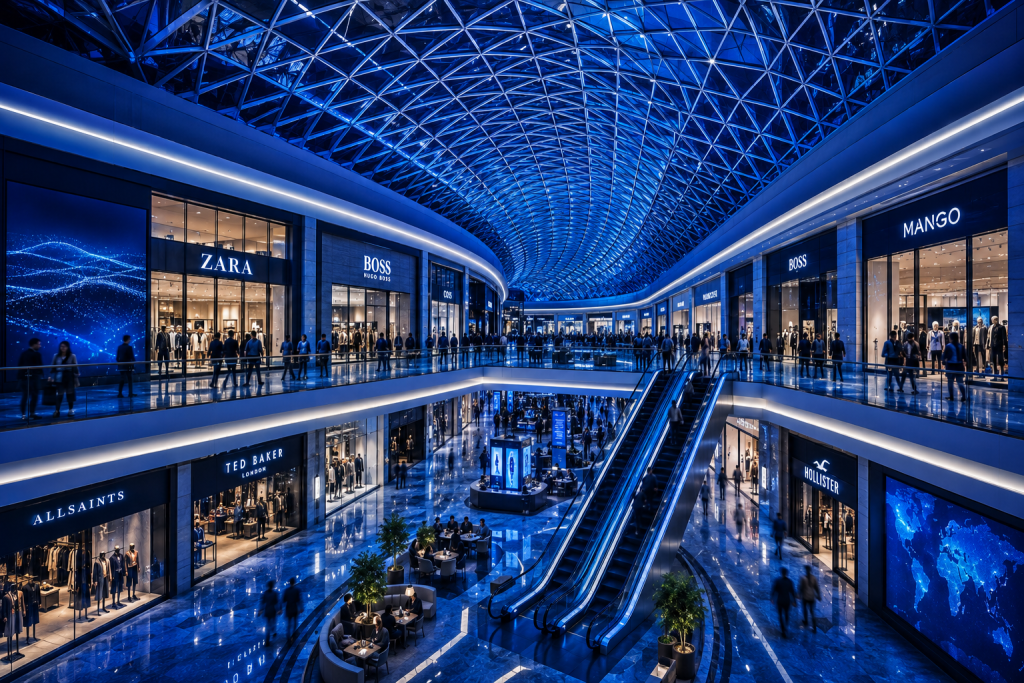
Iconic Retail Brands Shaping Stores and Customer Experiences Worldwide
The world’s most iconic retail brands influence far more than the products they sell. Their stores can shape expectations around design, technology, customer service, sustainability, digital integration and the overall experience of visiting a physical retail environment. From international flagship locations in major cities to carefully controlled store concepts reproduced across hundreds of markets, successful brands use physical retail to communicate identity and create connections with customers that extend beyond an individual transaction.

Behind these environments is a much wider professional network. Architects and designers develop concepts, manufacturers turn designs into physical fixtures, suppliers provide materials and technology, transport and logistics companies move equipment between countries and professional retail installation teams complete the final environment on site. Project managers coordinate these activities while local contractors, maintenance providers and specialist businesses support stores throughout their operational life.
This relationship between brands and the businesses supporting them is central to the Global Retail Directory. The Iconic Brands category celebrates influential retail environments and the companies shaping international retail while connecting the wider professional network responsible for bringing ambitious store concepts to life.
The Global Influence of Iconic Retail Brands
A successful retail concept can influence an entire sector.
When leading brands introduce new approaches to store design, digital technology, customer interaction or product presentation, competitors and retailers in other markets often take notice. Concepts first introduced in flagship locations can eventually influence mainstream retail environments around the world.
This influence is particularly visible in major international retail destinations. London, Paris, Milan, New York, Tokyo, Dubai, Singapore and other global cities provide brands with opportunities to create stores that operate as much as destinations as conventional sales environments.
Flagship locations may incorporate architecture, digital installations, bespoke furniture, experiential areas and specialist services that would not be practical in every store. However, successful elements can later be adapted into smaller formats and international rollout programmes.
The result is a continuous exchange of ideas across global retail. Design concepts, technologies and operational approaches increasingly move between countries, creating opportunities for the specialist companies capable of delivering them.
Flagship Stores as Global Brand Destinations
Flagship stores occupy a unique position within retail.
Rather than functioning purely as locations where customers purchase products, they can represent the most complete physical expression of a brand. Architecture, materials, lighting, technology, product presentation and customer service are coordinated to communicate a carefully defined identity.
The investment required to create these environments can be substantial. Bespoke fixtures may need to be manufactured specifically for one location, specialist materials sourced internationally and technical systems integrated throughout the store.
Flagship projects can therefore involve a broad network of specialist businesses.
Designers need manufacturers capable of producing unusual components. Manufacturers require logistics providers capable of transporting valuable or fragile equipment. Installation companies need to understand complex drawings and work alongside multiple trades. Project managers must coordinate everything within strict opening deadlines.
For the wider retail industry, flagship stores also function as testing grounds. New concepts can be introduced at a prominent location before successful elements are adapted for wider rollout.
Creating Consistent Brand Identity Across International Markets
One of the greatest challenges facing international retailers is maintaining a recognisable identity while operating across different countries.
Customers should be able to enter stores in different markets and immediately recognise the brand, yet every location exists within a different building, regulatory environment and cultural context.
Retail concepts therefore need sufficient consistency to protect brand identity while allowing practical adaptation.
Fixtures, colours, materials, signage, digital systems and merchandising standards may be carefully specified at international level. Local project teams then need to interpret those standards within the conditions of individual sites.
This places significant responsibility on the supply chain.
Manufacturers need to reproduce approved finishes accurately. Logistics providers must deliver equipment without damage. Retail installation teams need to follow specifications consistently. Local project managers need to identify situations where site conditions require an approved adjustment rather than an improvised solution.
The stronger the brand identity, the more noticeable inconsistencies can become.
Retail Design and the Customer Experience
Physical retail competes in an environment where customers can purchase many products without entering a store at all.
This has increased the importance of creating reasons to visit physical locations.
Successful stores can offer experiences that online channels cannot reproduce directly: customers can interact with products, receive personal assistance, explore physical environments and participate in events or services.
Store design supports these experiences.
Layout influences movement through the space. Lighting changes how products are perceived. Fixtures control presentation and accessibility. Digital technology can provide information or interactive experiences. Materials, sound and architectural details contribute to the atmosphere of the environment.
For iconic retail brands, these elements are often considered together rather than as independent components.
The physical store becomes part of the brand’s wider communication strategy, connecting architecture, products, digital channels and customer service within one environment.
Technology Inside Modern Flagship Stores
Digital technology has become increasingly important within high-profile retail environments.
Large-format displays, interactive screens, connected product information, digital signage and integrated mobile experiences can all become part of the customer journey.
Technology also operates behind the visible store environment. Inventory systems, electronic pricing, analytics, communications infrastructure and other connected technologies support everyday retail operations.
Introducing these systems requires coordination between technology suppliers and the businesses responsible for the physical environment.
Screens require appropriate mounting structures. Interactive equipment needs power and connectivity. Digital systems must be positioned so they complement rather than disrupt the wider store design.
Installation quality is particularly important because technology can become one of the most visually prominent elements of a modern flagship environment.
As technologies evolve, stores may also require regular updates without undergoing complete refurbishment. This creates continuing opportunities for technology suppliers, maintenance companies and installation specialists.
From Flagship Concept to Multi-Site Rollout
A concept developed for one flagship store can eventually influence hundreds of locations.
The challenge is translating an ambitious design into something that can be manufactured, transported and installed efficiently across a large retail estate.
This often requires simplification and standardisation.
Bespoke elements may be converted into modular systems. Materials may be adjusted to improve durability or availability. Installation methods may be refined so different teams can reproduce the concept consistently.
Prototype stores and early rollout locations are particularly important because they reveal practical issues before full-scale deployment.
Manufacturers can adjust components, packaging can be improved, logistics plans can be refined and installation instructions can be clarified.
Once the process becomes repeatable, brands can expand the concept much more efficiently.
This transition from individual flagship design to scalable retail system demonstrates how closely iconic brands depend on the manufacturers, suppliers, transport providers and installation companies operating behind the finished environment.
Manufacturers and Suppliers Behind Iconic Retail Environments
Customers rarely know which companies manufactured the fixtures surrounding them inside a famous store.
Nevertheless, specialist manufacturers and suppliers play a fundamental role in transforming brand concepts into physical reality.
Bespoke counters, display systems, furniture, signage, lighting and architectural components may require highly specialised production capabilities. Quality and consistency are particularly important when materials and finishes form part of a globally recognised brand identity.
Manufacturers may also need to support multiple countries simultaneously.
Production schedules must align with store programmes, components need appropriate packaging for international transportation and technical information needs to be clear enough for installation teams operating in different markets.
Suppliers of technology, materials and specialist equipment form another layer within this network.
The Global Retail Directory’s Manufacturers and Suppliers category provides a dedicated space for these businesses to become more visible within the international retail industry.
Transport and Logistics Behind International Retail Expansion
Global brands depend on sophisticated logistics networks.
Fixtures and equipment may travel considerable distances between factories, warehouses and stores. International projects can involve road freight, sea freight, air freight, consolidation centres and specialist final-mile delivery.
Timing is critical.
Retail openings are often connected to marketing campaigns, shopping seasons, lease commitments or wider development programmes. A delayed delivery can therefore affect considerably more than the installation schedule.
High-value and bespoke components may also require specialist handling.
Logistics providers supporting premium retail projects need to understand that replacement equipment may not be immediately available if something is damaged. Correct packaging, secure transportation and careful final delivery can therefore be essential.
The Global Retail Directory brings these providers into the same professional network as the brands, manufacturers and installation specialists they support.
Retail Installation Companies Bringing Brand Concepts to Life
Installation represents the point where months of planning, manufacturing and logistics finally become a finished physical environment.
Retail installation companies may receive components manufactured by several suppliers and need to assemble them accurately within a restricted programme.
The work can include fixtures, displays, digital technology, signage and specialist equipment, often while coordinating with electricians, decorators, flooring contractors and other trades.
International rollout programmes add another challenge: consistency.
Different teams may be operating hundreds or thousands of kilometres apart, yet the brand expects every completed environment to meet the same standard.
Clear drawings, training, photographic reporting and effective project management help maintain this consistency.
Experienced installation companies therefore contribute much more than physical labour. Their practical knowledge of retail environments can identify problems, improve installation methods and provide feedback that benefits subsequent stores.
Sustainability and the Future of Branded Retail
Sustainability is becoming an increasingly important consideration for global retail brands.
Store environments consume materials, energy and logistics resources throughout their lifecycle. Brands are therefore exploring ways to reduce waste, extend fixture life and make future updates more efficient.
Modular systems can allow individual components to be replaced rather than entire fixtures. Durable materials can extend operational life. Efficient packaging can reduce transportation volume, while responsible manufacturing processes can improve the environmental performance of new store programmes.
Technology may also help retailers understand how physical environments are being used and where operational efficiencies can be achieved.
The challenge is to combine sustainability with the quality, consistency and customer experience expected from leading international brands.
Achieving this requires collaboration throughout the supply chain rather than changes by the retailer alone.
Connecting the Businesses Behind Global Retail Brands
The world’s most recognisable retail environments are rarely the work of one organisation.
Behind every successful store is a network of businesses contributing specialist expertise. Brands establish the vision, designers develop the environment, manufacturers produce the components, suppliers provide equipment, logistics companies move everything into position and retail installation teams complete the physical project.
The Global Retail Directory has been created to connect this international professional network.
Through dedicated categories covering Retail Installation, Transport and Logistics, Manufacturers and Suppliers, and Iconic Brands, the platform gives businesses a central place to discover companies and explore the different sectors supporting modern retail.
The Iconic Brands category also provides an opportunity to explore influential stores, international retail concepts, innovative environments and the developments shaping the future of physical retail.
As the Knowledge Hub grows, it will examine remarkable retail projects and the wider industry behind them — not simply celebrating the brands customers recognise, but highlighting the enormous professional network required to design, manufacture, transport, install and maintain retail environments around the world.
For companies operating within that network, the Global Retail Directory provides a platform to increase visibility, present their expertise and become discoverable to potential partners across international markets.