
Retail Industry in Thailand
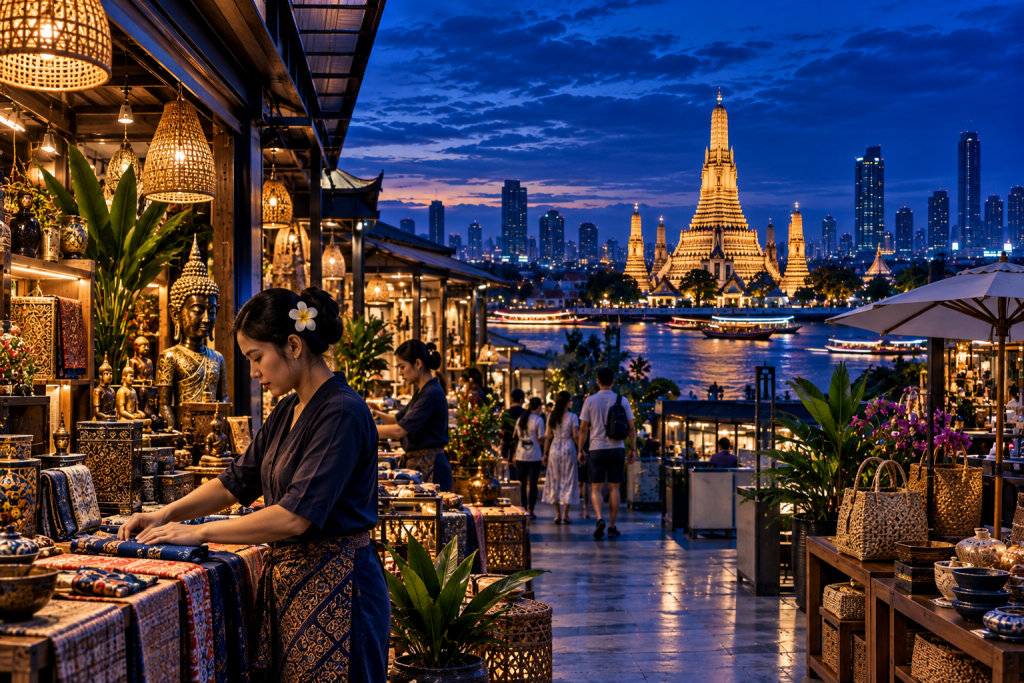
The retail industry in Thailand combines one of Southeast Asia’s largest consumer markets with international tourism, substantial manufacturing, food production, regional logistics and an increasingly sophisticated network of physical and digital retail. Bangkok dominates the country’s corporate and consumer economy, while Chiang Mai, Pattaya, Phuket and other regional markets operate within very different commercial environments shaped by local populations, tourism and industry.

Thailand is particularly interesting because it participates in retail from several directions simultaneously. International and Thai brands operate sophisticated shopping centres and stores, manufacturers produce vehicles, electronics, food, furniture, plastics and consumer products, agricultural businesses supply domestic and overseas retailers, and tourism introduces Thai products and brands directly to millions of international visitors. Ports, airports, warehouses and road networks connect these activities with neighbouring Southeast Asian markets and international supply chains.
For the Global Retail Directory, Thailand demonstrates the complete GRD mix particularly clearly. Retail Installation Companies, Manufacturers & Suppliers, Transport & Logistics businesses and Iconic Brandsoperate within a commercial ecosystem where manufacturing, tourism, physical stores and international trade continually overlap. Thailand’s opportunity is therefore much larger than domestic consumer growth alone: it can manufacture for global retailers, develop its own international brands and provide a strategic commercial base within Southeast Asia.
Bangkok Is the Centre of Thailand’s Modern Retail Economy
Bangkok provides Thailand with an enormous concentration of consumers, corporate headquarters, tourism and modern commercial development. International luxury houses, Thai brands, department stores, supermarkets, technology retailers and specialist businesses operate across a metropolitan region containing some of Southeast Asia’s most sophisticated shopping destinations.
The city does not represent one uniform consumer market. Premium central districts serve affluent Thai customers and international visitors, while residential areas support supermarkets, convenience retail and neighbourhood commerce. Traditional markets and independent businesses add another layer, allowing highly modern retail and long-established forms of commerce to operate within the same metropolitan economy.
For companies supporting physical stores, this scale creates substantial opportunity. Furniture, lighting, displays, technology, signage and electrical systems all need manufacturing and installation, while existing stores require refurbishment as concepts change. Thai Retail Installation Companies capable of working within tightly managed commercial properties can therefore become important partners to both domestic and international retailers.
Bangkok’s Shopping Centres Have Become Destinations in Their Own Right
Bangkok’s major shopping centres demonstrate how far the mall concept can evolve beyond a collection of stores. Fashion, luxury, beauty, restaurants, entertainment, supermarkets, technology and services operate together within large environments designed to attract customers for extended periods.
These destinations create demanding project conditions behind the customer experience. Retailers need to coordinate designs with property management, contractors work within controlled access periods and equipment needs to travel through loading docks, service corridors and goods lifts. Manufacturing decisions made months earlier can determine whether installation ultimately proceeds smoothly.
Mature shopping-centre markets also generate continuous refurbishment. Brands relocate, expand or update concepts, restaurants change and technology is replaced. For Manufacturers & Suppliers and installation companies, the opportunity therefore extends beyond new development into the continuing renewal of an established retail estate.
Thailand’s Traditional Commerce Remains Commercially Important
Modern malls are highly visible, but they represent only one part of Thai retail. Street markets, neighbourhood businesses, specialist traders and independent stores remain deeply integrated into everyday consumer life and contribute strongly to Thailand’s commercial identity.
These businesses frequently operate with detailed knowledge of local demand and can adapt product ranges quickly. For manufacturers and distributors, reaching independent commerce requires different strategies from supplying large organised retail groups. Wholesale markets and regional distributors can therefore remain important components of product distribution.
Technology can strengthen these businesses rather than eliminate them. Digital payments, social media, messaging and delivery platforms allow relatively small retailers to reach customers beyond immediate foot traffic while retaining the flexibility of independent commerce. Thailand consequently demonstrates how retail modernisation can happen across several formats simultaneously.
Thailand Is an Important Southeast Asian Manufacturing Base
Thailand has developed substantial manufacturing capabilities across automotive, electronics, electrical products, food processing, plastics, rubber, furniture and numerous other industries. Some of these products reach consumers directly, while others become components within international supply chains.
For retail, this manufacturing depth creates opportunities beyond finished consumer goods. Metal fabricators, plastics companies, electronics manufacturers and furniture producers can potentially manufacture displays, commercial equipment, store fixtures or components used within retail environments. The technical capability may already exist even when the business has not historically targeted retailers.
This is why GRD’s Manufacturers & Suppliers category deliberately extends beyond businesses identifying themselves as retail specialists. A Thai manufacturer serving automotive or electronics customers may possess exactly the machinery, engineering and quality-control systems required by an international retail project.
Automotive Manufacturing Creates Capabilities Relevant to Retail
Thailand has developed one of Southeast Asia’s most important automotive manufacturing industries. Vehicle production requires sophisticated networks of component suppliers producing metal, plastics, electronics, upholstery and engineered assemblies according to demanding quality standards.
Many of these capabilities can transfer into other sectors. Modern retail fixtures increasingly combine metal structures, moulded components, upholstery, lighting and electronics, while automotive showrooms themselves have become sophisticated customer environments incorporating digital technology and carefully controlled presentation.
Electric vehicles add another dimension. Dealerships need charging infrastructure, digital demonstrations and environments capable of explaining unfamiliar technology to customers. Manufacturers and commercial specialists supporting the automotive industry can therefore participate in retail both indirectly through production and directly through the physical dealership network.
Electronics Manufacturing Supports Increasingly Technical Stores
Thailand’s electronics and electrical manufacturing base creates another connection with modern retail. Consumer devices eventually reach stores, but electronic components and systems are also becoming integrated into the stores themselves.
Digital displays, electronic pricing, payment systems, security technology and connected devices increasingly operate alongside traditional furniture. A display can therefore require woodworking, metal fabrication, lighting, screens, power and connectivity within one finished unit.
For Thai manufacturers, this creates opportunities to combine existing technical capabilities with commercial manufacturing. International retailers searching Southeast Asia for specialist production may require exactly this mixture of conventional fabrication and electronics, making better B2B discovery increasingly valuable.
Thai Furniture Manufacturing Can Support International Retail Projects
Thailand’s woodworking and furniture industries have relevance to residential, hospitality and commercial markets. Retail stores require counters, shelving, display tables, cabinets and other furniture that can potentially draw upon the same manufacturing capabilities.
Commercial projects introduce additional requirements. A retailer opening multiple stores needs repeatable dimensions, consistent finishes, reliable packaging and clear component identification. Fixtures may also need integration with metalwork, glass, lighting or technology, increasing the complexity beyond conventional furniture production.
Manufacturers capable of developing these programme-management skills can move into higher-value international relationships. A Thai factory does not need to manufacture only products sold by retailers; it can manufacture the physical environments in which those products are presented.
Food Manufacturing Is One of Thailand’s Major Retail Strengths
Thailand’s agricultural and culinary economy creates an enormous range of products capable of moving into domestic and international retail. Rice, seafood, fruit, sauces, snacks, beverages, prepared foods and other categories connect farms and food processors with supermarkets and consumers throughout the world.
Turning agricultural production into finished branded products allows more value to remain within the manufacturing business. Processing, packaging, design and distribution transform ingredients into consumer propositions capable of competing on supermarket shelves rather than solely within commodity markets.
For GRD’s Manufacturers & Suppliers and Iconic Brands, Thai food provides a particularly strong international opportunity. Consumers in many countries are already familiar with Thai cuisine, reducing some of the educational barriers that completely unfamiliar food products face when entering overseas markets.
Packaging Is Essential to Thailand’s Export Retail Economy
Food, beauty, electronics and consumer products all depend on packaging before they can move successfully through international retail supply chains. Packaging protects the product, communicates information, supports transportation and influences customer perception at the final point of sale.
International exports introduce additional requirements. Products need to survive long journeys, destination regulations can require different labelling and retailers may demand specific dimensions or case quantities. E-commerce creates another challenge because packaging designed for a supermarket shelf may not be suitable for individual parcel distribution.
Thai packaging businesses therefore form an important but often invisible part of the retail ecosystem. Manufacturers capable of combining material efficiency, technical performance and strong presentation can support brands both domestically and internationally.
Tourism Gives Thai Retail an International Customer Base
Tourism has an unusually powerful influence on Thailand’s retail economy. Bangkok, Phuket, Pattaya, Chiang Mai, Koh Samui and other destinations attract visitors from across Asia, Europe, the Middle East, North America and other regions.
These customers create demand for fashion, beauty, food, jewellery, crafts, convenience products and premium retail. Hotels and resorts add another B2B market requiring furniture, lighting, signage, technology and commercial equipment, meaning tourism generates opportunities far beyond businesses selling directly to travellers.
Physical retail also becomes an international discovery channel. A visitor encountering a Thai food, beauty or lifestyle brand can continue purchasing after returning home if the business has effective e-commerce and international distribution. Tourism can therefore become the first stage of international brand development.
Phuket Creates a Retail Economy Closely Connected with Hospitality
Phuket demonstrates how dramatically a regional Thai retail market can differ from Bangkok. Tourism, hotels, resorts, restaurants and leisure activities have a much greater influence on consumer demand, creating opportunities particularly within fashion, food, beauty, convenience and lifestyle categories.
The physical commercial environment reflects these conditions. Resort retail, shopping destinations and hospitality spaces often operate closely together, while customer demand can vary according to tourism seasons and international travel patterns.
For manufacturers and suppliers, Phuket creates opportunities across both retail and hospitality. A furniture manufacturer, lighting business or signage company can serve boutiques, restaurants and hotels using related capabilities, demonstrating again why GRD’s retail ecosystem extends beyond conventional stores.
Chiang Mai Combines Tourism, Craftsmanship and Regional Commerce
Chiang Mai provides another distinctive retail environment. The northern city combines a substantial resident population with tourism, food, crafts, independent businesses and regional commercial activity.
Craftsmanship is particularly relevant because textiles, ceramics, wood products, decorative goods and other locally associated products can become part of premium consumer propositions. Their value can come from origin, design and production method rather than attempting to compete directly with mass-manufactured products.
The commercial challenge is building modern infrastructure around specialist production. Photography, packaging, inventory, payments and international fulfilment can become professional while the underlying craft remains authentic. E-commerce gives these producers access to customers far beyond northern Thailand.
Thai Beauty and Wellness Can Develop International Brands
Thailand’s international association with wellness, hospitality and natural products creates opportunities within beauty and personal care. Botanical ingredients, skincare, spa products and fragrances can potentially build consumer propositions connected with Thai origin.
Successful beauty retail requires much more than an attractive ingredient story. Formulation, testing, manufacturing, packaging and regulatory compliance all need professional standards, particularly when products are sold internationally.
The wider ecosystem can become commercially significant as brands grow. Contract manufacturers, packaging companies, designers and distributors can all participate, allowing Thai beauty businesses to move from tourism-oriented discovery toward repeat international consumer purchasing.
Ports Connect Thai Manufacturing with International Retail
Thailand’s international manufacturing economy depends on ports and freight infrastructure connecting factories with overseas customers. Laem Chabang and other maritime gateways support container movements serving industrial and consumer supply chains.
For retail, these movements work in both directions. Imported materials, machinery and finished consumer products enter Thailand, while Thai-manufactured electronics, food, automotive products, furniture and other goods travel toward international markets.
Manufacturing and logistics therefore form one continuous process. A factory has not completed its commercial responsibility simply because the product leaves the production line. Packaging, documentation, freight and distribution all influence whether it reaches the retailer successfully.
Thailand Can Serve Wider Southeast Asian Markets
Thailand’s central position within mainland Southeast Asia creates opportunities extending beyond domestic consumption. Road networks connect the country with neighbouring markets, while maritime and air infrastructure provide access to the wider region.
For manufacturers, this creates a potential customer base considerably larger than Thailand alone. A supplier can serve domestic retailers while developing export relationships across Southeast Asia, and successful consumer brands can use neighbouring countries as a gradual route toward wider international expansion.
Regional growth still requires local understanding. Southeast Asia contains different languages, regulations, purchasing power and retail structures. Thailand can provide a strong manufacturing and commercial base, but every destination still needs an appropriate market strategy.
E-Commerce Gives Thai Businesses Reach Beyond Their Physical Stores
Digital commerce allows Thai businesses to reach consumers nationally without immediately developing extensive store estates. Fashion, beauty, food and lifestyle companies can build audiences through social media, marketplaces and direct e-commerce before deciding where permanent physical locations make commercial sense.
The digital transaction nevertheless creates a physical process behind it. Inventory needs storage, orders require picking and packing, parcels need transportation and returns must be handled efficiently.
As volumes increase, fulfilment becomes a significant competitive capability. Warehouses, packaging businesses, technology providers and delivery companies therefore benefit directly from digital retail growth even though customers interact primarily with a website or mobile application.
Physical Stores Are Becoming Part of Omnichannel Networks
The growth of digital retail does not make Thai stores irrelevant. Instead, physical locations can perform more functions. They can become showrooms, service centres, collection points, returns locations and sources of local inventory as well as conventional places to purchase products.
Beauty, fashion, technology and lifestyle products particularly benefit from physical experience. Customers can discover something digitally and visit a store before purchasing, or encounter a product physically and order it online later.
Retailers therefore increasingly need consistency across channels. Inventory, customer service and brand presentation should work together, while physical stores need technology capable of connecting them with the wider digital operation.
International Brands Need Capable Thai Partners
Thailand’s consumer scale and tourism make it attractive to international retailers, but global concepts still require local execution. Shopping-centre requirements, property conditions, climate and local supply networks influence how stores are actually delivered.
Imported fixtures need transportation and installation, while electrical and technology systems require coordination with local specialists. After opening, maintenance becomes necessary and replacement components need to be available.
International retailers therefore benefit from identifying Thai Retail Installation Companies, Manufacturers & Suppliers and Transport & Logistics businesses capable of working to professional standards. Local capability allows international design to function reliably within actual Thai commercial environments.
Thai Brands Can Expand Beyond the Domestic Market
Thailand’s consumer economy provides domestic businesses with enough scale to develop strong brands before pursuing international expansion. Food, beauty, hospitality, fashion and lifestyle businesses can build recognition at home and among international visitors before entering overseas markets.
E-commerce can provide the first international step, while pop-ups, wholesale partnerships and temporary locations allow brands to test demand without immediately committing to permanent stores. Once physical expansion begins, however, new B2B relationships become necessary.
A Thai brand opening overseas may retain manufacturing at home while working with destination-market logistics and installation companies. This is where Iconic Brands connect naturally with the wider GRD network, creating opportunities for businesses surrounding the consumer-facing company.
Sustainability Can Strengthen Thailand’s Manufacturing Position
International buyers increasingly examine energy, water, materials, waste and packaging when evaluating suppliers. For Thai manufacturers seeking long-term relationships with global retailers, environmental performance can therefore become part of commercial competitiveness.
Food processing, plastics, furniture and manufacturing all provide opportunities for greater resource efficiency. Reducing waste lowers material costs, energy-efficient machinery can reduce operating expenditure and better packaging can decrease both material use and transportation volume.
Retail fixtures provide another opportunity through modularity and reuse. Components designed for repair or refurbishment can remain in service longer, helping retailers reduce both replacement expenditure and waste across repeated store programmes.
Connecting Thailand Through Global Retail Directory
Thailand contains businesses capable of contributing to almost every part of international retail. Manufacturers produce furniture, electronics, food, packaging and consumer products, logistics companies connect factories with regional and global markets, installation businesses deliver physical stores and Thai brands increasingly have opportunities to reach international customers.
The Global Retail Directory is designed to make these capabilities easier to discover. Thai Manufacturers & Suppliers can present production expertise, Retail Installation Companies can demonstrate geographic coverage, Transport & Logistics businesses can connect with international supply chains and Iconic Brands can become visible within a wider global industry platform.
The opportunity works in both directions. International retailers entering Thailand can identify local businesses, while Thai companies can become visible to buyers and project organisations elsewhere. Greater discovery cannot replace quality, but it allows capable businesses to compete for opportunities outside the networks through which they are already known.
Thailand Connects Manufacturing, Tourism and Southeast Asian Retail
The future of the retail industry in Thailand will continue to be shaped by urban consumer growth, digital commerce, tourism, manufacturing and regional economic integration. Bangkok will remain the country’s dominant commercial centre, while Phuket, Chiang Mai and other regional markets provide retail environments shaped by completely different customer demands.
Thailand’s greatest strength may be the diversity behind those stores. Automotive and electronics manufacturing provide industrial capability, food production connects agriculture with international consumers, tourism introduces Thai brands to customers from around the world and logistics infrastructure connects domestic factories with global markets.
For Global Retail Directory, Thailand therefore represents the complete GRD ecosystem: retail installation, manufacturing and suppliers, transport and logistics, and brands operating within one interconnected market. Thailand is not simply somewhere products are sold. It is a place where products can be designed, manufactured, packaged, distributed, experienced by international customers and ultimately developed into brands capable of travelling throughout Southeast Asia and the wider global retail industry.