
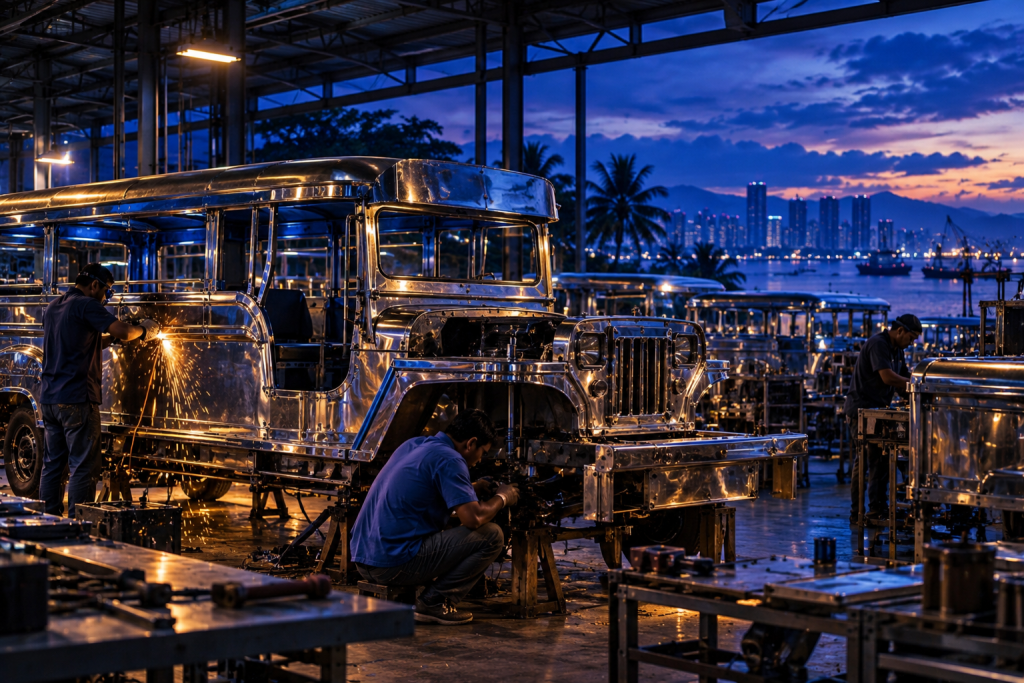
The retail industry in the Philippines operates within one of Southeast Asia’s most distinctive consumer markets, combining extensive shopping centre development, domestic manufacturing, international trade and a population distributed across thousands of islands. Metro Manila provides the country’s largest concentration of organised retail, corporate activity and commercial services, while Cebu, Davao, Clark and other regional centres contribute their own manufacturing, logistics and consumer economies. The Philippines has developed a particularly strong shopping mall culture, where major commercial developments combine retail, restaurants, entertainment and services within environments that function as important centres of urban activity.

The country’s commercial identity extends far beyond shopping centres. Electronics and semiconductor manufacturing connect Philippine factories with international technology supply chains, while food processing, packaging, textiles, furniture and agricultural products support domestic and overseas retail markets. The Philippines’ geography creates additional complexity because products frequently need to move between islands before reaching consumers. Ports, shipping services, warehouses and regional distribution networks therefore play an essential role in connecting manufacturers, retailers and customers throughout the archipelago.
For Global Retail Directory, the Philippines represents an interconnected business environment where Retail Installation Companies, Manufacturers & Suppliers, Transport & Logistics providers and Iconic Brandscontribute to the wider retail economy. International retailers require local installation and distribution partners, Philippine manufacturers need opportunities to reach overseas buyers, and domestic brands increasingly operate across several regional markets. Understanding these relationships reveals how the Philippines combines consumer demand, industrial production and complex distribution requirements within one internationally connected retail ecosystem.
Metro Manila Is the Centre of Philippine Retail and Consumer Commerce
Metro Manila provides the Philippines with its largest concentration of consumers, businesses and modern retail infrastructure. Makati, Bonifacio Global City, Quezon City, Pasig and other metropolitan districts contain major shopping centres, supermarkets, department stores, fashion retailers, electronics businesses and extensive hospitality facilities. Commercial developments frequently combine offices, residential properties, entertainment and retail, creating environments where shopping forms part of a wider urban lifestyle.
The metropolitan area’s retail landscape reflects different consumer requirements and purchasing patterns. Premium shopping destinations serve customers seeking international fashion, technology and luxury products, while supermarkets, convenience stores and neighbourhood businesses provide everyday goods. Traditional markets remain important for food and independent commerce, demonstrating how established retail formats continue operating alongside large modern developments.
For Retail Installation Companies, Metro Manila creates opportunities involving new store openings, shopfitting, commercial furniture, signage, lighting and technology installations. Shopping centres require coordinated project schedules, landlord approvals and controlled deliveries, while international brands expect consistent store presentation across multiple locations. Manufacturers supplying fixtures and displays can work with installation contractors and logistics providers to deliver complete retail environments.
Shopping Malls Play an Unusually Important Role in Filipino Retail
The Philippines has developed one of Asia’s most recognisable shopping mall cultures. Large developments provide more than conventional retail space, combining supermarkets, fashion, restaurants, cinemas, entertainment, professional services and community activities. In a tropical climate where heat and heavy rainfall influence daily life, enclosed shopping environments can provide comfortable destinations for extended visits.
Major operators such as SM Supermalls and Ayala Malls have helped establish large-scale organised retail across metropolitan and regional markets. Their developments accommodate domestic and international brands, creating opportunities for businesses supplying commercial interiors, furniture, technology, signage and specialist equipment. Retailers operating within these properties need to balance consistent brand identity with the practical requirements of individual shopping centres.
The scale of Philippine mall development creates substantial activity behind the customer-facing environment. Store refurbishments, seasonal displays, new concessions and technology upgrades require manufacturers, logistics providers and installation teams. A single shopping centre can generate commercial relationships involving numerous specialist companies, demonstrating how organised retail supports a much larger B2B ecosystem.
Cebu Connects Manufacturing, Tourism and Regional Retail
Cebu is one of the Philippines’ most important regional commercial centres, combining manufacturing, international business services, tourism and substantial consumer demand. Metro Cebu includes shopping destinations, industrial facilities, hospitality businesses and distribution infrastructure supporting the wider Central Visayas region.
The province has established manufacturing capabilities involving electronics, furniture, food processing and other industrial activities. These businesses can serve domestic retailers while also supplying international customers. Cebu’s tourism economy creates additional demand for hospitality furniture, specialist retail products, restaurants and commercial services, connecting manufacturing with consumer-facing businesses.
For manufacturers and logistics providers, Cebu offers opportunities beyond serving its immediate metropolitan population. Products can move between Cebu and neighbouring islands through maritime transportation, while international connections support exports and imported materials. Retail Installation Companies operating within the region can support shopping centres, hotels, restaurants and international brands establishing additional locations outside Metro Manila.
Electronics Manufacturing Connects the Philippines with Global Technology Markets
Electronics and semiconductor manufacturing represent important components of the Philippine industrial economy. Manufacturing operations produce electronic components, semiconductor assemblies and other products used within international technology supply chains. Industrial activity is particularly associated with established manufacturing regions in Luzon and parts of the Visayas.
The connection with retail extends beyond finished consumer electronics. Components manufactured in the Philippines can eventually become part of smartphones, computers, household appliances and other products sold internationally. Electronics manufacturing capabilities can also contribute to commercial equipment used within stores, including payment technology, digital displays and specialist electronic systems.
For Philippine Manufacturers & Suppliers, this industry demonstrates the value of technical capability within international business networks. Precision assembly, quality control, testing and industrial engineering require specialist expertise. Companies operating within these supply chains may also develop opportunities with manufacturers serving other sectors, including commercial technology and retail infrastructure.
Laguna, Cavite and Batangas Form an Important Industrial Corridor
The provinces south of Metro Manila contain substantial manufacturing and industrial activity. Laguna, Cavite and Batangas have developed industrial estates and production facilities supporting electronics, automotive components, food processing, plastics and other manufacturing industries.
Their proximity to the capital creates connections between industrial production and one of the country’s largest consumer markets. Manufacturers can supply domestic distributors and retailers while maintaining access to international transportation infrastructure. Industrial businesses also require packaging, machinery, maintenance, warehousing and freight services, generating opportunities for specialist suppliers.
For international companies evaluating Philippine manufacturing, this industrial corridor provides an established environment with experience in export-oriented production. However, suitable sourcing still depends on individual factory capabilities, technical requirements, production capacity and commercial conditions. Professional business discovery can help identify potential suppliers before detailed evaluations and negotiations begin.
Filipino Food Manufacturing Supports Domestic and International Retail
Food manufacturing is an important part of the Philippine consumer economy, supported by agricultural production, established domestic brands and strong demand for packaged products. Manufacturers produce snacks, beverages, sauces, confectionery, processed foods and other products distributed through supermarkets, convenience stores and independent retailers.
The industry requires reliable connections between agricultural suppliers, processing facilities, packaging manufacturers and logistics businesses. Products must meet appropriate food safety and labelling requirements, while distribution systems need to maintain product quality throughout transportation and storage. The country’s tropical climate and island geography can make suitable handling particularly important for temperature-sensitive products.
Philippine food manufacturers also have opportunities to reach overseas customers, including Filipino communities living internationally. Products familiar within domestic markets may attract demand abroad, creating opportunities for exporters, distributors and specialist retailers. These commercial relationships connect local production with international consumer markets and the logistics networks supporting them.
Jollibee Demonstrates the International Potential of Filipino Brands
The Philippines has developed consumer brands that have expanded beyond their domestic market. Jollibee is a particularly recognisable example, demonstrating how a Philippine food-service concept can develop international operations while maintaining a distinctive consumer identity.
International expansion involves considerably more than brand recognition. Restaurant operators need commercial properties, kitchen equipment, furniture, signage, technology and reliable supply chains. New locations require installation contractors and maintenance providers, while food distribution depends on suitable manufacturing and logistics arrangements.
For Iconic Brands, the wider lesson is that successful consumer businesses create opportunities for numerous supporting industries. Manufacturers supply equipment and packaging, logistics companies distribute products, and installation specialists deliver physical commercial environments. A recognised brand therefore represents the visible part of a much larger international business network.
Davao Connects Mindanao’s Agriculture with Consumer Markets
Davao is an important commercial centre in Mindanao, combining agriculture, trade, retail and regional services. The wider region produces agricultural commodities and food products that contribute to domestic consumption and international exports.
Agricultural production creates opportunities for processing, packaging and transportation. Products such as bananas and other tropical crops require handling systems appropriate to their commercial destinations, while processed foods need manufacturing equipment, packaging and distribution. These activities support businesses operating beyond the original agricultural producers.
For retailers and suppliers, Davao also represents a regional consumer market with requirements different from Metro Manila. Businesses expanding nationally need to understand local purchasing patterns and distribution conditions. Manufacturers and logistics providers capable of supporting Mindanao can become important partners for companies developing operations across the southern Philippines.
More Than 7,000 Islands Create a Complex Retail Supply Chain
The Philippines consists of more than 7,000 islands, creating one of the most distinctive geographic challenges for national retail distribution in Southeast Asia. Although population and commercial activity are concentrated within major islands and metropolitan areas, retailers still need to serve customers across numerous separate markets.
Products manufactured in Luzon may need to travel by road, sea and local delivery networks before reaching stores in the Visayas or Mindanao. This creates additional requirements for packaging, inventory planning and transportation coordination. Replacement components for retail equipment can also take longer to arrive when projects operate outside major distribution centres.
For Transport & Logistics companies, these conditions create opportunities in maritime freight, regional warehousing, consolidation and inter-island distribution. Businesses capable of coordinating several transportation stages provide essential services to retailers, manufacturers and commercial contractors. Philippine geography makes logistics a central commercial capability rather than simply a supporting service.
Maritime Transportation Connects the Philippine Islands
Domestic shipping is fundamental to the movement of commercial goods throughout the Philippines. Ports connect major islands with smaller regional markets, allowing consumer products, industrial materials, food and retail equipment to move between production facilities, warehouses and customers.
The Port of Manila provides an important international trade connection, while Cebu, Batangas, Davao and other ports support domestic and overseas cargo movements. The suitability of individual routes depends on cargo type, shipping schedules, destination and the location of manufacturing or distribution facilities.
Retailers operating nationally need to coordinate these movements carefully. A shipment arriving from an overseas manufacturer may require customs clearance, warehousing and onward domestic transportation before reaching its final store. Freight forwarders and logistics providers experienced in Philippine conditions can help businesses manage these requirements and reduce avoidable disruptions.
Warehousing Is Essential to Regional Retail Distribution
Warehousing connects manufacturing and international transportation with domestic retail operations. In the Philippines, distribution facilities are particularly important because inventory may need to be positioned across several islands rather than concentrated entirely around Manila.
A retailer operating stores in Luzon, Cebu and Mindanao may require different inventory arrangements according to demand, delivery frequency and transportation costs. Regional warehouses can improve product availability, although operating several facilities introduces additional inventory-management requirements.
For logistics providers, these conditions create opportunities involving pallet storage, order preparation, stock allocation and distribution. Manufacturers supplying retail fixtures can also benefit from suitable warehouse partners capable of receiving equipment and preparing deliveries for individual stores. Reliable inventory management becomes especially valuable during nationwide retail rollout programmes.
Furniture and Commercial Interiors Support Philippine Retail Development
Furniture manufacturing has established connections with several Philippine regions, including Cebu and other areas with woodworking and specialist production capabilities. Manufacturers produce residential, hospitality and commercial furniture using different materials and manufacturing techniques.
Retail environments create opportunities for these capabilities to support commercial projects. Display tables, counters, shelving, seating and decorative fixtures can be produced by manufacturers experienced in furniture and joinery. International retailers may require consistent designs across multiple stores, while individual projects can involve bespoke equipment adapted to local premises.
For Manufacturers & Suppliers, commercial interiors provide opportunities beyond conventional residential furniture. However, larger retail programmes require accurate specifications, repeatable production and reliable packaging. Manufacturers capable of coordinating with logistics providers and installation companies can become valuable participants in domestic and international shopfitting projects.
Tourism Supports Retail Across the Visayas and Palawan
Tourism contributes to retail demand in destinations including Cebu, Boracay, Palawan and other internationally recognised Philippine locations. Hotels, resorts, restaurants and specialist retailers serve visitors alongside local communities, creating commercial environments influenced by tourism activity.
Visitors purchase clothing, food, beauty products, souvenirs and outdoor equipment, while hospitality operators require furniture, lighting, commercial equipment and ongoing maintenance. Tourism can also introduce Philippine products and brands to international consumers who may continue purchasing them after returning home.
For local manufacturers and installation companies, hospitality development creates opportunities involving commercial interiors, signage, furniture and specialist equipment. Logistics providers must coordinate deliveries to destinations that may have limited road access or require additional maritime transportation. Tourism therefore connects consumer retail with manufacturing and distribution throughout the archipelago.
E-Commerce Is Changing Philippine Retail Distribution
Digital commerce has become an important part of Philippine consumer activity, supported by online marketplaces, social media and mobile technology. Retailers can reach customers beyond their immediate physical locations, while smaller businesses can introduce products without first establishing extensive store networks.
However, digital transactions still depend on physical infrastructure. Products require storage, packaging, order processing and delivery, while returns and customer service create additional operational requirements. The country’s geography makes fulfilment particularly challenging when orders need to travel between islands.
This creates opportunities for parcel delivery companies, warehouse operators, packaging manufacturers and technology providers. Retailers need to balance delivery costs with customer expectations, while manufacturers selling directly to consumers may require different distribution arrangements from those used for wholesale shipments. E-commerce therefore strengthens the relationship between digital retail and physical logistics.
Retail Installation Across the Philippines Requires Regional Coordination
International retailers expanding across the Philippines may operate stores in Manila, Cebu, Davao and numerous regional shopping centres. Maintaining consistent store presentation across these locations requires careful coordination between manufacturers, logistics providers and installation teams.
Fixtures and technology may arrive from overseas manufacturers or domestic suppliers before being allocated to individual projects. Shopping centres can impose specific requirements involving deliveries, access and working hours, while stores on distant islands may require additional transportation and accommodation planning.
For Retail Installation Companies, this creates opportunities involving store openings, refurbishments, commercial furniture, signage, technology installations and maintenance. Regional contractors capable of supporting consistent quality standards can become valuable partners for national and international retailers. Reliable project management is particularly important when missing components or delayed deliveries can affect installation schedules across several islands.
Philippine Manufacturers Can Connect with International Retail Projects
The Philippines has manufacturing capabilities extending across electronics, furniture, food processing, textiles, packaging and other industries. These businesses can support international retail directly through finished consumer products or indirectly through components, materials and commercial equipment.
An electronics manufacturer may supply components used in retail technology, while a furniture producer can manufacture commercial fixtures. Packaging companies support consumer brands, and food processors supply products to international distributors. These relationships demonstrate how manufacturing capabilities can serve several parts of the retail ecosystem.
For overseas buyers, discovering suitable Philippine manufacturers requires reliable information about capabilities, production standards and geographic location. A professional business directory can provide another starting point for identifying potential suppliers, although technical assessments and commercial due diligence remain essential before establishing manufacturing relationships.
Connecting Philippine Businesses Through Global Retail Directory
The Philippines contains manufacturers, logistics providers, retail contractors and internationally recognised brands whose capabilities can support domestic and overseas commercial projects. Electronics manufacturers, furniture producers, packaging suppliers, food processors and specialist service companies all contribute to the wider retail economy.
Global Retail Directory provides a specialist international B2B platform where these businesses can present their capabilities. Manufacturers & Suppliers can demonstrate production expertise, Transport & Logisticscompanies can describe their services, Retail Installation Companies can become visible to retailers and project organisations, and Iconic Brands can participate in a network connecting the businesses behind retail.
GRD operates across 31 language versions and supports local, regional and international business discovery. A furniture manufacturer in Cebu may serve Philippine customers or export internationally, while an installation company in Manila may focus on projects throughout Luzon. The objective is to create another professional route through which relevant businesses can be discovered without requiring every company to operate globally.
The Philippines’ Retail Future Connects Consumer Demand with International Manufacturing
The future of the retail industry in the Philippines will continue to be shaped by metropolitan consumer demand, shopping centre development, e-commerce and the country’s internationally connected manufacturing industries. Metro Manila will remain the principal commercial centre, while Cebu, Davao and other regional markets contribute distinctive manufacturing, tourism and distribution activities.
The Philippines’ wider strengths create opportunities extending beyond conventional shopping. Electronics manufacturing connects the country with international technology markets, food processing supports domestic and overseas consumers, and furniture production contributes to commercial interiors. Maritime transportation and regional warehousing remain essential because products must move across an archipelago where geography strongly influences distribution.
For Global Retail Directory, the Philippines demonstrates how retail, manufacturing, logistics, installation and brands form an interconnected commercial ecosystem. The country’s opportunities extend from local retailers and specialist manufacturers to international consumer brands and complex regional supply chains. Making those capabilities easier to discover can help Philippine businesses connect with suitable customers, suppliers and commercial partners throughout Southeast Asia and the wider global retail industry.