
Retail Industry in Kenya
The retail industry in Kenya sits at the centre of one of East Africa’s most important commercial economies. Nairobi has developed into a major regional business hub where modern shopping centres, supermarkets, international brands, technology companies and growing domestic businesses operate alongside traditional markets, independent shops and a vast network of small enterprises. Beyond the capital, Mombasa connects Kenya with international maritime trade, while Kisumu, Nakuru, Eldoret and other cities support important regional consumer markets of their own.

What makes Kenya particularly interesting is the way different generations of commerce operate simultaneously. A customer can shop inside a contemporary Nairobi mall, purchase everyday products from a neighbourhood business, discover a local brand through social media and pay using a mobile phone within the same commercial ecosystem. Technology has allowed parts of Kenyan retail to modernise without requiring every business to adopt the same physical format, creating a market where independent commerce and organised retail can evolve alongside one another.
For the Global Retail Directory, Kenya represents much more than a collection of stores. Agricultural producers, manufacturers, packaging companies, technology businesses, logistics providers, commercial contractors and consumer brands all contribute to the wider retail economy. Kenya’s ports, professional services and regional business relationships also connect these companies with neighbouring East African markets and international supply chains, giving capable Kenyan businesses opportunities extending far beyond domestic consumers.
Nairobi Has Become an East African Commercial Centre
Nairobi dominates Kenya’s corporate and modern retail landscape, hosting multinational companies, financial institutions, technology businesses, manufacturers and regional headquarters serving markets throughout East Africa. Its physical retail environment reflects this position through modern shopping centres, supermarkets, fashion and beauty stores, restaurants, electronics businesses and entertainment, while traditional markets and independent retailers remain highly visible throughout the wider city.
This diversity supports several layers of B2B demand. A premium international retailer can require architectural design, bespoke furniture, lighting, technology and professional store installation, while a supermarket network needs shelving, refrigeration, checkout equipment and reliable distribution. Smaller businesses may need affordable displays, packaging, payment technology or locally manufactured furniture. The same city can therefore support very different commercial suppliers according to the type of retailer and customer being served.
For international companies, Nairobi can function as both a consumer market and a regional commercial base. Retailers entering Kenya need local knowledge and reliable project partners, while businesses coordinating East African operations can establish relationships in Nairobi that later become relevant elsewhere. GRD can help make Kenyan Manufacturers & Suppliers and Retail Installation Companies easier to identify when overseas organisations need local capabilities rather than attempting to manage every requirement from another country.
Mobile Technology Has Changed Kenyan Commerce
Few developments illustrate Kenya’s distinctive commercial evolution more clearly than mobile payments. Mobile money has made electronic transactions accessible far beyond conventional banking infrastructure and has become deeply integrated into everyday commerce. Consumers can pay businesses, transfer money and interact with services through mobile devices, allowing relatively small retailers to participate in digital transactions without requiring the infrastructure historically associated with large organised chains.
This matters because technology can modernise a business without changing its fundamental physical model. A neighbourhood retailer can remain independent while adopting digital payment, messaging and delivery tools that connect it with customers more efficiently. Kenya therefore challenges the assumption that retail modernisation must involve replacing small businesses with large stores; traditional physical commerce can become technologically sophisticated while retaining its local character and relationships.
For technology companies, this creates opportunities throughout the retail economy. Payments, inventory management, customer communication, delivery and business analytics can all be developed around the realities of Kenyan commerce, while cloud-based and mobile systems can make sophisticated capabilities accessible to businesses of relatively modest scale. Within GRD’s wider ecosystem, these technology providers are relevant precisely because modern retail increasingly depends on infrastructure customers may never physically see.
Shopping Centres and Independent Retail Serve Different Consumer Needs
Nairobi’s shopping centres represent one of the most visible signs of changing consumer behaviour, bringing supermarkets, fashion, restaurants, entertainment, fitness, beauty and services together within professionally managed destinations. For international brands, these environments provide established customer traffic, security, parking and property management, while domestic businesses gain access to organised commercial locations capable of supporting more sophisticated store concepts.
Behind every finished store sits a wider supply chain. Retail units need flooring, lighting, furniture, displays, signage, technology and electrical infrastructure, while equipment may be manufactured locally or imported according to the project. As international brands enter Kenya and domestic retailers invest in more sophisticated environments, contractors and manufacturers gain experience with new specifications and project requirements, allowing knowledge created through individual developments to strengthen the wider local B2B industry.
Independent shops, markets, wholesalers and family businesses remain equally important because a large proportion of everyday commerce happens outside modern malls. Consumer-product manufacturers seeking national reach may need wholesalers and independent retailers as much as supermarket listings, while pricing, packaging sizes and distribution strategies can differ considerably between channels. The future of Kenyan retail is therefore likely to involve organised, independent and digital commerce developing together rather than one format completely replacing the others.
Agriculture Connects Kenyan Production with International Retail
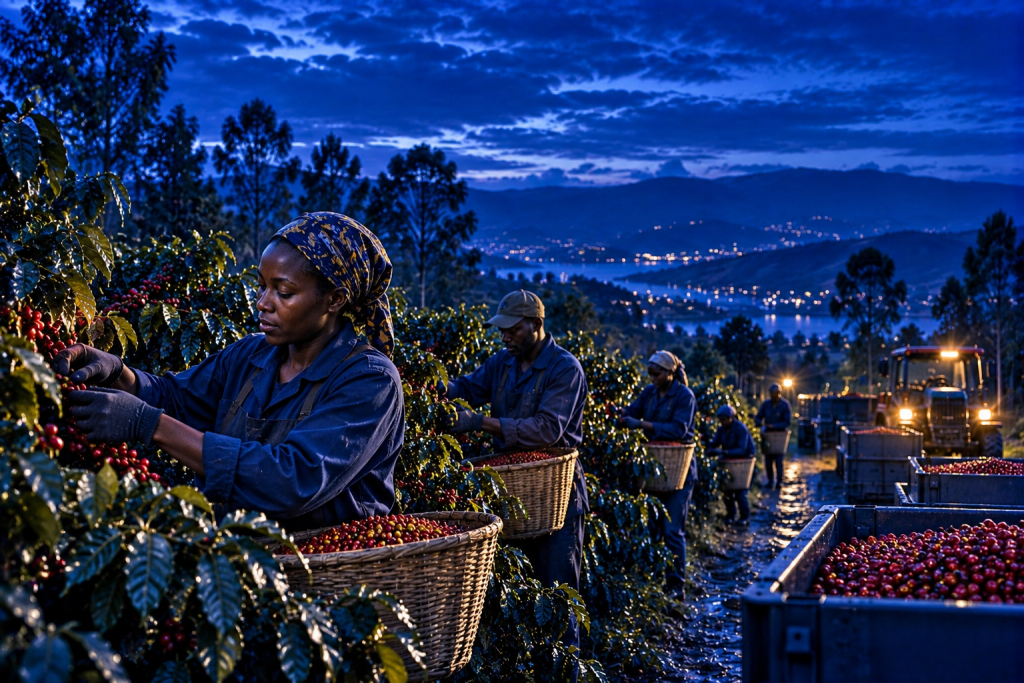
Kenya is internationally recognised for agricultural products including tea, coffee, flowers and fresh produce, creating supply chains that connect rural production with processing, packaging, logistics and international customers. Coffee provides a clear example because an agricultural product grown in Kenya can eventually become a premium consumer item sold through supermarkets, specialist retailers, cafés and e-commerce platforms around the world.
Between the farm and the customer sits an extensive commercial network. Coffee requires processing, quality control, packaging, transportation, distribution and marketing, while tea and fresh produce have their own technical and logistics requirements. Businesses can export commodities at an early stage of the value chain, but greater commercial value can potentially remain within Kenya when more processing, packaging and branding are completed domestically.
Retail therefore creates an opportunity for Kenyan businesses to move from production toward consumer recognition. A coffee or tea producer can eventually develop a finished brand rather than remaining exclusively a supplier behind another company’s label. For GRD’s Manufacturers & Suppliers and Iconic Brands categories, this progression is particularly relevant because the same Kenyan capability can participate in international retail at several different stages of development.
Kenyan Products Can Develop into International Brands
Building a consumer brand requires different capabilities from producing an agricultural commodity or manufacturing an unbranded product. Packaging becomes part of the customer experience, visual identity needs consistency and distribution must deliver products reliably as sales volumes increase. Graphic designers, packaging manufacturers, printers, logistics companies, e-commerce providers and marketing businesses can therefore all contribute to transforming production capability into a retail proposition.
Physical retail can become part of this journey as well. A Kenyan coffee, fashion, beauty or lifestyle business can build recognition domestically and digitally before developing branded stores, concessions or international wholesale relationships. Tourism and diaspora communities can introduce products to customers beyond Kenya, while e-commerce allows businesses to test overseas demand before committing to expensive permanent locations.
This demonstrates why manufacturers and producers do not necessarily need to remain permanently behind other brands. A company capable of producing something distinctive can eventually develop consumer recognition of its own, while the B2B network surrounding it grows at the same time. Successful Kenyan Iconic Brands can therefore create opportunities for manufacturers, packaging companies, logistics providers and commercial specialists as they expand.
Mombasa Connects Kenya with International Supply Chains
While Nairobi dominates corporate activity, Mombasa gives Kenya its major maritime connection with international trade. The port provides access to global shipping routes and supports commerce extending beyond Kenya into neighbouring landlocked markets, making the country important within the wider East African supply chain. Consumer products, machinery, commercial equipment and raw materials can enter through maritime trade before moving inland toward businesses and customers.
The reverse journey is equally important because Kenyan agricultural and manufactured products leave through international networks before appearing in stores elsewhere in the world. Manufacturers therefore need to consider packaging, documentation and transportation as part of the product rather than activities beginning only after production is complete. A product that leaves the factory correctly but arrives damaged or late has still failed commercially.
This gives GRD’s Transport & Logistics businesses an important role within Kenya. Freight, warehousing and distribution connect producers with retailers domestically and internationally, while overseas companies entering East Africa may need local partners capable of understanding how products move through the region. Mombasa is therefore more than a port; it is one of the physical connections between East African production and global consumption.
Kenya Can Function as a Commercial Gateway to East Africa
Kenya’s importance becomes even clearer when viewed regionally rather than solely as a domestic market. Businesses operating from Nairobi can develop relationships across Uganda, Tanzania, Rwanda and other East African economies, while corporate offices, professional services and distribution networks increasingly coordinate activities across national borders. For an international company entering the region, establishing strong Kenyan relationships can therefore create value extending beyond one country.
The same opportunity exists for Kenyan businesses. A manufacturer capable of supplying retailers in Nairobi can potentially serve customers elsewhere in East Africa, while a technology company developing successful payment, inventory or delivery solutions domestically can pursue neighbouring markets where similar commercial needs exist. Retailers and consumer brands can follow the same progression as their operational capabilities develop.
Regional expansion still requires local understanding because East Africa is not one homogeneous consumer market. Regulations, infrastructure, languages, purchasing power and retail structures differ between countries, meaning a strategy successful in Kenya may require adaptation elsewhere. Kenya can provide a strong commercial base, but successful regional growth depends on combining that base with reliable partners and market knowledge in each destination.
Manufacturing and Packaging Support Kenya’s Retail Economy
Kenya has manufacturing capabilities across food processing, beverages, plastics, packaging, textiles, construction materials, chemicals and other sectors. Some businesses manufacture finished consumer products, while others provide the materials and infrastructure required by retailers and other manufacturers. This domestic production can reduce dependence on imports in categories where local businesses can provide competitive quality, pricing and lead times.
Packaging is particularly important because every physical product requires some combination of protection, identification and presentation. Food manufacturers need suitable containers, fashion businesses require bags and labels, and e-commerce creates additional demand for shipping materials capable of surviving individual delivery. Local packaging production can therefore support a broad range of companies regardless of the consumer category in which they ultimately operate.
Furniture and construction-related manufacturing can similarly contribute to stores, restaurants and hospitality environments. As organised retail develops, businesses capable of producing commercial-quality products locally can potentially reduce replacement lead times and make maintenance easier. GRD can help international buyers identify these Kenyan Manufacturers & Suppliers while giving domestic producers greater visibility beyond the customers they already serve.
Supermarkets Are Professionalising the Wider Supply Chain
Supermarkets require a very different infrastructure from small neighbourhood retailers. Large stores need coordinated product distribution, refrigeration, shelving, checkout systems, inventory management and substantial back-of-house operations, and those requirements multiply as the retailer develops a network of locations. Distribution centres and technology become increasingly important because suppliers cannot efficiently deliver small quantities independently to every store within a large national estate.
This development also changes expectations placed on manufacturers. A producer supplying a handful of independent shops can often operate relatively flexibly, while a national supermarket network requires consistent packaging, barcodes, volumes and delivery schedules. Fresh and refrigerated products introduce additional requirements around temperature control, while promotional campaigns can create rapid changes in demand that suppliers need to manage.
Organised retail therefore encourages professionalisation throughout the supply chain. Meeting these standards can be demanding for smaller manufacturers, but it can also provide access to substantially larger markets. Packaging businesses, refrigeration suppliers, warehouse operators and logistics companies consequently become part of grocery retail even though customers may never encounter their names.
Omnichannel Retail Is Connecting Stores, Technology and Fulfilment
Kenyan consumers increasingly move between physical and digital commerce. Social media can introduce a product, messaging platforms support customer communication and online marketplaces allow businesses to reach customers without immediately building large store networks. A company can maintain one showroom while selling nationally online, while a supermarket can use physical stores as part of its collection or delivery infrastructure.
Physical locations remain important because customers may want to inspect products, receive advice, make immediate purchases or return digital orders. The strongest retail models therefore connect channels rather than forcing consumers to choose between them. This creates demand for accurate inventory, payment technology, packaging and fulfilment systems capable of supporting a customer relationship that can move repeatedly between online and offline environments.
Nairobi’s technology ecosystem gives Kenya opportunities to develop solutions suited specifically to these commercial conditions. Businesses creating payments, inventory systems, delivery tools or e-commerce infrastructure can support retailers ranging from large chains to independent merchants. Modern Kenyan retail consequently creates opportunities for technology businesses alongside conventional manufacturers and store-equipment suppliers.
International Brands Need Local Knowledge and Delivery Capability
Nairobi’s growing consumer market and regional commercial importance make Kenya attractive to international brands, but successful market entry requires more than importing an existing concept. Pricing, product selection, property conditions, local competition and customer behaviour need to be understood, while a format developed for London, Dubai or Johannesburg may require adaptation before it makes commercial sense within Kenya.
Physical stores also need local delivery capability. Imported furniture or equipment still needs to reach the unit and be installed correctly, while maintenance becomes difficult if every replacement component needs to travel internationally. Capable Kenyan manufacturers can potentially provide selected products locally, while installation and maintenance businesses ensure that international standards continue after the original opening programme has finished.
The objective is not to dilute the international brand but to combine a consistent identity with a supply structure appropriate to the market. Through Global Retail Directory, international retailers can identify Kenyan Retail Installation Companies, manufacturers, suppliers and logistics businesses capable of supporting that process rather than attempting to manage every physical requirement from overseas.
Retail Development Beyond Nairobi Creates Regional Opportunities
Kenya’s retail opportunity is not limited to the capital. Mombasa has its own consumer and tourism economy, while Kisumu, Nakuru and Eldoret provide important regional markets and infrastructure development can create additional opportunities in smaller urban centres over time. National retailers therefore need to understand where customer demand is developing rather than assuming expansion simply means adding more locations within Nairobi.
Regional growth introduces questions around store size, product selection, pricing and distribution. Brand identity and core operating processes benefit from consistency, but commercial formats need enough flexibility to respond to individual locations. A store serving a regional city may not require exactly the same assortment or physical scale as a flagship Nairobi location, while longer supply routes can influence inventory and maintenance planning.
Companies capable of supporting this balance can become valuable long-term partners. Manufacturers need repeatable quality, logistics businesses need reliable regional coverage and installation teams need to deliver consistent standards across different properties. Kenya’s expanding regional markets therefore create opportunities throughout the B2B retail ecosystem as well as for the retailers opening stores.
Connecting Kenyan Companies Through Global Retail Directory
Kenya contains thousands of businesses capable of contributing to retail, but international discovery can remain difficult. An overseas retailer entering Nairobi may need local manufacturers, installation businesses or technology providers, while a Kenyan producer may want international buyers and a supplier serving domestic stores may be capable of expanding throughout East Africa without having strong visibility outside existing relationships.
The Global Retail Directory is designed to make these connections easier. Kenyan Manufacturers & Suppliers can present their production capabilities, Retail Installation Companies can demonstrate where they operate, Transport & Logistics businesses can become visible to companies moving goods through Kenya and growing Iconic Brands can represent the consumer-facing businesses whose expansion creates demand throughout the wider industry.
Kenya is a particularly strong example of why this broad definition matters. Retail connects agriculture, manufacturing, technology, property, logistics and consumer brands within the same economy, and the companies supporting those activities can have completely different day-to-day operations while contributing to the same commercial system. GRD provides a structure through which those capabilities can be discovered internationally.
Kenya’s Role in the Future of African Retail
The future of the retail industry in Kenya will be shaped by the interaction between local enterprise, organised shopping development, technology, regional trade and a young, increasingly connected consumer population. Nairobi will remain the country’s largest concentration of corporate and modern retail activity, while regional cities can become increasingly important as infrastructure, employment and consumer markets continue to develop.
Independent retailers are likely to remain significant even as larger chains expand, with mobile technology allowing smaller businesses to modernise without losing their local advantages. Manufacturing and agriculture provide another route to growth because Kenyan companies capable of moving from production into processing, packaging and branding can capture more value from products already recognised internationally. Digital commerce can give those brands access to customers long before permanent overseas stores become commercially realistic.
For Global Retail Directory, Kenya therefore represents a market with opportunities extending in several directions at once. Retailers need suppliers, manufacturers need customers, brands need partners as they expand and technology businesses need markets where their solutions solve genuine commercial problems. Connecting those capabilities internationally can help turn individual companies into a stronger retail ecosystem and reinforce Kenya’s position as an increasingly important commercial gateway between East Africa and the wider world.