
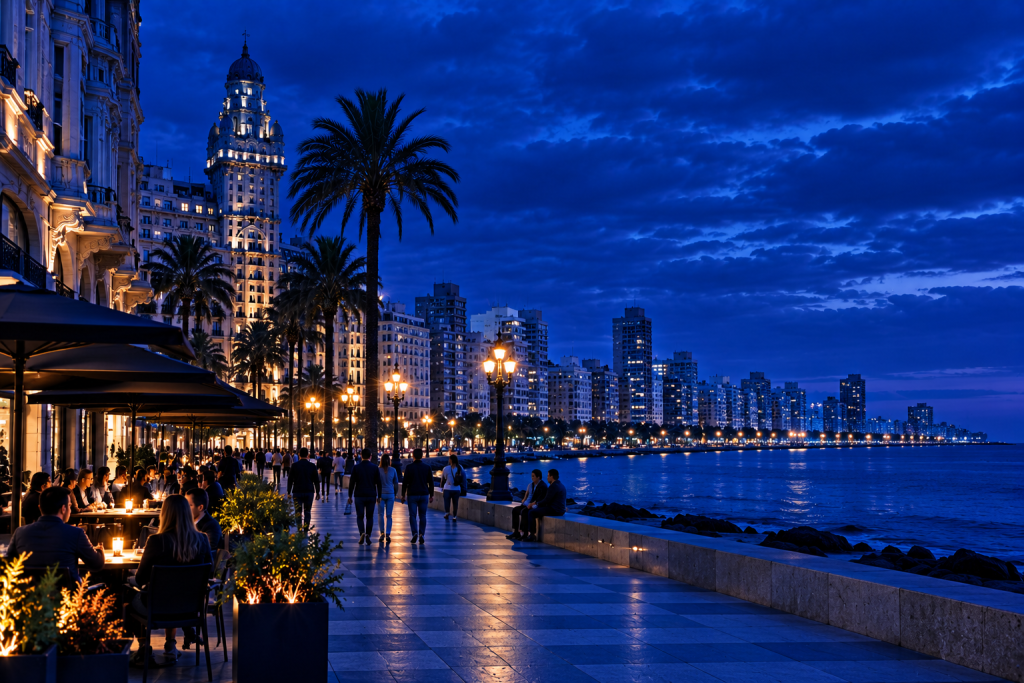
The retail industry in Uruguay operates within one of South America’s smaller national markets, but the country’s commercial significance extends beyond population size. Montevideo concentrates much of Uruguay’s corporate activity, consumer spending and modern retail, while cities including Punta del Este, Salto, Paysandú and Colonia del Sacramento create distinctive regional markets influenced by tourism, agriculture and cross-border commerce. Uruguay’s position between Brazil and Argentina gives businesses access to a much larger regional economy than the domestic market alone might suggest.

Uruguay also has an important production economy behind its consumer market. Beef, dairy products, rice, wine, wool, leather and other agricultural products connect farms and processors with supermarkets, restaurants and international customers, while packaging, food manufacturing, furniture and specialist businesses contribute additional capabilities. The Port of Montevideo and the country’s logistics infrastructure provide connections between domestic production, imports and wider regional trade.
For the Global Retail Directory, Uruguay demonstrates why retail should be understood as an ecosystem rather than simply a collection of stores. Retail Installation Companies, Manufacturers & Suppliers, Transport & Logistics businesses and Iconic Brands can all participate in different stages of the commercial journey. Uruguay’s opportunity lies in combining a sophisticated domestic market with high-quality production, regional connectivity and international visibility.
Montevideo Is the Centre of Uruguay’s Retail Economy
Montevideo dominates Uruguay’s commercial landscape because the capital and surrounding metropolitan area contain a substantial proportion of the country’s population, businesses and consumer spending. Shopping centres, supermarkets, fashion retailers, technology stores, restaurants and independent businesses operate throughout the city, creating a market where organised retail exists alongside neighbourhood commerce.
Different parts of Montevideo support different commercial formats. Central and established districts can accommodate traditional high-street and neighbourhood retail, while modern shopping destinations provide environments for domestic and international brands. Supermarkets and convenience businesses serve everyday demand across the metropolitan area, while hospitality and food add another substantial component to the consumer economy.
For businesses supporting physical stores, this concentration creates opportunities around furniture, lighting, displays, signage, technology and installation. A retailer developing several locations needs more than products to place on shelves; it requires a network capable of building, maintaining and periodically refurbishing the environments in which those products are sold.
Uruguay’s Smaller Scale Creates a Different Retail Market
Uruguay should not be evaluated by comparing its population directly with Brazil, Mexico or Colombia. Smaller markets can offer different commercial advantages, particularly when consumer spending is concentrated within a limited number of metropolitan and regional centres and businesses can build national recognition without operating hundreds of locations.
For retailers, this can influence expansion strategy. A company may achieve substantial domestic coverage through a relatively focused store network supported by e-commerce rather than requiring the enormous physical estates necessary in geographically larger consumer markets. Individual locations can consequently play important roles as showrooms, service centres and brand environments as well as conventional transactional stores.
The same scale can encourage businesses to think internationally earlier. Once a strong domestic position has been established, meaningful long-term growth may require customers in neighbouring countries or farther overseas. This creates a natural connection between Uruguay’s retail market and the international discovery, logistics and partnership networks represented within Global Retail Directory.
Shopping Centres Provide Organised Retail Destinations
Modern shopping centres have become important parts of Uruguay’s organised retail environment, particularly around Montevideo. Fashion, beauty, food, technology, entertainment and services can operate together within managed destinations providing consumers with convenient access to several categories during one visit.
For retailers, these environments provide established infrastructure but also create detailed project requirements. Deliveries need to use designated access routes, contractors can be restricted to specific working periods and fixtures must move through service areas before reaching individual stores. These practical conditions should influence manufacturing and installation planning from the beginning.
Shopping centres also create recurring commercial work after their original construction. Tenants change, stores are refurbished, technology is upgraded and brands update their identities. Retail Installation Companies and suppliers capable of working within operating commercial properties can therefore develop continuing relationships rather than relying solely on new store openings.
Punta del Este Creates a Retail Market Shaped by Tourism
Punta del Este has a commercial identity fundamentally different from Montevideo because tourism and seasonal demand play much larger roles. Fashion, restaurants, hospitality, beauty, jewellery and lifestyle retail can benefit from visitors arriving from elsewhere in Uruguay as well as neighbouring and international markets.
Seasonality affects how retailers operate. Inventory and staffing may need to increase significantly during periods of strong visitor demand, while permanent stores need business models capable of operating through quieter periods. Temporary retail and pop-ups can provide alternatives for brands wanting visibility during peak seasons without committing to identical operating costs throughout the year.
Tourism also gives Uruguayan brands an international audience without requiring them immediately to operate overseas. Visitors can discover food, wine, fashion or lifestyle products locally and continue purchasing digitally after returning home. Physical retail therefore becomes a customer-discovery channel capable of supporting future international commerce.
Uruguay’s Food Production Is Central to Its Retail Story
Agriculture and food production are fundamental to Uruguay’s economy and create strong connections with domestic and international retail. Beef, dairy products, grains, rice and other agricultural categories move through processing, packaging, distribution and retail before eventually reaching consumers.
The commercial opportunity increases as production moves closer to the final customer. Raw agricultural products have value, but processing, packaging and branding create additional stages through which Uruguayan businesses can capture more of the final retail price. A food manufacturer can supply supermarkets under another company’s brand or gradually develop consumer recognition of its own.
This creates opportunities beyond agriculture itself. Packaging companies, cold-storage businesses, food-processing equipment suppliers and logistics providers all participate before the finished product reaches the shelf. Uruguay’s food economy therefore demonstrates particularly clearly why Manufacturers & Suppliers form an essential part of the wider retail ecosystem.
Beef Connects Uruguayan Production with International Consumers
Uruguay’s cattle industry gives the country one of its most internationally recognisable food-production identities. Beef can move through processing and distribution networks before reaching supermarkets, restaurants and specialist food businesses across domestic and international markets.
Traceability, consistency and temperature control are particularly important because the product needs to maintain quality throughout processing, storage and transportation. Refrigerated supply chains therefore become part of the retail proposition even though consumers rarely see the infrastructure behind them.
Premium positioning can create additional opportunities. Origin, production methods and quality can differentiate products in international markets where customers increasingly want to understand where food comes from. Retail becomes the point at which agricultural capability and consumer perception finally meet.
Dairy Products Can Build Consumer Brands
Uruguay’s dairy sector provides another route from agricultural production toward finished retail products. Milk can become cheese, butter, yoghurt and other products capable of serving domestic consumers and export markets rather than leaving the production chain at an earlier commodity stage.
Finished products require manufacturing discipline and consistent packaging. Refrigeration needs to continue through storage and distribution, while retailers expect predictable product quality and delivery schedules. Exporting adds regulatory, documentation and destination-market requirements to the existing production process.
Successful dairy brands can therefore create commercial ecosystems extending well beyond farms. Food processors, packaging manufacturers, cold-chain logistics providers, distributors and retailers all participate, allowing a domestic agricultural strength to generate value across several B2B industries.
Uruguay’s Wine Industry Combines Production, Tourism and Retail
Uruguay’s wine industry provides a distinctive opportunity to connect agriculture with premium consumer branding. Vineyards and wineries can produce products carrying a strong sense of geographic origin, while tourism allows customers to experience the environment in which those products are made.
A winery can therefore operate simultaneously as a producer, hospitality business and retailer. Tasting rooms and direct sales create relationships with visitors, while supermarkets, restaurants, specialist merchants and e-commerce provide additional routes to market. International distribution allows those relationships to extend far beyond Uruguay.
Packaging and presentation become particularly important as products move toward premium retail. Bottles, labels, cartons and brand communication all contribute to customer perception, while freight needs to protect relatively heavy and fragile products throughout international transportation. Wine demonstrates how a relatively specialised agricultural sector can create opportunities across manufacturing, tourism, packaging and logistics.
Wool Can Move Further Along the Retail Value Chain
Uruguay’s agricultural economy also includes wool production, creating connections with textiles, fashion and home products. Raw fibre can be exported relatively early in the supply chain, but processing, spinning, textile manufacturing and finished products create opportunities to retain additional value.
Premium natural materials can benefit from strong provenance when customers understand origin and production quality. Wool can become clothing, blankets, interiors and specialist textile products rather than remaining only an agricultural commodity. Design and branding then create another layer of potential value.
For Uruguayan Manufacturers & Suppliers, the opportunity lies in identifying where specialist processing or finished-product capability can compete internationally. Not every stage needs to remain within one business or even one country, but stronger connections between producers, textile companies and brands can allow Uruguay to participate in more of the value created before the product reaches consumers.
Leather Connects Agriculture with Manufacturing and Fashion
The cattle industry creates materials relevant beyond food production. Leather can move through processing and manufacturing before becoming footwear, bags, accessories, furniture or other consumer products sold through retail.
Manufacturing capability determines how much value can be created domestically. Exporting material at an early stage provides one commercial model, while producing finished goods introduces design, craftsmanship, packaging and branding into the value chain.
Smaller Uruguayan businesses can also use e-commerce to test international demand for specialist leather products without immediately establishing overseas stores. Physical retail can then be introduced selectively once the brand understands where customers are concentrated, allowing manufacturing capability to become the foundation for international consumer relationships.
Uruguay Can Develop Premium Brands Around Product Origin
Smaller countries can struggle to compete with the production volume of much larger economies, but scale is not the only route toward international retail success. Quality, provenance, design and specialist production can create premium propositions where the country of origin strengthens rather than limits the brand.
Uruguay’s food, wine, wool and leather industries all provide opportunities for this approach. Products can communicate authenticity when the connection between origin and production is genuine, particularly within consumer categories where customers value material quality and traceability.
Building the brand still requires professional commercial infrastructure. Photography, packaging, digital marketing, distribution and customer service all influence whether an excellent product becomes a successful retail business. Production creates the foundation, but retail determines how customers eventually understand its value.
The Port of Montevideo Connects Uruguay with International Trade
Montevideo’s port gives Uruguay an important physical connection with international commerce. Imports of consumer products, machinery, equipment and materials can enter domestic supply chains, while agricultural and manufactured goods move outward toward overseas customers.
Ports matter to retail because manufacturing and consumption frequently occur in different countries. A fixture, consumer product or packaging component can travel thousands of kilometres before entering a warehouse and eventually reaching the store. Customers see only the final product, but maritime infrastructure forms an essential part of its journey.
For Uruguay’s Transport & Logistics businesses, this creates opportunities extending beyond domestic distribution. Freight forwarding, warehousing, customs processes and regional transportation can connect local manufacturers with international customers and overseas suppliers with Uruguayan retailers.
Uruguay’s Position Between Argentina and Brazil Creates Regional Opportunity
Uruguay sits between two of South America’s largest economies, giving the country a commercial position that cannot be understood solely through domestic population. Argentina and Brazil provide neighbouring consumer and industrial markets many times larger than Uruguay itself.
For manufacturers and brands, regional expansion can therefore provide a logical stage between domestic operations and more distant international markets. A Uruguayan company that learns to manage customers, distributors and regulations across neighbouring countries develops valuable international experience while remaining geographically close to its home operation.
Regional proximity does not mean the markets are identical. Language, regulation, consumer behaviour and commercial structures differ, particularly between Spanish-speaking Uruguay and Portuguese-speaking Brazil. Successful expansion still requires appropriate local partners rather than assuming one South American strategy will work everywhere.
Warehousing Can Support Domestic and Regional Distribution
Warehouses have evolved from simple storage facilities into operational parts of modern retail networks. Inventory can be received, inspected, picked, packed and allocated to stores or e-commerce customers, while returns and replacement components move through the same facilities.
Uruguay’s relatively concentrated consumer geography can make centralised distribution practical for many categories. As businesses expand regionally, however, inventory strategy becomes more complex because stock needs to support customers across borders without creating unnecessary duplication.
For international companies entering Uruguay, local warehousing can also provide flexibility. Products can arrive in larger quantities and be released according to actual demand, while commercial equipment can be consolidated before store installation. Warehousing therefore connects Transport & Logistics with both consumer distribution and physical retail projects.
E-Commerce Gives Uruguayan Businesses Greater Geographic Reach
Digital commerce can be particularly valuable within a smaller domestic market because businesses can reach customers nationally without building physical locations in every city. Fashion, food, beauty and specialist consumer businesses can use digital channels to develop demand before deciding where permanent stores provide additional value.
International e-commerce can extend this reach further. A Uruguayan brand with a distinctive product can potentially serve customers abroad before establishing conventional wholesale or retail networks, although international delivery, customs and returns introduce additional operational requirements.
The physical infrastructure behind e-commerce remains essential. Inventory needs warehousing, products need packaging and orders need transportation. Digital retail therefore increases opportunities for logistics and fulfilment companies rather than eliminating the need for physical supply chains.
Physical Stores Can Support Omnichannel Retail
As digital commerce develops, physical stores can perform several functions simultaneously. They remain places where customers purchase products, but they can also become showrooms, service centres, collection points and returns locations supporting transactions that began online.
This can be particularly useful for retailers operating within a relatively compact national market. A smaller number of strategically positioned stores can provide strong physical brand visibility while digital commerce extends geographic coverage beyond each immediate catchment area.
Store design needs to respond to this changing role. Space may be required for collections, customer service or digital ordering alongside conventional merchandising. Retail Installation Companies and manufacturers therefore need to understand that the modern store is increasingly part of a wider retail system rather than an isolated sales environment.
Retail Installation Requires Local Knowledge
International brands entering Uruguay may use store concepts developed elsewhere, but the final project still needs to fit a specific Uruguayan property. Dimensions, services, loading access and landlord requirements influence how fixtures and equipment are actually delivered.
Imported furniture needs transportation from port or warehouse to site, while installation teams need accurate drawings and complete equipment before beginning work. Local manufacturing can sometimes provide alternatives for graphics, furniture or replacement components where suitable capability exists.
This creates opportunities for Uruguayan Retail Installation Companies capable of connecting international standards with local execution. The strongest project partners understand that their responsibility is not simply assembling equipment but helping the retailer achieve a consistent finished environment within the practical conditions of each location.
International Brands Need Reliable Uruguayan Partners
Uruguay can provide an attractive market for international businesses seeking consumers within a politically and commercially established South American economy. Yet entering a smaller market requires careful decisions about property, inventory and the amount of permanent infrastructure the business genuinely needs.
Local partners can reduce this complexity. Distributors, logistics businesses, manufacturers and project specialists can provide capabilities that would be inefficient for an overseas retailer to establish internally during the early stages of market entry.
These relationships can expand as the retailer grows. A company initially supporting one flagship or distribution programme may eventually become part of a wider national or regional network. International retail therefore creates opportunities not only for consumer brands but for the Uruguayan B2B businesses operating behind them.
Sustainability Can Support Uruguay’s Premium Position
Uruguay’s agricultural and natural-resource economy makes questions around environmental performance, traceability and material origin increasingly relevant. International customers and retailers can require evidence supporting claims about how food, textiles and other products have been produced.
For manufacturers, sustainability can also connect directly with efficiency. Reducing material waste, improving energy use and optimising packaging can lower operating costs while strengthening the company’s commercial proposition to customers with environmental requirements.
Retail equipment offers similar opportunities. Durable fixtures, modular components and repairable furniture can remain useful through several store updates rather than being discarded during every refurbishment. Sustainability becomes commercially strongest when it extends product life or improves operations rather than existing only as marketing language.
Uruguayan Manufacturers Need Greater International Visibility
A relatively small domestic market can make international discovery particularly valuable for specialist manufacturers. A company producing food, furniture, textiles, leather goods, packaging or commercial equipment may possess capabilities relevant to overseas customers without being easily discoverable outside Uruguay.
Websites and traditional business networks can provide some visibility, but international buyers increasingly search across several countries before selecting suppliers. Clear descriptions of capability, production scale, certifications, export experience and geographic coverage can therefore influence whether a company enters the buyer’s consideration at all.
Visibility does not replace manufacturing quality, competitive pricing or reliable delivery. It creates the opportunity for those capabilities to be evaluated. For Uruguayan businesses seeking international customers, improving discoverability can therefore become an important part of export development.
Uruguayan Brands Can Expand Beyond Their Home Market
Uruguay’s smaller domestic scale can encourage successful consumer businesses to consider international markets relatively early. Food, wine, fashion, leather, beauty and lifestyle companies can build recognition locally before using digital commerce, distribution or physical retail to reach customers elsewhere.
Neighbouring markets provide one potential route, while tourism can introduce products directly to international consumers visiting Uruguay. E-commerce provides another way to test overseas demand before committing to permanent stores or complex distribution arrangements.
Once international expansion begins, the supporting network around the brand grows. Manufacturers, packaging suppliers, freight businesses, distributors and local project partners can all become involved. Iconic Brands therefore represent more than consumer recognition; their growth creates commercial opportunities throughout the wider retail ecosystem.
Connecting Uruguay Through Global Retail Directory
Uruguay contains businesses relevant to many different parts of international retail. Food processors, wineries, textile companies, leather businesses, furniture manufacturers, packaging suppliers, logistics companies, commercial contractors and consumer brands can all contribute to domestic and international supply chains.
The Global Retail Directory is designed to make these capabilities easier to discover. Uruguayan Manufacturers & Suppliers can present their production expertise, Transport & Logistics companies can connect with businesses moving products regionally and internationally, Retail Installation Companies can demonstrate local project capability and Iconic Brands can become visible within a wider international retail network.
The opportunity works in both directions. Overseas retailers can discover Uruguayan partners when entering the market, while local businesses can become visible to buyers, brands and project organisations elsewhere. For a smaller economy positioned between much larger neighbours, international business discovery can help ensure commercial opportunity is determined by capability rather than domestic market size.
Uruguay’s Retail Future Connects Quality with Regional Opportunity
The future of the retail industry in Uruguay will continue to be shaped by digital commerce, changing consumer expectations, tourism and the evolution of physical retail. Montevideo will remain the dominant commercial centre, while Punta del Este and regional cities contribute consumer markets influenced by tourism, agriculture and local economic activity.
The country’s wider opportunity lies in connecting production more closely with finished consumer value. Beef, dairy, wine, wool and leather provide strong foundations from which manufacturers and brands can develop premium products, while the Port of Montevideo and regional logistics networks connect those businesses with markets beyond Uruguay.