
Retail Industry in Vietnam
The retail industry in Vietnam is developing at the intersection of two powerful economic stories. Vietnam is a rapidly evolving consumer market with expanding cities, a relatively young population, growing digital commerce and increasingly sophisticated physical retail. At the same time, the country has become an important manufacturing base for products sold by retailers throughout the world, giving Vietnam a position within global retail that extends far beyond the stores operating inside its own borders.

Ho Chi Minh City provides Vietnam with its largest concentration of commercial activity and modern retail, while Hanoi combines the economic importance of the national capital with a different architectural, cultural and consumer environment. Traditional street commerce remains deeply embedded within everyday life even as shopping centres, convenience stores, international brands and e-commerce expand. Beyond the consumer market, manufacturing regions produce footwear, apparel, furniture, electronics, packaging and other goods that ultimately reach stores and consumers throughout Asia, Europe, North America and other international markets.
For the Global Retail Directory, Vietnam demonstrates why the modern retail industry needs to be understood as an entire ecosystem rather than simply a collection of shops. Manufacturers, suppliers, retail installation businesses, logistics providers, technology companies and growing Vietnamese brands can all contribute to retail without performing the same function. Making those capabilities easier for international buyers and project organisations to discover is particularly relevant in a country where manufacturing expertise has become increasingly important to global sourcing.
Ho Chi Minh City and Hanoi Define a Changing Consumer Market
Ho Chi Minh City is Vietnam’s largest commercial centre and one of Southeast Asia’s most dynamic urban economies. Modern shopping centres, international fashion and beauty brands, supermarkets, restaurants, technology retailers and entertainment operate alongside traditional markets, independent businesses and dense street-level commerce. These formats are not simply replacing one another as the economy develops. They serve different purchasing occasions and customer groups, allowing premium international retail and highly local commerce to exist within the same metropolitan economy.
Hanoi provides a different commercial environment. Historic streets and long-established independent businesses operate alongside contemporary developments, shopping centres and international retailers, while the city’s architecture and tourism economy influence how physical commerce interacts with the urban environment. A retailer occupying a modern shopping-centre unit can use a relatively conventional format, while a business inside an older urban property may need to respond to restricted access, narrow buildings and existing architectural conditions. The same brand can therefore require different physical solutions according to location.
For businesses entering Vietnam, these cities provide access to substantial consumer markets but also demonstrate why local execution matters. International brands need designers, manufacturers, technology suppliers and Retail Installation Companies capable of translating global concepts into Vietnamese properties, while domestic businesses can use the same capabilities as their store networks become more sophisticated. GRD provides a route for those commercial specialists to become visible to retailers and project organisations searching for partners within Vietnam.
Traditional Commerce, Young Consumers and Modern Shopping Are Developing Together
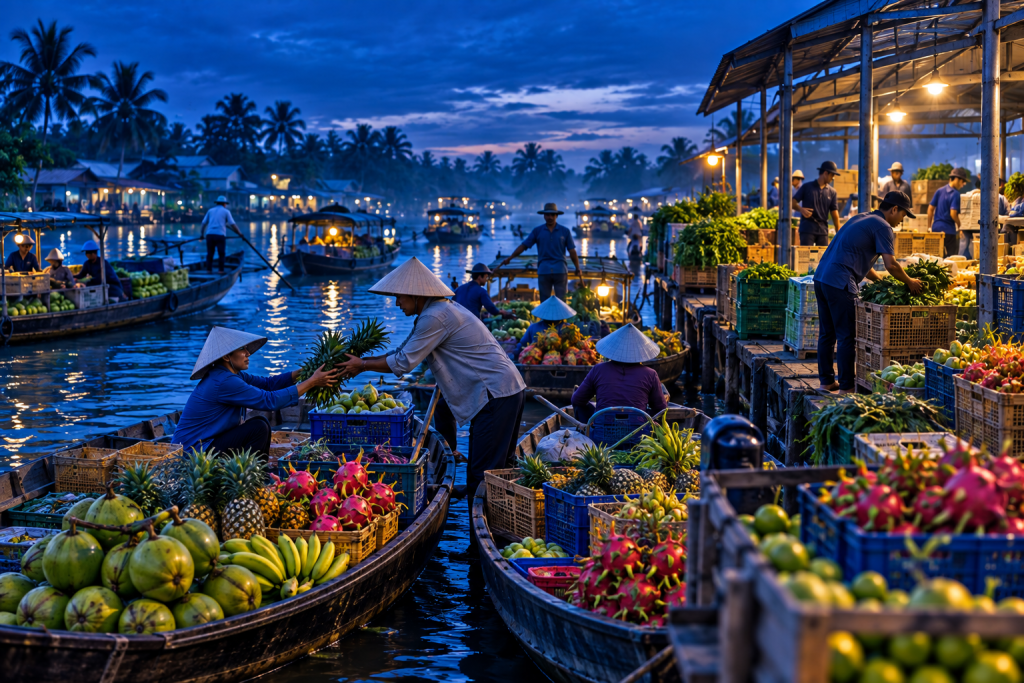
Vietnam’s economic development has not removed the importance of traditional street-level commerce. Small shops, food businesses, markets and family-run operations remain deeply embedded within everyday life, providing convenience and strong local relationships. Their relatively small scale can become an advantage because independent retailers can change product ranges quickly and respond closely to neighbourhood demand without the organisational complexity of a national chain. Modern retail is therefore developing alongside existing commercial structures rather than simply replacing them.
At the same time, Vietnam’s relatively young consumer population is accelerating the connection between physical and digital shopping. Customers can discover a product through social media, research it online and purchase it physically, while another customer may encounter something inside a store before ordering later through a mobile device. Shopping centres and convenience stores reflect the same changing lifestyles from different directions: one provides destination shopping, entertainment and dining, while the other provides speed and proximity within dense urban environments.
These changes create opportunities throughout the wider retail ecosystem. Shopping centres require furniture, lighting, technology, electrical infrastructure and ongoing maintenance, while convenience networks depend on frequent replenishment, refrigeration and organised distribution. Independent retailers increasingly use digital payments and delivery platforms, meaning technology and logistics companies become important even when the store itself remains small. This is why Global Retail Directory treats retail broadly: the businesses supporting commerce can be just as important as the businesses whose names appear above the shop entrance.
Vietnam Has Become an Important Global Manufacturing Base
Vietnam’s manufacturing importance has increased as international companies diversify their supply chains and develop production networks across several countries rather than relying excessively on one location. The country has established significant capabilities across footwear, apparel, furniture, electronics and other consumer categories, creating an industrial base directly connected with retailers and brands around the world. For international businesses, Vietnam can provide established supplier networks and access to major maritime trade routes as well as manufacturing capacity.
The larger opportunity for Vietnamese companies is to move beyond being viewed simply as production capacity. Engineering, product development, quality control, communication and reliability can become competitive advantages in their own right. A manufacturer that understands its customer’s commercial requirements can become a long-term development partner rather than simply a factory producing to instructions, while specialist suppliers can build expertise difficult for competitors to reproduce quickly.
This development is particularly relevant to the Manufacturers & Suppliers represented within Global Retail Directory. International buyers may already know that Vietnam is an important sourcing market without knowing which individual company can manufacture a particular product, material or commercial component. A factory can possess sophisticated machinery, experienced staff and substantial production capability while remaining difficult for new international customers to discover. Better B2B visibility can help Vietnamese manufacturers compete through capability rather than relying entirely on intermediaries or existing relationships.
Footwear and Apparel Connect Vietnamese Factories with Global Fashion
Footwear provides one of the clearest examples of Vietnam’s connection with international retail. Production requires specialised processes involving material preparation, cutting, assembly, sole attachment, finishing, inspection and packaging, while consistency is essential because international brands expect products manufactured across different production runs to meet the same standards. The finished shoes may eventually appear inside stores thousands of kilometres from the factory, making Vietnamese manufacturing part of a global consumer experience even when customers never see the manufacturer’s name.
Apparel creates similar demands but operates within fashion cycles that can change rapidly. A retailer may require substantial volumes of one garment for a relatively short selling period, forcing manufacturers to combine production scale with flexibility and accurate scheduling. Fabric sourcing, cutting, sewing, finishing and quality control all need to remain coordinated, while international customers increasingly consider environmental and labour standards alongside price and production capacity when selecting long-term suppliers.
The expertise created through contract manufacturing can eventually support Vietnamese businesses moving further along the value chain. Manufacturers already understand materials, production and quality; adding design, packaging, marketing and direct customer relationships can create opportunities to develop products or consumer brands of their own. Within GRD, this demonstrates how a company can begin within Manufacturers & Suppliers and eventually become relevant to Iconic Brands as its commercial identity develops and it begins selling products under its own name.
Furniture and Electronics Create Opportunities Beyond Consumer Products
Vietnam’s furniture industry provides another major connection with international retail. The country manufactures substantial quantities of indoor and outdoor furniture, creating capabilities in woodworking, CNC machining, finishing and repeatable production. Many of these skills can also be applied to commercial fixtures such as counters, shelving and display tables. A manufacturer that originally produces furniture sold by retailers can therefore potentially diversify into manufacturing the physical environments in which retailers operate.
Retail fixtures introduce additional requirements because a brand opening dozens or hundreds of locations needs consistency across every site. Furniture can combine timber, metal, glass, lighting and technology, while components need packaging capable of surviving international transportation and identification systems ensuring the correct equipment reaches the correct project. Manufacturers capable of managing these requirements can move beyond conventional furniture production into higher-value international rollout programmes.
Vietnam’s growing electronics sector adds another dimension because modern stores increasingly combine physical fabrication with technology. Screens, connected devices, lighting, security and electronic systems can be integrated directly into retail displays and furniture, requiring collaboration between traditional manufacturing and technology businesses. Vietnamese suppliers capable of combining these disciplines can become particularly relevant to international retailers, and GRD can help make those specialist capabilities easier for buyers and designers to identify.
Coffee and Food Can Develop into International Vietnamese Brands
Vietnam is one of the world’s major coffee-producing countries, but from a retail perspective the most interesting opportunity is how much value can remain within the country as coffee moves toward the final customer. Coffee can leave Vietnam as an agricultural commodity, or Vietnamese businesses can roast, package, brand and sell it as a finished consumer product. These commercial models capture value at very different stages and create opportunities for packaging businesses, designers, distributors, cafés and retailers around the original agricultural product.
Vietnam’s distinctive coffee culture provides a strong foundation for consumer branding because preparation styles and café experiences can become part of how Vietnamese coffee is presented internationally. A successful café concept can itself develop into an expanding retail brand, requiring repeatable furniture, equipment, installation and maintenance as new locations open. What begins as agricultural production can therefore create an entire B2B supply chain as the product moves closer to the consumer and the brand develops internationally.
The same opportunity exists across Vietnam’s wider food economy. Seafood, rice products, sauces, snacks, fruit products and other categories can move from agricultural or food-processing businesses toward international retail, but packaging needs to protect products, comply with destination regulations and communicate effectively to customers who may know relatively little about their origin. Vietnamese companies capable of combining production quality with strong consumer presentation have an opportunity to move from commodity supply toward recognised Iconic Brands with greater control over the value generated by their products.
Ports and Logistics Turn Manufacturing into International Retail Supply
Vietnam’s factories can participate in global retail only when products reach international customers reliably. Manufacturing regions in both southern and northern Vietnam connect with ports and transport infrastructure that move furniture, footwear, clothing, electronics and consumer products toward distribution centres and retailers around the world. A product may travel through a factory, warehouse, container terminal, vessel, destination warehouse and regional distribution network before it finally appears inside a store.
This journey requires coordination from the beginning. Production schedules need to align with shipping bookings, documentation must be accurate and packaging needs to protect products during repeated handling and potentially weeks at sea. A product that leaves the factory in perfect condition but arrives damaged has still failed commercially, which means manufacturing and logistics need to be treated as parts of one continuous supply chain rather than completely separate activities.
This is where GRD’s Transport & Logistics category has genuine relevance to Vietnam. Manufacturers need freight, warehousing and distribution partners capable of turning production capacity into dependable international delivery, while overseas businesses sourcing from Vietnam need visibility into companies that understand the country’s export infrastructure. Connecting manufacturers with capable logistics businesses helps create stronger supply chains and makes Vietnamese production more useful to international retail customers.
E-Commerce and Social Commerce Are Changing How Vietnamese Brands Grow
Vietnamese consumers increasingly purchase through mobile devices, marketplaces and social platforms, allowing businesses to reach customers without immediately developing extensive physical store networks. For emerging fashion, beauty, food and lifestyle brands, this reduces some barriers to market entry because a company can develop a product, build an audience and begin selling nationally before committing substantial capital to conventional retail property. Digital channels can therefore provide a testing ground for brands before physical expansion.
Successful digital retail still creates substantial physical requirements behind the screen. Inventory needs to be organised, orders need to be picked and packed efficiently, delivery needs to be predictable and returns require processing. As volumes increase, businesses may need dedicated fulfilment facilities and more sophisticated inventory systems. E-commerce does not remove warehouses and logistics from retail; it often makes them more important because customers expect the convenience promised by the digital interface to continue throughout the physical delivery.
Social commerce can accelerate growth even further because products can gain visibility rapidly through content and direct customer communication. That success can expose weak operations just as quickly as it creates sales if manufacturing cannot keep pace or fulfilment becomes unreliable. Vietnamese brands capable of combining strong digital marketing with disciplined production, inventory and logistics are therefore better positioned to turn temporary online attention into sustainable retail businesses.
Tourism and Craftsmanship Give Vietnam Another Route to International Consumers
Tourism gives Vietnamese businesses access to international customers before those businesses establish operations overseas. Visitors encounter food, coffee, ceramics, textiles, fashion and other products while travelling through Vietnamese cities and coastal destinations, allowing physical retail inside the country to become an international discovery channel. A tourist may encounter a Vietnamese brand locally and continue purchasing from it digitally after returning home if the company has suitable international e-commerce and fulfilment.
This is particularly powerful for products with a genuine connection to Vietnamese culture, craftsmanship or materials. Ceramics, textiles, furniture and decorative products can combine traditional production methods with contemporary design, creating products that are difficult for generic mass manufacturers to reproduce authentically. The challenge is building professional commercial systems around those products so that packaging, inventory, quality and distribution can support customers beyond the immediate local market.
Global Retail Directory can help these specialist businesses become visible as professional suppliers rather than remaining discoverable only as local craft producers. International designers, retailers and hospitality organisations may be looking for exactly these capabilities but lack an efficient way to identify suitable Vietnamese companies. Greater B2B visibility can allow traditional skills to participate in modern international retail without requiring the underlying craftsmanship to become standardised mass production.
International Brands Need Local Partners and Vietnamese Suppliers Need Global Visibility
Vietnam’s consumer growth makes the country attractive to international retailers, but successful market entry requires local knowledge and execution. Consumer behaviour, property conditions, pricing and product preferences need consideration, while physical store projects require equipment delivery, electrical work, installation and ongoing maintenance. Local manufacturing can sometimes provide a better solution than importing every component, particularly where Vietnamese suppliers can meet international standards while providing shorter lead times and easier replacement.
The opportunity works in the opposite direction as well. Vietnamese manufacturers already produce enormous quantities for global consumer industries, and some can extend those capabilities into specialist retail supply. Furniture factories can manufacture commercial fixtures, metal businesses can produce display structures, packaging companies can support international product programmes and technology manufacturers can contribute to increasingly connected stores. Technical capability may already exist even when international buyers are unaware of it.
The Global Retail Directory is designed to reduce this discovery gap. International organisations can identify Vietnamese Manufacturers & Suppliers, Retail Installation Companies and Transport & Logisticsbusinesses, while Vietnamese companies can present their capabilities to buyers beyond existing customer networks. Growing domestic businesses can also gain visibility as Iconic Brands, connecting Vietnam’s manufacturing strength with the consumer-facing companies increasingly capable of expanding internationally.
Supply-Chain Diversification and Sustainability Will Shape the Next Stage
International interest in manufacturing diversification should not be viewed simply as a temporary reaction to disruption. Retailers and manufacturers have learned that concentrating too much production within one region can create risk, making balanced sourcing networks increasingly attractive. Vietnam is well positioned to participate because it already possesses established manufacturing capabilities across several important consumer categories, but long-term success requires more than being available when another production market encounters difficulty.
Vietnamese suppliers need to become preferred partners in their own right through quality, engineering, communication, reliability and continuous improvement. Relationships built purely around being an alternative source can disappear when circumstances change, while relationships built around genuine capability can survive for many years. Manufacturers that understand the commercial requirements of retailers rather than simply their technical specifications can become particularly valuable because they contribute to solving problems rather than only executing orders.
Environmental performance will increasingly become part of the same assessment. Energy use, water, waste, chemicals, packaging and material sourcing are already relevant to international procurement, particularly in textiles, furniture and consumer-product manufacturing. Improvements can also make financial sense through lower energy consumption, better material utilisation and reduced waste. Sustainability becomes strongest when it improves the industrial process rather than existing solely as marketing language.
Connecting Vietnamese Businesses Through Global Retail Directory
Vietnam contains a vast number of companies relevant to international retail, including furniture manufacturers, footwear factories, apparel producers, electronics businesses, packaging suppliers, food manufacturers, logistics providers, commercial contractors and growing consumer brands. These companies contribute to global supply chains every day, yet international discovery remains uneven. A retailer in Europe may know Vietnam is an important sourcing market without knowing which individual company fits a particular requirement.
For Vietnamese businesses, dependence on existing customers or intermediaries can limit access to new international opportunities even when technical capability is strong. A professional international profile allows a company to explain what it manufactures, which markets it serves and what type of projects it can support. Visibility does not replace manufacturing quality, reliable service or commercial credibility; it gives those qualities a better chance of being discovered by companies actively searching for them.
Global Retail Directory brings these different parts of the industry into one international platform. Manufacturers and suppliers can become visible to buyers, installation businesses can demonstrate geographic capability, logistics companies can connect with organisations moving products through Vietnam, and Vietnamese brands can present themselves alongside consumer businesses from other markets. The purpose is to connect capability across borders rather than allowing geography or existing networks to determine which companies can discover one another.
Vietnam’s Retail Future Connects Production with the Consumer
The future of the retail industry in Vietnam will be shaped by the continued development of its consumer market and by its growing importance within international manufacturing. Ho Chi Minh City and Hanoi will continue evolving as retail centres, while digital commerce, convenience formats and modern shopping destinations change how Vietnamese customers interact with brands. Traditional commerce will remain relevant at the same time, increasingly supported by digital payments, social platforms and delivery services rather than simply being replaced by larger organised retailers.
Behind the consumer market, manufacturing remains one of Vietnam’s strongest international advantages. Footwear, apparel, furniture, electronics, coffee and food products connect Vietnamese businesses with customers around the world, while ports and logistics infrastructure turn production capability into international supply. The next stage of development can involve more companies moving beyond contract manufacturing toward specialist B2B expertise, product development and Vietnamese consumer brands with international recognition.
For Global Retail Directory, Vietnam represents exactly the type of market the platform is designed to connect. International businesses need access to Vietnamese manufacturers, suppliers, logistics providers and retail specialists, while Vietnamese companies need greater visibility to buyers and project organisations outside their existing networks. Vietnam is therefore not simply a fast-growing retail market or an international manufacturing base; it is increasingly both at the same time, creating opportunities throughout the global retail ecosystem.