
The retail industry in Portugal combines a modern European consumer market with internationally recognised manufacturing, tourism, food, wine, fashion and a growing digital economy. Lisbon provides the country with its largest metropolitan retail environment and international business centre, while Porto contributes a distinctive northern commercial economy connected closely with manufacturing, design and export industries. Braga, Aveiro, Coimbra, Faro and other regional markets add further diversity to a country whose commercial identity extends from major cities to Atlantic tourism destinations.

Portugal is particularly interesting from a B2B perspective because many industries operating behind retail have substantial international reach. Portuguese factories manufacture footwear, textiles, clothing, furniture, ceramics, cork products, packaging and specialist components for customers across Europe and farther overseas. Some of these businesses supply consumer brands directly, while others produce materials or commercial products that customers may encounter without ever knowing they originated in Portugal.
For the Global Retail Directory, Portugal therefore represents much more than a destination where products are sold. Retail Installation Companies, Manufacturers & Suppliers, Transport & Logistics businesses and Iconic Brands all form part of an ecosystem connecting Portuguese production with stores, hospitality environments and consumers domestically and internationally. Portugal’s Atlantic position adds another dimension, linking a European manufacturing base with maritime trade and commercial relationships extending toward several continents.
Lisbon Is Portugal’s Largest Retail and Commercial Market
Lisbon provides Portugal with its greatest concentration of corporate activity, international visitors and modern retail. Shopping centres, premium stores, supermarkets, fashion businesses, technology retailers, restaurants and independent companies operate throughout the metropolitan region, creating commercial environments serving both residents and a substantial visitor economy.
Central Lisbon presents very different property conditions from newer suburban developments. Historic streets and older buildings can create restricted access and unusual internal layouts, while modern shopping destinations provide dedicated loading facilities and more standardised commercial units. Retailers need to understand these differences when developing stores rather than assuming the same installation method will work everywhere.
For businesses supporting physical retail, Lisbon creates continuing demand beyond new store openings. Existing locations need refurbishment, technology changes and international brands periodically update their identities. Manufacturers, designers and installation companies can therefore participate throughout the lifecycle of a store rather than only during its original construction.
Porto Connects Retail with Northern Portugal’s Manufacturing Economy
Porto provides Portugal with a second major commercial centre but operates within an economic environment different from Lisbon. The wider northern region has strong connections with textiles, clothing, footwear, furniture and other manufacturing industries, placing consumer retail relatively close to businesses producing goods for domestic and international customers.
The city itself supports fashion, food, tourism, hospitality and specialist independent retail alongside modern shopping destinations. Its architectural character also creates commercial environments where contemporary stores operate within historic buildings, requiring designers and installers to adapt international retail concepts to individual properties.
Porto demonstrates an important characteristic of Portugal’s wider retail ecosystem: production and consumption do not exist separately. Businesses manufacturing products around northern Portugal can supply stores elsewhere in Europe while simultaneously supporting domestic brands and retailers operating within their home market.
Portuguese Tourism Creates Several Different Retail Markets
Tourism has an unusually strong influence on Portuguese commerce. Lisbon and Porto attract international city visitors, while the Algarve operates within a heavily tourism-driven economy and Madeira and the Azores create island markets with completely different logistical requirements.
Visitors create demand across fashion, beauty, food, jewellery, crafts, hospitality and lifestyle retail. Premium and specialist businesses can gain exposure to customers who would never otherwise encounter them within their domestic markets, allowing a Portuguese store to function as an international discovery point.
Seasonality creates operational challenges as well. Retailers in tourism-heavy destinations need to manage inventory and staffing around substantial changes in customer demand, while suppliers and logistics businesses can experience concentrated periods of activity. Tourism therefore influences the entire commercial network behind the store rather than simply increasing customer numbers.
Portugal’s Footwear Industry Has International Reach
Footwear is one of Portugal’s most distinctive manufacturing connections with international retail. Northern production regions contain companies capable of combining traditional skills with modern manufacturing, allowing Portuguese factories to supply domestic and international brands across several market segments.
Footwear manufacturing requires coordination between materials, pattern development, cutting, stitching, assembly and finishing. Quality, fit and consistency become particularly important for premium products, while retailers also expect manufacturers to deliver reliably according to seasonal buying programmes.
Portuguese manufacturers can participate in retail through several different models. Some produce for established international companies, others develop private-label products and some build consumer brands of their own. Manufacturing capability can therefore become the foundation for international retail relationships even when the factory itself never operates a store.
Textiles and Clothing Connect Portugal with European Fashion
Portugal has long-established capabilities in textiles and garment manufacturing, particularly within northern regions. Yarn, fabric, knitwear and finished clothing connect Portuguese factories with fashion businesses throughout Europe and international markets.
Proximity to major European consumers can provide advantages when brands value communication, shorter transport distances and the ability to react more quickly to demand. Manufacturing decisions increasingly involve more than unit price because long lead times, excess inventory and inflexible production can create substantial costs elsewhere in the retail business.
This creates opportunities for Portuguese Manufacturers & Suppliers capable of combining technical expertise with responsive production. A factory able to support product development, smaller production runs and repeat orders can become valuable to brands seeking alternatives or complements to long-distance manufacturing.
Nearshoring Creates Opportunities for Portuguese Manufacturers
European retailers have become increasingly interested in creating more diversified supply networks rather than depending entirely on distant production markets. Portugal’s position within Europe gives domestic manufacturers an opportunity where shorter lead times and easier collaboration provide commercial value.
Nearshoring does not mean every product should be manufactured within Europe. Large-scale international sourcing remains fundamental to global retail, and different manufacturing regions provide different advantages. Portugal becomes particularly relevant when speed, specialist production, product development or relatively frequent replenishment matter alongside manufacturing price.
For Portuguese factories, this creates an opportunity to compete through responsiveness rather than attempting to become the lowest-cost manufacturer. Retailers can visit production facilities more easily, prototypes can move quickly and problems can potentially be corrected without waiting for extremely long international freight cycles.
Cork Connects a Portuguese Natural Material with Global Retail
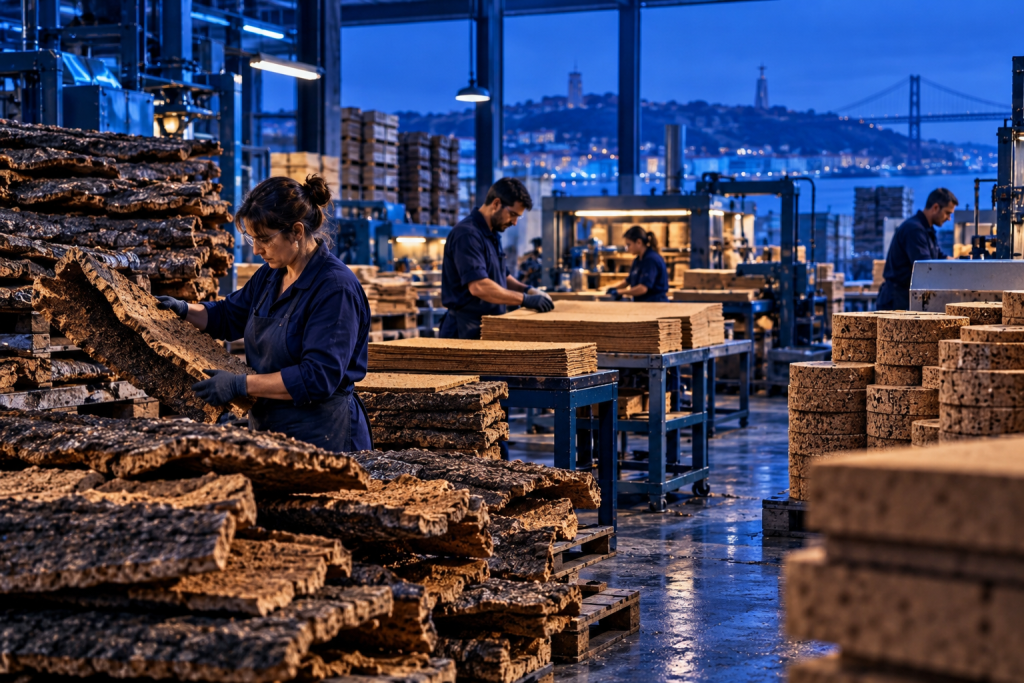
Cork provides Portugal with a manufacturing story fundamentally different from many other European markets. The material is internationally associated with wine closures, but its commercial applications extend into interiors, fashion accessories, furniture, flooring and numerous design products.
For retail environments, cork can provide both functional and decorative possibilities. Designers increasingly search for materials with distinctive texture and provenance, allowing specialist Portuguese suppliers to participate in commercial interiors as well as conventional consumer-product manufacturing.
The opportunity becomes greater when raw material expertise is combined with product development. Instead of supplying cork only as an industrial input, Portuguese companies can create finished components and consumer products where manufacturing, design and origin contribute more strongly to the final retail value.
Portuguese Furniture Manufacturing Supports International Interiors
Furniture provides another important connection between Portuguese manufacturing and the wider retail industry. Domestic companies produce residential, hospitality and commercial furniture, using capabilities that can also support stores, showrooms and branded environments.
Commercial furniture introduces particular requirements around consistency and repeatability. A retailer opening multiple locations needs counters, shelving and display furniture produced to the same dimensions and finishes, while packaging needs to protect equipment during transportation to different markets.
Manufacturers capable of managing these requirements can move from conventional furniture production toward international commercial projects. Experience with hospitality can also transfer naturally because hotels, restaurants and retail environments often require similar combinations of bespoke manufacturing, premium materials and carefully controlled finishes.
Ceramics Connect Portuguese Production with Retail and Hospitality
Portuguese ceramics provide another example of a traditional manufacturing industry with modern commercial applications. Tableware, decorative products, tiles and architectural ceramics can reach customers directly through retail while also forming part of restaurants, hotels and commercial interiors.
Retail environments themselves can use ceramic materials across floors, walls, counters and decorative features. A manufacturer therefore does not need to produce something sold from a shelf to participate in the retail economy; its products can form part of the physical environment in which other products are sold.
Design and manufacturing quality can help Portuguese producers compete internationally. Specialist ceramics are difficult to evaluate solely through price because colour, finish, durability and design influence the value customers and commercial buyers place on the finished product.
Portuguese Food Production Reaches Retailers Internationally
Portugal’s food industry connects agriculture, fishing, manufacturing and consumer branding with domestic and international retail. Olive oil, preserved fish, bakery products, confectionery and numerous regional foods can move through supermarkets, specialist merchants and hospitality businesses around the world.
The difference between producing food and building an international retail product is significant. Packaging, labelling, regulatory compliance, consistency and distribution all become important once the product leaves a local market and needs to compete on shelves elsewhere.
This creates opportunities throughout the B2B supply chain. Food manufacturers need packaging companies, cold-chain businesses where appropriate, warehouses, distributors and freight providers. The consumer eventually sees one finished product, while several specialist businesses may already have contributed before it reaches the shelf.
Portuguese Wine Connects Regions with International Consumers
Wine provides another strong connection between Portuguese production, tourism and international retail. The Douro Valley, Alentejo, Vinho Verde regions and other production areas create products with distinctive regional identities capable of reaching consumers far beyond Portugal.
Wineries can interact with customers through several channels simultaneously. Supermarkets and specialist wine retailers provide conventional distribution, while restaurants, tourism, tasting facilities and e-commerce allow producers to develop more direct relationships with consumers.
Packaging and logistics become essential once wine travels internationally. Bottles are relatively heavy and fragile, labels need to meet destination requirements and products require protection throughout distribution. A successful international wine business therefore depends on manufacturing, packaging, branding and logistics working together rather than on the vineyard alone.
Portuguese Brands Can Expand Beyond Their Domestic Market
Portugal’s domestic population provides a useful consumer base, but successful brands can access substantially larger opportunities when they expand internationally. Fashion, footwear, food, beauty, furniture and lifestyle businesses can use manufacturing capabilities and distinctive Portuguese identity as foundations for growth.
Digital commerce allows companies to test overseas demand before committing to extensive physical expansion. A business can sell internationally from Portugal, identify markets where customers respond strongly and later use distributors, concessions, pop-ups or permanent stores selectively.
Once physical expansion begins, the B2B network surrounding the brand grows. Overseas stores require property specialists, furniture, logistics, installation and maintenance within markets where the Portuguese company may initially have few established relationships. Successful Iconic Brands consequently create opportunities for specialist businesses far beyond their own organisations.
Lisbon’s Historic Buildings Create Retail Installation Challenges
Central Lisbon contains commercial properties that were never designed around modern retail equipment. Narrow entrances, stairs, irregular dimensions and restricted vehicle access can all influence how furniture and technology need to reach the final store.
Accurate surveys are therefore particularly important. Large fixtures can require modular construction so they can move through restricted access before being assembled inside, while delivery schedules need to consider local traffic, pedestrian environments and property-management restrictions.
Experienced Retail Installation Companies provide value by understanding these practical conditions. The retailer may use the same visual concept internationally, but successful delivery depends on adapting the installation process to the actual property rather than assuming every store behaves like a modern shopping-centre unit.
Shopping Centres Remain Important to Portuguese Retail
Modern shopping centres provide another side of Portugal’s physical retail environment. They combine fashion, supermarkets, restaurants, entertainment, technology and services within organised destinations serving metropolitan and regional consumers.
For retailers, these environments provide established infrastructure and customer traffic, but project delivery needs to follow landlord requirements. Contractors can have restricted working hours, deliveries may use designated service routes and every store needs to coordinate its work with the wider commercial property.
Mature centres also create recurring refurbishment opportunities. Brands relocate, concepts change and existing stores need updating as customer expectations and technology evolve. Installation companies, furniture manufacturers and other suppliers can therefore develop repeat relationships across retail estates rather than depending entirely on newly constructed developments.
The Algarve Has a Retail Economy Shaped by International Visitors
The Algarve operates within a consumer environment heavily influenced by tourism and international residents. Retail, restaurants, leisure and hospitality all respond to demand patterns that can differ significantly from Portugal’s larger metropolitan markets.
Seasonal changes can affect product selection and inventory volumes, while fashion, food, beauty and lifestyle businesses can benefit from customers arriving from several European countries. Retail environments can also overlap closely with hotels, resorts and leisure destinations.
For Portuguese brands, this international customer base creates valuable exposure. A visitor discovering a domestic product in the Algarve can later search for it online or through retailers after returning home, allowing local physical retail to support international brand development.
Madeira and the Azores Create Island Supply-Chain Challenges
Portugal’s island regions create a different operational environment from the mainland because products, fixtures and replacement components need to travel through maritime or air connections before reaching individual stores.
Retailers therefore benefit from accurate inventory planning. A missing product or damaged fixture that can be replaced relatively quickly between mainland cities may require substantially more coordination when the destination is Madeira or the Azores.
Local partners and carefully planned stock can reduce this vulnerability. Island retail demonstrates that distance is not simply measured in kilometres; transport frequency, freight capacity and replacement lead times can be equally important when designing a reliable national supply network.
Portugal’s Atlantic Ports Support International Commerce
Portugal’s Atlantic coastline provides maritime connections with Europe and international markets farther overseas. Ports including Sines, Leixões and Lisbon support trade flows involving consumer products, raw materials, machinery and manufactured goods.
For retailers and manufacturers, ports form part of the infrastructure connecting international sourcing with domestic distribution. Imported products need to move from maritime terminals toward warehouses and stores, while Portuguese manufacturers use the same networks to reach customers abroad.
This creates opportunities for Transport & Logistics businesses involved in freight forwarding, customs, warehousing and inland distribution. The port may sit far from the final retail transaction, but its performance can influence inventory availability, manufacturing schedules and international competitiveness.
Portugal Can Connect European Commerce with Atlantic Markets
Portugal’s geography gives the country commercial relationships extending beyond continental Europe. Atlantic maritime connections, historical business relationships and the Portuguese language create links with markets in South America and Africa as well as conventional European trade.
These relationships can provide routes for Portuguese brands and manufacturers seeking international growth. Brazil represents an enormous Portuguese-speaking consumer market, while commercial relationships with Angola, Mozambique and other Lusophone markets can create additional opportunities depending on sector and business strategy.
Shared language can make communication easier, but it does not make markets identical. Regulations, consumer expectations, logistics and economic conditions still differ substantially. Successful international expansion requires local understanding rather than assuming cultural connections remove the need for capable destination partners.
E-Commerce Gives Portuguese Businesses International Reach
Digital commerce allows Portuguese businesses to reach customers far beyond the country’s physical retail network. Fashion, footwear, furniture, food and specialist consumer brands can develop international audiences without immediately establishing stores in every destination market.
The digital transaction still depends on physical infrastructure. Products need manufacturing, inventory requires storage and international orders need packaging and delivery. Returns can become particularly complex when customers and warehouses are located in different countries.
Successful e-commerce therefore increases the importance of efficient logistics rather than replacing it. Businesses capable of connecting online sales with reliable fulfilment can use Portugal as a base from which to serve customers across Europe and potentially farther overseas.
Physical Stores Are Becoming Part of Wider Omnichannel Networks
Portuguese consumers increasingly move between digital and physical retail rather than treating them as completely separate channels. Customers can research products online, visit stores before purchasing, collect digital orders physically or return online purchases through retail locations.
This changes how retailers evaluate store performance. A location can influence transactions that eventually happen digitally, while the physical environment provides service, immediate product access and customer experience that websites cannot completely reproduce.
Store design consequently needs to accommodate new functions. Collection areas, technology and service points can become integrated with conventional merchandising, creating opportunities for manufacturers and installation businesses capable of supporting increasingly technical retail environments.
Sustainability Can Strengthen Portuguese Manufacturing
European retailers increasingly consider materials, energy, waste and supply-chain transparency when evaluating manufacturers. Portuguese suppliers seeking international customers can therefore use genuine environmental improvements as part of their commercial proposition.
Manufacturing efficiency can support both sustainability and profitability. Reducing waste lowers material cost, energy-efficient machinery can reduce operating expenditure and better packaging can decrease transportation volume.
Furniture and retail fixtures provide additional opportunities through durability and repair. Products designed for disassembly can be refurbished or updated rather than completely replaced, allowing Portuguese manufacturers to compete through engineering and lifecycle value as well as appearance.
Discovering Portuguese Manufacturers Can Still Be Difficult
Portugal contains specialist manufacturers with capabilities relevant to retailers, designers and project organisations around the world. Yet excellent factories can remain relatively unknown outside established customer relationships or particular regional industries.
A buyer searching internationally may not know which Portuguese company specialises in footwear, furniture, textiles, ceramics, cork or commercial equipment. The manufacturer can possess excellent machinery and technical knowledge while its digital presence fails to explain those capabilities clearly to international customers.
Greater visibility helps close this gap. Manufacturers still need competitive products, quality and reliable delivery, but discovery determines whether buyers have the opportunity to evaluate those strengths in the first place.
Connecting Portugal Through Global Retail Directory
Portugal contains businesses relevant to almost every part of the retail ecosystem. Furniture manufacturers, footwear factories, textile companies, ceramics producers, food businesses, packaging suppliers, logistics companies and commercial contractors can all participate in domestic or international retail supply chains.
The Global Retail Directory is designed to make these capabilities easier to discover. Portuguese Manufacturers & Suppliers can present their production expertise, Transport & Logistics companies can connect with businesses moving products internationally, Retail Installation Companies can demonstrate project capability and Iconic Brands can become visible within a wider global industry network.
The opportunity works in both directions. International retailers entering Portugal can discover local companies capable of supporting their operations, while Portuguese businesses can become visible to buyers and project organisations elsewhere. Better international discovery can help turn established domestic capabilities into relationships extending across multiple markets.
Portugal’s Retail Strength Connects Manufacturing with International Commerce
The future of the retail industry in Portugal will continue to be shaped by tourism, e-commerce, evolving physical stores and stronger integration between domestic businesses and international markets. Lisbon will remain the country’s largest consumer and corporate centre, while Porto and regional markets contribute distinctive commercial environments of their own.
Portugal’s wider strength lies behind the storefront. Footwear and textiles connect domestic factories with international fashion, cork and ceramics provide distinctive materials, furniture manufacturers contribute to commercial interiors and food and wine businesses transform regional production into consumer brands. Atlantic ports and logistics networks connect these capabilities with customers across Europe and farther overseas.
For Global Retail Directory, Portugal demonstrates how a relatively compact European market can combine retail, manufacturing, logistics, installation and brands within a much larger international commercial network. The country’s opportunity is not simply to attract more retailers or sell more products domestically, but to make Portuguese capabilities increasingly visible to the businesses designing, manufacturing, supplying and developing retail around the world.