
Retail Industry in Nigeria
The retail industry in Nigeria operates within one of Africa’s largest and most diverse consumer economies, combining enormous urban markets, independent commerce, domestic manufacturing, food production, fashion, technology and increasingly sophisticated digital retail. Lagos provides the country with a commercial centre of continental importance, while Abuja, Kano, Ibadan, Port Harcourt and other major cities create substantial regional markets of their own. Nigeria’s scale means that opportunities exist far beyond conventional stores: manufacturers, packaging businesses, technology companies, distributors, commercial contractors, designers, warehouse operators and numerous specialist suppliers all contribute to the infrastructure behind consumer commerce.

What makes Nigeria particularly interesting for the international retail industry is the combination of scale and entrepreneurial activity. Modern shopping centres and supermarkets operate alongside traditional markets and neighbourhood businesses, while digital payments, social commerce and e-commerce are creating new ways for brands to reach consumers without immediately developing large physical store networks. Domestic businesses can manufacture products for Nigerian consumers, develop brands around those products and potentially use the same capabilities to expand into other West African markets. International companies, meanwhile, need local knowledge and reliable Nigerian partners if they want to participate effectively in such a large and complex market.
This wider ecosystem is exactly what the Global Retail Directory is designed to represent. GRD connects the consumer-facing side of retail with the companies that manufacture, supply, transport, design, install and support it. In Nigeria, that can mean everything from a food manufacturer or packaging producer to a commercial furniture business, technology company, retail installation specialist or growing Nigerian brand. Understanding these connections provides a much more useful picture of Nigerian retail than simply counting shopping centres or international chains.
Lagos at the Centre of Nigerian Commerce
Lagos is the natural starting point for understanding the retail industry in Nigeria. Its enormous metropolitan population, concentration of corporate headquarters, financial services, technology businesses, entertainment industries and international trade make it one of Africa’s most significant commercial cities. Retail operates at almost every imaginable scale, from contemporary shopping destinations and premium stores to supermarkets, independent businesses, markets and neighbourhood commerce. Different parts of the metropolitan area serve very different customers, meaning that Lagos itself should be viewed as several interconnected retail markets rather than one uniform consumer environment.
For retailers, this diversity creates both opportunity and complexity. A premium fashion or beauty concept serving affluent consumers requires a different property strategy, product mix and customer experience from a grocery business built around everyday household demand. Traffic and accessibility can influence where consumers are prepared to shop, while property costs and infrastructure affect the economics of individual locations. International brands entering Lagos therefore need more than population statistics; they need to understand where their customers live, how they purchase and which physical or digital channels make sense for the products being offered.
Lagos also creates significant opportunities for the businesses behind stores. New and refurbished commercial environments require furniture, lighting, electrical infrastructure, technology, displays, flooring, graphics and ongoing maintenance. International equipment may need local installation and support, while capable Nigerian manufacturers can potentially replace imported components where quality, price and availability make local production commercially attractive. These are precisely the relationships GRD aims to make easier to discover: a retailer or project organisation should be able to identify Nigerian companies with relevant capabilities without depending entirely on existing personal networks.
Traditional Markets Remain a Major Commercial Force
Modern shopping centres represent only one part of Nigerian commerce. Traditional markets, wholesalers and independent retailers continue to move enormous quantities of food, clothing, electronics, household products and other consumer goods. These businesses often operate through sophisticated relationship networks developed over many years, with products moving from importers or manufacturers through wholesalers and distributors before eventually reaching smaller retailers and customers. For businesses attempting to understand Nigeria, ignoring these channels would mean ignoring a substantial part of how the consumer economy actually functions.
Traditional and independent commerce also demonstrates why retail modernisation should not automatically be interpreted as the replacement of smaller businesses by large chains. Technology can strengthen existing retail structures. Mobile communication helps merchants coordinate purchasing, digital payments reduce dependence on cash, social platforms create new marketing channels and delivery services allow independent retailers to reach customers beyond immediate footfall. A neighbourhood business can therefore become increasingly digital while remaining locally owned and physically small.
For manufacturers and suppliers, the challenge is understanding how different channels work together. A consumer brand might sell through supermarkets in one part of the market while relying on wholesalers and independent retailers for broader geographic penetration. Packaging sizes, pricing and distribution methods can vary accordingly. Businesses listed within Global Retail Directory’s wider Manufacturers & Suppliers ecosystem can benefit from presenting these capabilities clearly, because international buyers increasingly need partners who understand both organised retail and the commercial networks surrounding it.
Shopping Centres Are Building a More Organised Retail Environment
Nigeria’s major cities have developed modern shopping centres that combine fashion, beauty, food, electronics, restaurants, entertainment and services within professionally managed properties. These destinations give domestic and international brands access to organised environments with established customer traffic, security, parking and property management. They also create a completely different B2B economy behind the consumer-facing experience, because every retail unit needs to be designed, manufactured, built and maintained before customers can enter it.
A store opening can involve architects, designers, joinery manufacturers, metal fabricators, lighting suppliers, electricians, technology providers and installation teams working to a common programme. Restaurants add commercial kitchens, refrigeration and extraction systems, while entertainment spaces introduce their own specialist requirements. Once a centre is established, refurbishment creates recurring work as brands change concepts, tenants move and technology becomes outdated. Retail property is therefore never truly finished; it continually generates demand for companies capable of maintaining and improving physical environments.
This is where the Retail Installation Companies category within Global Retail Directory becomes relevant to Nigeria. An international manufacturer supplying fixtures to Lagos may require a capable local company to complete the physical installation, while a Nigerian contractor with experience delivering stores to international standards may want greater visibility to brands and project organisations outside its existing network. GRD’s purpose is to make those capabilities discoverable internationally rather than allowing valuable expertise to remain hidden behind individual projects.
Nigeria’s Scale Creates an Enormous FMCG Economy
Nigeria’s population creates particularly significant opportunities for businesses supplying frequently purchased consumer goods. Food, beverages, personal care, household products and other everyday categories depend less on occasional high-value transactions and more on millions of repeated purchases. This makes manufacturing efficiency, pricing, packaging and distribution extremely important. A product can be commercially successful even at a relatively modest unit margin if the business is capable of supplying substantial volumes consistently.
Local production can provide advantages in these categories because finished imports may be exposed to international freight costs, currency movements and long replenishment cycles. Nigerian manufacturers capable of producing competitive products domestically can respond more quickly to market conditions and develop pack sizes suited specifically to local purchasing behaviour. This does not mean locally manufactured products succeed automatically; consumers still expect quality and value, and retailers need suppliers capable of delivering reliably. The opportunity exists when domestic production can meet those expectations.
For international companies looking at Nigeria, manufacturing partnerships can therefore be as important as retail distribution. A company may decide that manufacturing or packaging locally provides a stronger long-term model than importing every finished product. Global Retail Directory can help create visibility between international organisations searching for production capabilities and Nigerian manufacturers seeking new B2B relationships, particularly where those businesses can demonstrate clear standards, capacity and commercial experience.
Food Manufacturing Connects Agriculture with the Retail Shelf
Nigeria’s agricultural economy provides raw materials for an extensive food-processing sector, creating one of the clearest connections between production and retail. Agricultural products can move through cleaning, processing, manufacturing and packaging before becoming consumer goods sold through supermarkets, independent retailers, hospitality businesses and digital channels. The finished product visible on a shelf represents only the final stage of a much larger system involving machinery, ingredients, quality control, packaging, warehousing and distribution.
The opportunity for Nigerian businesses is to capture more value through processing and branding rather than allowing commodities to leave the production chain at an early stage. A raw agricultural product has one commercial value, while a processed, packaged and trusted consumer brand can have another. Developing that brand requires expertise beyond manufacturing: packaging design, marketing, distribution and retail relationships all become important. Businesses that combine these capabilities can potentially expand beyond their immediate regional markets and eventually pursue international consumers.
This is why GRD treats food producers, packaging companies and other suppliers as relevant to the retail ecosystem even when they do not operate stores themselves. A Nigerian manufacturer capable of supplying supermarkets or international distributors is part of retail because its products and capabilities ultimately support consumer commerce. Making these businesses easier to identify is particularly valuable in markets where strong companies may have limited international digital visibility.
Packaging Can Determine Whether a Product Looks Local or International
Packaging plays a major role in how Nigerian consumer products compete. It needs to protect goods through manufacturing, warehousing, transportation and store handling, but it also communicates quality to the customer. A domestically produced product does not need to appear less professional than an imported competitor, and strong packaging can help an emerging Nigerian brand establish credibility before the consumer has even tried what is inside.
The technical requirements vary considerably by category. Food may require moisture barriers, temperature resistance or tamper protection, while beauty and personal-care products depend heavily on containers, closures and visual presentation. E-commerce introduces another requirement because products need outer packaging capable of surviving individual delivery networks. Nigerian companies producing cartons, flexible packaging, labels, plastics and other materials therefore support many different areas of retail simultaneously.
International buyers searching for manufacturing capabilities often need these supporting businesses as much as they need the primary product manufacturer. A consumer brand considering production in Nigeria may require a complete local supply network rather than one factory. Global Retail Directory can help make that wider network visible by allowing specialist suppliers to present what they actually produce and which industries they can support.
Nigerian Fashion Has International Potential
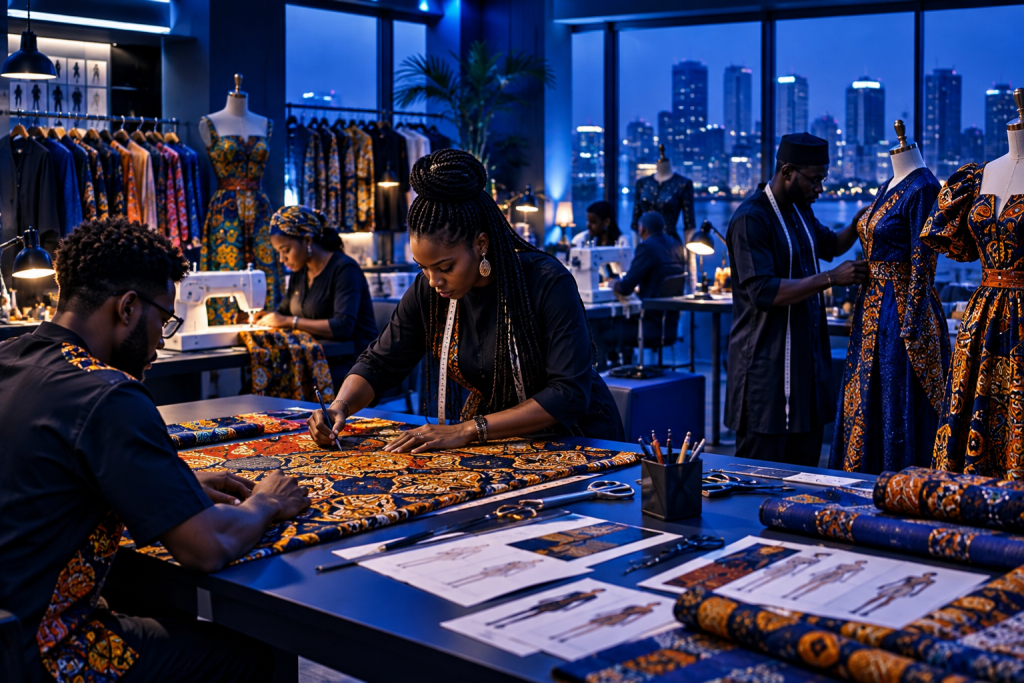
Nigeria’s fashion industry combines contemporary design with an internationally visible creative culture. Designers and brands can draw on local textiles, craftsmanship and cultural influences while developing products aimed at modern domestic and international consumers. Lagos in particular provides an environment where fashion intersects with music, entertainment, media and technology, giving brands opportunities to build identities extending well beyond the clothing itself.
Digital commerce has significantly changed the route available to emerging designers. A Nigerian fashion company no longer needs to establish stores across several countries before reaching international customers. Social media and e-commerce can build audiences first, while wholesale partnerships, pop-ups and carefully selected physical stores can follow as demand develops. Diaspora communities provide another potential customer base, particularly where consumers already understand the cultural context surrounding a brand.
As these businesses grow, their B2B requirements become more sophisticated. Manufacturers need repeatable quality, packaging needs to support international shipping, inventory needs accurate management and physical stores require furniture and display systems. Within GRD, successful Nigerian Iconic Brands can therefore sit at the centre of much wider networks of manufacturers, suppliers, designers and commercial specialists. The consumer sees one brand, but the commercial ecosystem behind it can involve dozens of businesses.
Beauty and Personal Care Can Become a Major Nigerian Brand Sector
Nigeria’s large, young and style-conscious population creates substantial potential within beauty, skincare, haircare, fragrance and grooming. Local brands can develop products specifically for Nigerian consumers rather than relying entirely on formulations and marketing strategies created for other markets. That local understanding can become an advantage when combined with professional manufacturing, testing and presentation.
Beauty also demonstrates how closely product manufacturing and physical retail interact. Consumers often discover products through social media but still value the opportunity to inspect packaging, compare colours, test textures and receive advice in person. Stores and concessions therefore remain relevant even when digital marketing generates the initial interest. Good lighting, display furniture and organised testers become part of the product experience.
The sector also creates opportunities for laboratories, contract manufacturers, packaging businesses and display suppliers. International buyers searching for African beauty capabilities may not know which Nigerian companies can manufacture professionally at scale, while domestic brands expanding abroad need partners within their destination markets. This is exactly the kind of cross-border discovery GRD is intended to support.
Technology Is Changing Commerce Without Replacing the Store
Lagos has developed one of Africa’s most visible technology ecosystems, and retail increasingly benefits from the services produced around payments, e-commerce, delivery and business management. Digital payments can reduce transaction friction, while cloud-based tools allow businesses to maintain better records and understand sales. Technology can therefore improve the operation of both large retail chains and relatively small independent businesses.
The most useful retail technology does not necessarily need to be visible to customers. Inventory systems, payment infrastructure and order management can operate quietly while making the business significantly more efficient. A small merchant able to understand what is selling and reorder accordingly can make better commercial decisions without becoming a conventional corporate retailer.
For GRD, technology businesses are relevant because the modern retail ecosystem extends beyond physical products. A company enabling payments, fulfilment or inventory management can influence thousands of retailers without ever owning a store. Nigeria’s technology sector therefore represents another important category of businesses capable of contributing to retail domestically and internationally.
E-Commerce Makes Logistics More Important, Not Less
Online retail can create the impression that commerce is becoming less physical, but the opposite is true behind the screen. Every digital order still requires inventory, storage, picking, packaging and delivery. Returns create another physical movement in the opposite direction. As Nigerian e-commerce grows, businesses capable of solving these operational challenges become increasingly important.
Nigeria’s geography and urban conditions make fulfilment particularly demanding. Lagos traffic can affect delivery times, while serving customers across the country introduces substantial distances and varying infrastructure. Retailers therefore need realistic delivery promises and inventory strategies rather than assuming every customer can be served equally from one central warehouse. Larger businesses may eventually benefit from regional stockholding as demand becomes geographically predictable.
This is where GRD’s Transport & Logistics category has a genuine role rather than being inserted artificially into every article. Nigerian retailers, manufacturers and e-commerce companies need logistics partners capable of handling their actual requirements, while international businesses entering the country need local organisations that understand how goods move through Nigerian commercial networks. The relevance comes from the market itself, not from forcing transport terminology into the article.
Nigerian Ports Connect Retail with Global Supply Chains
Nigeria’s maritime infrastructure supports the movement of consumer products, machinery, raw materials and manufacturing components into the domestic economy. Lagos and surrounding port facilities are particularly important because the commercial activity concentrated in the region creates enormous demand for imported goods and industrial inputs. Products arriving through container terminals can move onward to warehouses, wholesalers, factories and retailers throughout the country.
Domestic manufacturing does not eliminate the need for international trade. A Nigerian factory may still require imported machinery, specialist ingredients or components even when the finished product is manufactured locally. The more useful distinction is between importing finished consumer goods and importing inputs that enable domestic businesses to create additional value within Nigeria.
For manufacturers seeking international customers, ports also provide the route outward. Nigerian food, fashion, beauty or manufactured products can eventually travel toward retailers elsewhere in Africa and beyond. Developing export capability therefore requires manufacturers to think about documentation, packaging and international logistics as carefully as they think about production.
Local Manufacturing Can Strengthen the Retail Economy
Nigeria’s consumer scale provides a strong potential foundation for domestic manufacturing. Food, beverages, personal care, household products, furniture, packaging and commercial equipment are all areas where local businesses can participate in the supply chain. The opportunity becomes particularly attractive where manufacturers can provide quality comparable with imported alternatives while reducing lead times and exposure to international freight.
Retail development itself can stimulate manufacturing. As more supermarkets, restaurants, hotels and shopping centres are built or refurbished, demand increases for shelving, counters, furniture, lighting, packaging and other commercial products. Nigerian manufacturers capable of meeting professional specifications can participate directly rather than allowing every component to be imported.
International visibility is important if these businesses want to expand beyond domestic customers. A Nigerian furniture or metalwork manufacturer may already possess capabilities relevant to international retail projects but remain unknown to overseas buyers. Through Global Retail Directory’s Manufacturers & Suppliers network, those companies can present themselves within the same international ecosystem as businesses from Europe, Asia and the Americas.
Abuja and Regional Cities Add Depth Beyond Lagos
Nigeria’s retail opportunity extends far beyond Lagos. Abuja provides a different commercial environment shaped by its role as the national capital, professional employment, hospitality and substantial residential development. Kano has long-standing commercial importance in the north, while Ibadan, Port Harcourt and other cities support large regional consumer markets with their own economic characteristics.
National retailers therefore need to think regionally. Product ranges, store formats and distribution strategies that work in Lagos may require adjustment elsewhere. A consistent brand identity can remain valuable, but the business model needs enough flexibility to respond to local purchasing power, property conditions and customer behaviour.
For suppliers and project businesses, this creates opportunities to build geographic coverage. A retail installation company capable of supporting projects across several Nigerian cities becomes more useful to a national or international brand than one restricted to a single metropolitan area. Likewise, manufacturers with reliable distribution networks can reach customers far beyond their immediate production region.
Nigerian Businesses Can Use the Domestic Market as a Platform for West Africa
Nigeria’s scale allows successful businesses to become substantial before they ever leave the country. That domestic foundation can provide manufacturing volume, brand recognition and operational experience that later support expansion into neighbouring markets. Food, fashion, beauty, technology and other consumer businesses can all potentially use Nigeria as the starting point for wider West African growth.
Regional expansion still requires local understanding. West Africa is not one homogeneous consumer market, and regulations, languages, infrastructure and purchasing behaviour vary significantly between countries. Nevertheless, geographic proximity creates opportunities for companies that learn how to operate internationally while remaining relatively close to their home base.
For B2B businesses, the same principle applies. A Nigerian manufacturer or commercial contractor that builds strong relationships with expanding retailers can potentially follow those customers into additional markets. One successful domestic partnership can therefore become the beginning of a much wider commercial relationship.
International Brands Need Nigerian Partners, Not Just Nigerian Customers
For overseas retailers and manufacturers, entering Nigeria should not be treated simply as gaining access to a large population. Businesses need local knowledge, distribution, property expertise and operational support. Products may require different pricing or pack sizes, while physical stores need to function within local buildings and infrastructure.
Local partners can solve problems that are difficult to manage remotely. Nigerian manufacturers may be able to produce selected store components, while local installers and maintenance companies can support equipment after opening. Distribution businesses understand the practical realities of moving goods through the market, and technology companies can provide payment or fulfilment solutions appropriate to local conditions.
GRD’s role is to make these capabilities easier to discover. Instead of an international organisation beginning with a blank sheet every time it enters a new country, Global Retail Directory can provide visibility into the companies already operating within that market and the specialist services they offer.
Connecting Nigerian Companies Through Global Retail Directory
Nigeria contains thousands of businesses relevant to retail that may never describe themselves simply as “retail companies.” A packaging manufacturer, food processor, technology provider, commercial furniture producer, logistics company or installation contractor can all contribute directly to the success of retailers and consumer brands. The challenge is making those capabilities visible to organisations searching from outside existing local networks.
The Global Retail Directory is designed around that discovery problem. International buyers can use the platform to identify companies operating within Nigeria, while Nigerian businesses can present their capabilities to retailers, manufacturers and project organisations in other countries. GRD’s multilingual structure also helps businesses become discoverable beyond a purely English-language audience as the directory expands internationally.