
Retail Industry in Argentina
The retail industry in Argentina has developed around a distinctive combination of large metropolitan consumer markets, strong domestic brands, traditional shopping streets, modern malls, supermarkets, independent businesses and an increasingly important digital economy. Buenos Aires dominates the national commercial landscape and provides one of Latin America’s most recognisable urban retail environments, but Argentina’s retail economy extends through Córdoba, Rosario, Mendoza, La Plata, Mar del Plata and numerous regional cities serving consumers across an exceptionally large and geographically varied country.

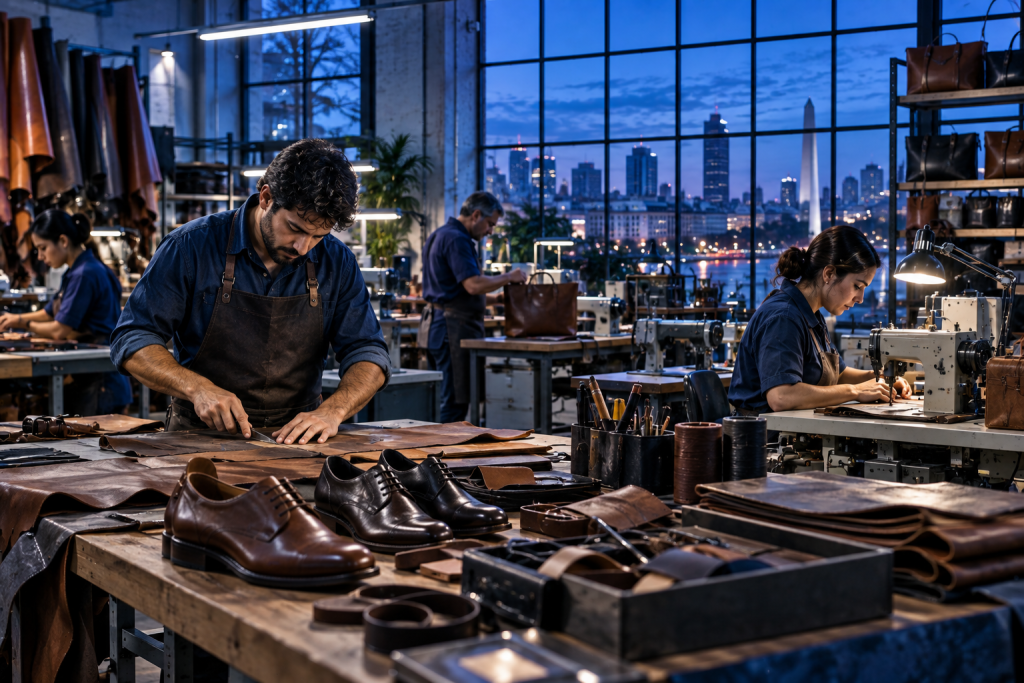
Argentina is an interesting market precisely because it cannot be understood only by looking at store numbers or international brands. Retail businesses operate within an economic environment that has experienced significant inflation, currency movements and changes in import conditions over many years. These circumstances influence how retailers purchase equipment, manage inventory, price products and decide whether to manufacture or source locally. At the same time, Argentina has its own established capabilities in areas including food production, fashion, leather goods, furniture, plastics, metalwork, packaging and other industries that contribute directly or indirectly to physical retail.
For companies operating across the international retail ecosystem, Argentina therefore presents a market where local knowledge, commercial flexibility and reliable partnerships can be particularly important. A retailer opening a store in Buenos Aires may require very different support from a manufacturer supplying equipment to a national supermarket programme or a foreign brand attempting to establish a long-term presence in the country. Understanding those differences provides a much more useful picture of Argentine retail than treating the market as simply another version of Europe or North America.
Buenos Aires at the Centre of Argentine Retail
Buenos Aires is the natural starting point for understanding retail in Argentina. The capital and its enormous surrounding metropolitan area represent the country’s largest concentration of consumers, businesses, commercial property and corporate decision-making. Its retail environment is also remarkably varied.
Traditional commercial streets remain important. Avenida Santa Fe, Calle Florida and other established corridors combine local retailers, international businesses, restaurants and services, while neighbourhoods such as Palermo have developed strong identities around fashion, design, hospitality and independent concepts. Recoleta is associated with premium commercial environments and affluent consumers, while different parts of the metropolitan area support everything from luxury stores to large-scale everyday retail.
Modern shopping centres operate alongside these traditional urban environments. Major malls provide professionally managed locations for domestic and international retailers and create concentrated destinations for fashion, beauty, technology, entertainment and food. Their controlled environments can also make them attractive to brands seeking predictable store standards and high customer traffic.
Buenos Aires has another advantage: it is a city where retail is embedded deeply into everyday urban life. Cafés, restaurants, pharmacies, fashion stores, supermarkets and independent businesses occupy streets throughout the metropolitan area rather than existing only inside dedicated shopping destinations. This creates opportunities for many different kinds of suppliers and service businesses because the physical retail estate is extraordinarily varied.
For companies involved in store development, this diversity means there is no single standard Buenos Aires project. A premium boutique inside a modern shopping centre, an independent store within an older urban building and a supermarket refurbishment can involve completely different access, construction, delivery and installation requirements.
Argentina’s Retail Identity Goes Beyond International Brands
One of the strengths of the retail industry in Argentina is the presence of domestic businesses with recognisable identities of their own. International brands are important, particularly within Buenos Aires and other major cities, but Argentine consumers also shop through national and regional businesses across fashion, food, beauty, homeware and other categories.
This matters to the wider B2B industry because domestic retailers generate their own supply chains. They require store furniture, packaging, graphics, technology, refrigeration, signage, merchandising equipment, construction services and maintenance. When a successful concept expands from a handful of locations into a larger national network, these requirements can develop into substantial recurring programmes.
Argentina also has a strong design and creative culture. Fashion, interiors, architecture, food and hospitality frequently overlap within modern commercial environments, particularly in Buenos Aires. Retail spaces can therefore be important expressions of brand identity rather than purely functional places for displaying products.
For manufacturers and suppliers, understanding the retailer’s positioning becomes important. A mass-market chain prioritising repeatability and cost efficiency requires a different solution from a premium fashion business where materials, lighting and presentation form a major part of the customer experience.
This diversity is precisely why the wider retail industry should not be reduced to one category of contractor or supplier. A functioning store can depend on dozens of businesses, many of which the customer will never see.
Shopping Centres, High Streets and Neighbourhood Commerce
Argentina’s physical retail landscape combines modern shopping destinations with a long-established culture of street-based commerce. This produces a different environment from markets where suburban malls or retail parks dominate most consumer activity.
Shopping centres provide structured environments where retailers can operate within professionally managed buildings. Store openings and refurbishments can require coordination with centre management, security, loading facilities and other contractors. Deliveries may need to occur within designated periods, while disruptive work can be completed outside customer trading hours.
Street locations introduce different challenges. Older properties can contain irregular layouts, restricted entrances and infrastructure that has been modified repeatedly over decades. Accurate site information becomes especially important where bespoke furniture or equipment is manufactured before arriving at the store.
Neighbourhood retail also remains commercially significant. Consumers frequently use local supermarkets, pharmacies, food businesses and specialist stores as part of everyday life. This means the retail supply chain does not serve only prestigious shopping destinations. Large volumes of equipment and services can be required by businesses whose stores individually appear relatively modest but collectively form extensive networks.
This mix gives Argentina a retail character that is difficult to reproduce through a single standardised format. It also creates opportunities for specialist companies capable of adapting their products and services to very different environments.
The Importance of Local Manufacturing and Suppliers
Argentina’s industrial capabilities give the retail sector access to domestic production across numerous categories. Furniture, metalwork, plastics, packaging, printed materials, textiles, food equipment and construction products can all contribute to the development and operation of stores.
Local manufacturing can become particularly valuable when international sourcing is complicated by currency conditions, import costs, lead times or administrative requirements. A retailer may use a global design concept while adapting some components for production within Argentina. International brands can similarly combine imported specialist elements with locally manufactured items.
The practical relationship between designer, manufacturer and store is crucial. Retail fixtures are not simply decorative objects. They need to survive transport, fit through building access routes, assemble efficiently and withstand daily commercial use. Manufacturers that understand what happens to their products after they leave the factory can often develop more practical solutions.
Local supply also provides advantages when replacement components are needed. A damaged panel or discontinued fitting can become expensive if every replacement needs to travel internationally. Maintaining appropriate domestic manufacturing or supplier relationships can make long-term store maintenance more manageable.
For international companies searching for these capabilities, visibility is often part of the challenge. The Global Retail Directory provides a platform where manufacturers, suppliers and other businesses supporting the retail sector can present what they do to organisations searching across different countries and markets.
Operating Through Economic Change
Argentina’s economic environment has had a particularly strong influence on retail strategy. Periods of high inflation, currency volatility and changing import conditions can affect purchasing decisions in ways that businesses from more stable markets may be less accustomed to managing.
Retailers may need to reconsider how far in advance they commit to projects, which components should be sourced domestically and how imported equipment is priced. Manufacturers and suppliers can face changing material costs, while businesses relying heavily on imported products need to consider currency exposure and availability.
This does not mean retail investment stops. Instead, companies can change how they invest. Refurbishing existing stores may become preferable to complete replacement. Reusable fixtures can become more attractive. Local production may substitute for imported equipment, and retailers can prioritise projects that produce measurable improvements in efficiency or customer experience.
Flexibility therefore becomes a commercial capability in its own right. Businesses able to adapt specifications, sourcing arrangements and project schedules without sacrificing quality can be particularly valuable within changing economic conditions.
International companies considering Argentina should consequently evaluate the current operating environment at the time of each project rather than relying on assumptions based on earlier market conditions. Local professional and commercial knowledge remains important because regulations and economic circumstances can evolve.
Moving Retail Goods Across a Country of Enormous Scale
Argentina stretches for thousands of kilometres from its northern borders to Patagonia. This geography creates a completely different operational challenge from compact markets such as Singapore.
Buenos Aires may dominate commercial decision-making, but national retailers need to serve stores far beyond the capital. Córdoba and Rosario are major markets in central Argentina, Mendoza provides an important western commercial centre, and cities throughout the north, Atlantic coast and Patagonia create additional regional demand.
Distribution therefore requires realistic planning around distance. Store equipment being deployed nationally can spend substantial time in transit, and a missing component discovered after installation begins may not be replaced immediately. Accurate picking, packing and checking before dispatch become increasingly important as the distance from the original warehouse increases.
Regional consolidation can sometimes provide advantages for larger programmes. Rather than treating every store as an isolated delivery, equipment can be organised according to geographic groups and installation schedules. This can reduce unnecessary transport movements and give project managers greater visibility over what has reached each region.
For retailers with extensive estates, the challenge is maintaining consistent brand standards despite these distances. A customer should not experience a lower-quality store simply because it is hundreds of kilometres from Buenos Aires. This makes good documentation, reliable suppliers and consistent project management particularly important.
Stores as Long-Term Assets
New store openings attract attention, but much of the commercial work within mature retail networks comes from what happens afterwards. Stores require continual adaptation throughout their operating lives.
Displays change as products change. Technology becomes obsolete. Furniture becomes damaged. Branding evolves. Layouts need adjustment as retailers learn how customers actually use a space. A store opened five or ten years ago can consequently undergo several significant changes without ever closing permanently.
This creates an important market for retail installation, refurbishment, maintenance and fixture replacement. It also creates opportunities to think more intelligently about existing assets.
A modular display can potentially be reconfigured rather than discarded. Furniture removed from one location may remain suitable for another. Metal components can be refurbished, graphics replaced and technology upgraded without rebuilding complete structures. These decisions can reduce both project costs and material waste.
Argentina’s economic conditions can make this asset-management approach particularly relevant. Extending the useful life of well-manufactured equipment can provide genuine commercial value when replacement costs are high.
The most effective retail environments are therefore not necessarily those containing the newest possible equipment. They are environments where design, manufacturing and maintenance have been considered together so stores can continue adapting without unnecessary disruption.
Supermarkets and Everyday Retail at National Scale
While premium fashion and shopping destinations provide highly visible examples of Argentine retail, grocery and everyday consumer businesses represent another enormous part of the market.
Supermarkets and related formats depend on operational consistency. Shelving, refrigeration, checkout areas, promotional displays, signage and customer circulation all need to function within environments handling substantial daily traffic. Even relatively small changes can become major programmes when repeated across hundreds of stores.
This scale changes how projects are managed. A fixture design needs to be economical to manufacture, straightforward to transport and efficient to install. Components need to be replaceable, and instructions must be clear enough for different teams to reproduce the same result.
Rollouts also generate information. Problems discovered during the first stores can be corrected before the programme reaches later locations. Installation times can improve, packaging can be adjusted and components can be redesigned where recurring difficulties emerge.
This feedback loop between stores, installation teams and manufacturers is one of the less visible but most valuable parts of large retail programmes. It turns physical rollout activity into information that can improve future production.
Buenos Aires as a Gateway for International Retail Projects
For overseas businesses entering Argentina, Buenos Aires is likely to provide the first point of commercial contact. Corporate offices, professional services, major retailers, distribution businesses and international transport connections are concentrated heavily around the metropolitan region.
Equipment arriving from overseas may need customs coordination, temporary storage and domestic distribution before reaching the store. International companies therefore need to understand the complete route from factory to finished environment rather than treating delivery into Argentina as the end of the supply process.
This becomes especially important for bespoke equipment. A standard consumer product can often enter an established distribution system, while a custom-made store fixture may require specialist handling, identification and scheduled delivery according to the construction or refurbishment programme.
International project managers also need visibility after equipment has been dispatched. Knowing that something left a factory is not the same as knowing that it arrived complete, undamaged and at the correct store. Photographic reporting, inventory control and communication between local and international teams can significantly improve project management.
The objective is not necessarily to reproduce every overseas process exactly. Successful international retail projects often combine global brand standards with local knowledge of how work is actually delivered.
E-Commerce Is Changing the Physical Store
Digital commerce continues to reshape the retail industry in Argentina, but the relationship between online and physical retail is increasingly interconnected rather than purely competitive.
Consumers can discover products through social media, marketplaces and retailer websites before completing purchases online or visiting stores. Physical locations can provide immediate product access, personal service, collection, returns and experiences that complement digital channels.
This changes the commercial role of stores. A location can influence online sales even when the final transaction occurs elsewhere. Retailers therefore need to consider the value of physical environments beyond conventional measures of sales generated directly at the till.
Technology is becoming more visible inside those environments as well. Digital displays, payment systems, inventory tools and connected customer services increasingly operate alongside traditional shelving and furniture. Suppliers that understand how technology integrates physically into stores can therefore become valuable partners.
Warehousing and fulfilment are evolving simultaneously. Inventory may need to support both physical locations and online orders, while returns create additional movement through the network. The distinction between an e-commerce supply chain and a store supply chain becomes increasingly blurred.
Argentine Brands Looking Beyond the Domestic Market
Argentina has created brands and consumer businesses capable of building recognition beyond the domestic market, particularly across Latin America. Fashion, food, wine, leather goods, beauty and design are among the areas where Argentine identity can provide commercial differentiation.
International expansion creates a new set of B2B requirements. A retailer that understands how to open stores successfully in Buenos Aires may still need new manufacturers, contractors and logistics relationships when entering another country. Local regulations, building practices and supply networks change even when the brand concept remains the same.
This is where the broader international retail ecosystem becomes particularly visible. An Argentine brand expanding into another market may work with its established designers while sourcing production or installation locally. Conversely, an overseas brand entering Argentina can bring global design standards while relying on Argentine companies for manufacturing, project delivery and ongoing support.
Within Global Retail Directory, Iconic Brands provide context for these relationships. They are different from commercial supplier listings because their role is to represent the brands and retailers whose physical networks create demand throughout the wider industry.
Understanding where brands operate can help explain why manufacturers, logistics businesses, installers and other specialists increasingly need international visibility themselves.
Sustainability, Reuse and Practical Retail Investment
Sustainability within retail is often discussed through energy use, packaging and consumer products, but the physical store itself represents another significant area of opportunity.
Fixtures contain materials and embodied energy. Replacing complete installations every time a brand changes its visual identity can generate substantial waste. Designing furniture that can be updated, repaired or disassembled can therefore provide environmental and commercial benefits simultaneously.
Reuse does not mean accepting poor-quality environments. A strong metal structure can receive new panels and graphics. Modular shelving can be reconfigured. Technology can be replaced without discarding surrounding furniture. Components removed from one store can sometimes be refurbished for use elsewhere.
These approaches can be particularly relevant in markets where replacement costs and imported materials fluctuate. Durability becomes financially valuable as well as environmentally preferable.
Manufacturers that understand these requirements can differentiate themselves through design rather than simply price. Retailers, meanwhile, can treat fixtures as managed assets rather than disposable components.
Opportunities Across Argentina’s Retail Ecosystem
Argentina offers opportunities to many different types of B2B businesses because its retail industry requires far more than consumer products. Manufacturers, architects, designers, technology businesses, fit-out specialists, installers, warehouse operators, maintenance providers, packaging companies and numerous other suppliers contribute to physical and digital retail operations.
The opportunity for international companies depends heavily on what they offer. Some products may compete effectively with domestic manufacturing, while others may be more successful through partnerships with Argentine businesses. Technology and specialist equipment can create different opportunities from conventional furniture or construction materials.
Likewise, Argentine businesses can use their domestic capabilities to pursue work internationally. A manufacturer producing strong retail furniture for national brands may be capable of supplying projects elsewhere in Latin America. A design business with experience in Buenos Aires may bring a distinctive approach to international projects. A supplier already working with an expanding retailer can potentially follow that relationship into additional countries.
The common challenge is visibility. Relevant companies frequently exist but are difficult to identify outside their established networks. Generic searches do not always distinguish a business experienced in complex retail programmes from one whose work happens to fall within a broadly similar category.
That discovery problem becomes increasingly important as retail supply chains cross national borders.
Connecting Argentina with the Global Retail Industry
The Global Retail Directory is being developed around this wider understanding of retail. Rather than treating the industry simply as retailers and shopping destinations, it brings together companies capable of contributing to the environments, infrastructure and supply chains behind them.
For Argentina, that can include manufacturers and suppliers seeking international customers, businesses supporting store development, companies involved in distribution and warehousing, and brands whose expansion creates opportunities throughout the wider industry. International organisations can similarly use greater market visibility to understand what capabilities exist within Argentina before beginning a project.
This is particularly valuable because Argentina is not a market where every requirement should automatically be imported. Strong domestic capabilities exist alongside areas where international expertise and technology can contribute. Finding the right balance requires companies to understand what potential partners actually do.
The retail industry in Argentina is therefore shaped by much more than economic headlines or individual shopping centres. It combines one of Latin America’s great metropolitan retail markets with domestic manufacturing, national distribution challenges, strong local brands, changing digital behaviour and a commercial culture accustomed to adapting to changing conditions.
For businesses capable of contributing useful products, services or expertise, those characteristics create a market with its own identity and opportunities. The companies that understand that identity—and build the right relationships around it—will be better positioned to participate in Argentina’s evolving retail ecosystem.