
Retail Industry in Morocco
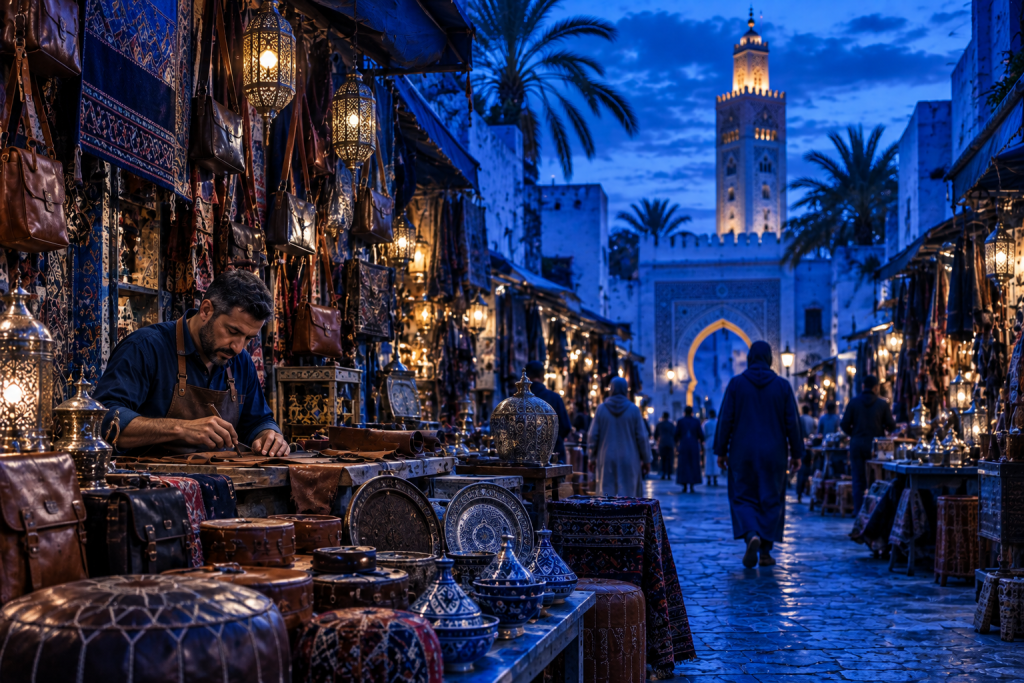
The retail industry in Morocco occupies an unusual commercial position between Africa, Europe and the wider Mediterranean economy. Modern shopping centres, international fashion brands, supermarkets and expanding urban retail operate alongside traditional souks, independent merchants and long-established craft industries. Casablanca functions as the country’s principal commercial centre, Marrakech combines domestic consumption with an enormous tourism economy, and cities including Rabat, Tangier, Agadir and Fez contribute different characteristics to a market shaped by urban development, manufacturing and international trade.

Morocco is particularly interesting because it is not simply a destination where finished products are sold. Textiles, clothing, leather goods, furniture, automotive components, packaging, food products and other goods are manufactured domestically, while ports and industrial zones connect Moroccan production with European and international supply chains. A retailer sourcing products from Morocco therefore interacts with the country very differently from an international brand opening a store in Casablanca or a hospitality business developing a new location in Marrakech.
For the Global Retail Directory, Morocco demonstrates how several parts of the retail ecosystem can operate simultaneously within one market. Traditional commerce remains highly visible, organised retail continues to develop, manufacturers support domestic and export customers, logistics infrastructure connects continents and Moroccan brands increasingly have opportunities to reach international consumers. Understanding these connections provides a much fuller picture of Moroccan retail than simply examining stores or consumer spending.
Casablanca Is the Commercial Heart of Moroccan Retail
Casablanca is Morocco’s largest city and principal business centre, concentrating corporate offices, financial institutions, manufacturers, distributors, logistics businesses and major retail developments within one metropolitan economy. Its retail environment reflects the wider transformation of the country, with traditional street commerce operating alongside supermarkets, international fashion stores, modern shopping destinations, restaurants and premium retail. This combination gives businesses access to several different customer markets rather than one standardised consumer environment.
For international brands, Casablanca provides an obvious starting point for entering Morocco, but physical expansion requires considerably more than securing property. New stores need furniture, shelving, counters, lighting, graphics, technology and numerous other components, while existing locations require refurbishment and maintenance as brands change concepts. Local property conditions also influence how global designs are implemented, creating demand for manufacturers and Retail Installation Companies capable of delivering international standards within Moroccan commercial environments.
Casablanca’s industrial surroundings make the city equally important from a B2B perspective. Manufacturing and distribution operations connect consumption with production, allowing retail equipment and consumer products to be manufactured domestically, imported through international trade routes or consolidated within warehouses before reaching stores. GRD can help international retailers and project organisations identify the Moroccan businesses supporting these activities rather than viewing Casablanca only as a place where products are sold.
Modern Retail and Traditional Commerce Continue to Coexist
One of Morocco’s defining characteristics is the continuing importance of traditional commerce. Markets, souks, neighbourhood stores and independent merchants remain deeply integrated into everyday consumer life even as supermarkets, shopping centres and international chains expand. Modern retail does not simply replace these businesses because the different formats serve different purchasing occasions, price points and customer expectations.
For international businesses, this distinction matters because a strategy developed for a highly consolidated European market cannot automatically be transferred unchanged to Morocco. Distribution methods, store formats, product selection and pricing can differ substantially between organised retail and traditional commercial districts. Wholesalers and regional distributors may therefore remain important to manufacturers seeking broad market coverage even while larger retail networks continue developing.
Technology can strengthen both sides of the market. Digital payments, social media, messaging and delivery services can help independent merchants modernise without abandoning the physical formats their customers already understand, while larger retailers use technology to improve inventory, payment and customer experience. This mixture demonstrates why Global Retail Directory treats retail broadly: manufacturers, technology companies, distributors and logistics businesses can all contribute to Moroccan commerce without operating conventional stores themselves.
Marrakech Connects Tourism, Craftsmanship and Retail
Marrakech has a commercial identity very different from Casablanca because tourism plays a much larger role in the local economy. Visitors create demand for fashion, beauty, jewellery, food, crafts, hospitality retail and premium consumer experiences, while traditional Moroccan products form an important part of the city’s international identity. Leather goods, textiles, ceramics, carpets and metalwork are sold through historic markets as well as increasingly sophisticated contemporary retail concepts.
Hotels and resorts broaden the opportunity beyond conventional shops. Boutiques, spas, restaurants, gift retail and other hospitality environments require furniture, displays, lighting, decorative products and specialist equipment, making the boundary between retail and hospitality increasingly difficult to separate. International brands entering Marrakech also need to understand the city’s architecture and tourism-driven customer profile rather than simply reproducing a generic global store concept without local consideration.
Tourism can provide Moroccan manufacturers and brands with international exposure before they establish operations overseas. A visitor discovering a product in Marrakech may continue purchasing after returning home if the business has suitable e-commerce and fulfilment, allowing physical retail in Morocco to become an international discovery channel. Growing Moroccan Iconic Brands can therefore build relationships with overseas consumers locally before committing to permanent international expansion.
Manufacturing Is Central to Morocco’s International Retail Opportunity
Manufacturing is one of the strongest reasons Morocco matters to the international retail industry. Textiles and clothing provide a direct connection with fashion, while leather production supports footwear, bags and accessories. Furniture, metalwork, plastics, packaging and construction-related products broaden the industrial base further, creating capabilities relevant both to the products sold by retailers and to the commercial environments in which those products are presented.
Morocco’s wider industrial development also matters. Automotive manufacturing has demonstrated the country’s ability to participate in sophisticated international production networks requiring quality control, engineering, supplier coordination and reliable logistics. Those capabilities can have applications beyond automotive production because metalwork, plastics, electronics and engineered components can also be relevant to stores, displays, equipment and other parts of the retail ecosystem.
For GRD’s Manufacturers & Suppliers category, Morocco therefore represents much more than a low-cost production alternative. International buyers can potentially discover businesses offering specialist capabilities, while Moroccan manufacturers can present themselves directly to retailers and project organisations outside their existing customer networks. The commercial opportunity becomes stronger when manufacturers compete through quality, responsiveness and technical expertise rather than production cost alone.
Tangier Connects Moroccan Manufacturing with Europe
Tangier provides one of the clearest examples of Morocco’s strategic geographic position. Located close to the Strait of Gibraltar, northern Morocco connects domestic manufacturing and international trade with European markets only a relatively short distance away. Major port and industrial infrastructure has strengthened this relationship, allowing businesses to combine Moroccan production with access to Spain, France and the wider European economy.
For retailers and manufacturers, geography can directly influence sourcing decisions. Producing furniture, clothing, packaging or specialist components closer to the destination can reduce transit times and make smaller or more responsive production programmes practical. This does not mean Morocco replaces Asian manufacturing across every category, but it provides another option where lead time, flexibility and supply-chain diversification matter commercially.
Industrial development around Tangier also creates additional consumer demand through employment, housing and commercial growth. Manufacturing and logistics infrastructure therefore do more than support stores that already exist; they contribute to economic development that can create new retail demand. This relationship between industrial investment and consumer commerce makes northern Morocco relevant on both sides of the retail economy.
From Moroccan Factory to European Store
The journey from Moroccan manufacturing to a finished European retail environment demonstrates how interconnected the industry has become. A European brand might source furniture, displays, packaging or consumer products from Morocco, but production represents only the beginning. Goods need quality control, packaging, documentation, transportation and potentially consolidation before entering the destination country’s distribution network.
If the product is retail equipment, the supply chain continues after arrival. Components may move through a warehouse before being allocated to individual stores, transported according to installation schedules and assembled by local project teams. Drawings, packing lists, component identification and installation instructions need to travel with the physical equipment because poor information can create delays even when manufacturing quality is excellent.
This is why manufacturers, Transport & Logistics businesses and installation companies should not be treated as unrelated categories. Poor packaging can create damage, unclear identification can increase installation labour and small manufacturing tolerances can become significant when components need to align precisely on site. Companies that understand the complete journey can become more valuable partners, and GRD is designed to make those interconnected capabilities easier for international businesses to discover.
Moroccan Craftsmanship Can Support Modern Commercial Design
Morocco has a distinctive material and design culture built around timber, metalwork, ceramics, textiles, stone, leather and decorative craftsmanship. These capabilities are strongly associated with traditional products, but they can also contribute to contemporary retail, hospitality and commercial interiors. A specialist workshop does not necessarily need to remain limited to products sold within a souk; its skills may be relevant to bespoke furniture, architectural components or premium store environments.
The challenge is translating craftsmanship into repeatable commercial production when a project requires consistency. A one-off decorative item and a rollout involving dozens of identical components demand different documentation, tolerances and quality-control processes. Collaboration between designers, traditional specialists and modern manufacturers can allow distinctive Moroccan materials and skills to remain visible while meeting the standards expected by commercial clients.
This combination can provide Morocco with a meaningful competitive advantage. Competing solely through manufacturing price places suppliers against factories around the world, while combining technical production, distinctive materials, craftsmanship and proximity to European markets creates a more differentiated proposition. International designers and retailers using Global Retail Directory can potentially discover Moroccan businesses whose capabilities would be difficult to identify through conventional retail searches.
Physical Retail Development Creates Opportunities for Local Specialists
As Moroccan cities develop, the physical environments used by retailers continue to become more sophisticated. Shopping centres, mixed-use developments and international brands require stores incorporating bespoke furniture, illuminated displays, graphics, technology and carefully controlled finishes, while established locations need refurbishment as concepts change. Domestic brands are also investing in more professional environments as competition and customer expectations increase.
International retailers need consistency across countries, but global standards still need to respond to local buildings, materials and regulations. Equipment manufactured abroad needs transportation and installation, while locally manufactured components need to meet the specifications established by the brand. Installation teams become the final point where design, manufacturing and property conditions meet, making their capability critical to the finished result.
This creates a genuine role for Moroccan Retail Installation Companies within the GRD ecosystem. Businesses that develop experience supporting international brands domestically can eventually use that expertise when pursuing regional projects, while local retailers benefit from a more professional supply chain capable of reproducing successful concepts across multiple locations. Physical retail development can therefore create expertise that becomes commercially valuable beyond the individual project.
Food Retail and Digital Commerce Are Changing Consumer Distribution
Food and grocery retail provide another perspective on Morocco’s changing consumer market. Supermarkets and larger organised formats operate alongside traditional markets, neighbourhood shops and specialist food businesses, requiring manufacturers to work across different distribution channels. Large grocery networks need procurement, warehousing, temperature management and coordinated replenishment, while independent commerce can depend more heavily on wholesalers and regional distributors.
The infrastructure behind grocery is substantial even though customers see only products and shelves. Refrigeration, shelving, packaging, warehouse operations and transportation all need to work reliably, particularly for fresh or temperature-sensitive products. As organised grocery develops, central and regional distribution can become more important because national networks cannot operate efficiently if every supplier independently delivers small quantities to every individual store.
Digital commerce adds another layer to this changing distribution system. Younger consumers increasingly use smartphones, social platforms and marketplaces to discover products and interact with brands, while businesses can begin online before opening physical locations. E-commerce still depends on inventory, fulfilment and delivery, however, meaning digital growth creates additional opportunities for warehouses, technology providers and logistics businesses rather than eliminating the physical supply chain.
Moroccan Brands Have International Potential
Morocco’s international visibility through tourism, manufacturing and cultural identity gives domestic brands opportunities beyond the national market. Fashion, beauty, food, interiors, leather goods and lifestyle products can all benefit from a recognisable Moroccan origin when positioned professionally, while e-commerce makes international customers easier to reach and tourism exposes products to consumers from many different countries.
International expansion nevertheless introduces operational challenges. A Moroccan brand opening abroad needs to understand property conditions, regulations, logistics and installation within the destination market. It may continue manufacturing products or store fixtures in Morocco while using local companies elsewhere for transportation, installation and maintenance, creating an international network around a brand whose consumer identity remains Moroccan.
This is where Iconic Brands fit naturally within the wider Global Retail Directory ecosystem. Brands create demand across manufacturing, logistics and physical retail delivery while occupying a different position from the B2B companies supporting them. A successful Moroccan brand expanding internationally can therefore create opportunities not only for itself but for manufacturers, designers and suppliers that develop alongside it.
Morocco Can Connect European and African Retail Markets
Morocco’s location gives it a strategic position that relatively few retail markets share. It is geographically African, closely connected with Europe and commercially linked with the Mediterranean and wider international economy. A Moroccan manufacturer can potentially serve customers in Spain or France while also pursuing opportunities elsewhere in Africa, and an international retailer can view Morocco as one market within a broader regional expansion strategy.
Casablanca provides corporate and consumer scale, Tangier connects manufacturing with international trade and Marrakech contributes tourism and global consumer visibility. Other cities add regional markets, manufacturing and specialist capabilities, creating a retail economy that cannot be understood through one location or one industry alone. Morocco’s opportunity lies in combining these different strengths rather than attempting to reproduce the structure of another country’s retail market.
For international companies, this position creates opportunities across sourcing, market entry and distribution. For Moroccan businesses, it provides several possible directions for expansion. GRD can help connect these movements by allowing capability rather than geography alone to determine which manufacturers, retailers and commercial specialists can discover one another.
Connecting Moroccan Businesses Through Global Retail Directory
International retail frequently encounters a simple problem: the right company may exist, but the organisation requiring its services does not know how to find it. A European retailer might be interested in Moroccan manufacturing without knowing which supplier has the required capability, while a brand entering Casablanca may need installation or logistics support without possessing an established network inside the country.
The Global Retail Directory is designed around this discovery problem. Moroccan Manufacturers & Suppliers can present their production capabilities, Retail Installation Companies can demonstrate the markets and projects they support, Transport & Logistics businesses can become visible to companies moving goods through Morocco, and growing Iconic Brands can present the consumer-facing side of the country’s retail economy.
For Moroccan companies, international visibility can create opportunities in Europe, Africa and beyond without requiring the business to depend entirely on existing contacts or intermediaries. For overseas buyers, GRD provides a structured way to identify companies contributing to Moroccan retail and international supply chains. Visibility does not replace quality, capability or reliability; it gives those strengths a better chance of being discovered.
The Future of the Retail Industry in Morocco
The future of the retail industry in Morocco will be shaped by urban development, changing consumer behaviour, manufacturing investment, tourism, digital commerce and stronger international connections. Modern shopping destinations are likely to continue developing alongside traditional commerce rather than eliminating it, while domestic brands can become more sophisticated and internationally visible as e-commerce and tourism introduce them to customers beyond Morocco.
Manufacturing may become increasingly important as companies reconsider the geography and resilience of international supply chains. Morocco’s proximity to Europe, port infrastructure and established capabilities in textiles, industrial production and craftsmanship create opportunities where businesses value shorter lead times, diversified sourcing and access to specialist skills. The country’s strongest position may come from combining these advantages rather than competing solely on manufacturing price.
Behind these developments are thousands of companies consumers rarely notice: manufacturers, suppliers, designers, technology businesses, logistics providers and contractors whose work makes physical and digital retail possible. Connecting those companies more effectively with retailers and international project organisations is central to the purpose of Global Retail Directory. Morocco demonstrates why that broader view matters: retail is not simply what happens inside the store, but the entire network of businesses, skills and infrastructure required to create, supply and continually develop it.