
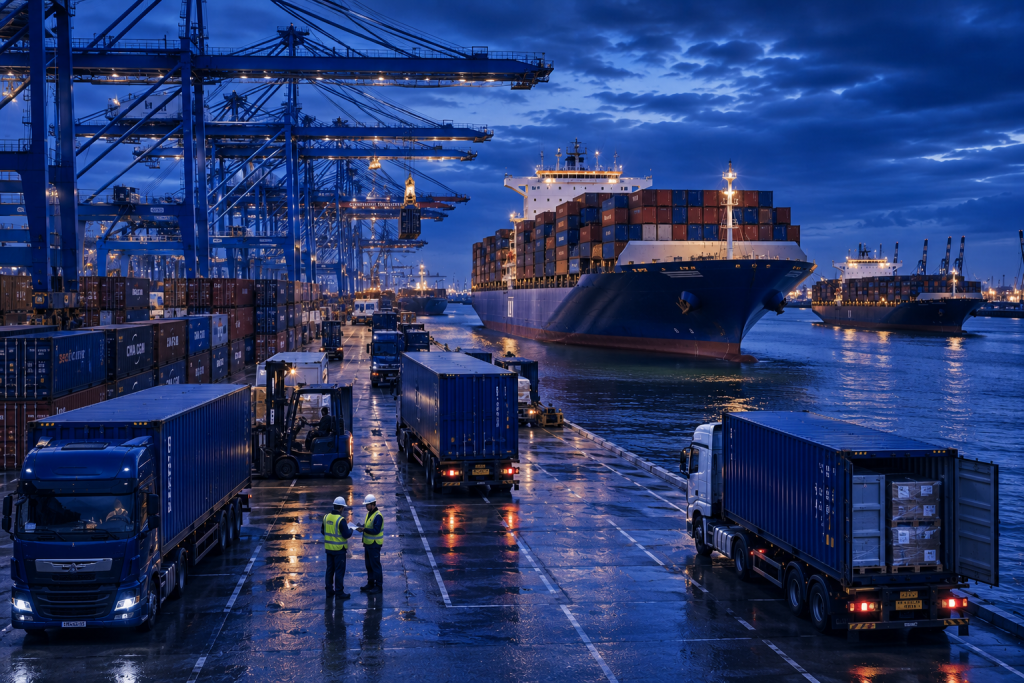
Professional retail transport and logistics services form one of the essential foundations of the global retail industry. Every new store, refurbishment, display installation, shop-in-shop project or international rollout depends on equipment and materials reaching the correct location, in the correct condition and at precisely the right stage of the programme. Behind the finished retail environment seen by customers is often a complex logistics network involving manufacturers, warehouses, transport companies, project managers, installation teams and individual stores.

Retail logistics can be considerably more demanding than standard commercial distribution. Bespoke fixtures, digital displays, signage, furniture, high-value technology and fragile equipment may require specialist handling, timed deliveries or direct coordination with installation teams. Shopping centres, city-centre stores, airports and live retail environments can also introduce restricted delivery windows, security procedures, loading restrictions and limited storage space.
The Global Retail Directory brings transport and logistics providers together with retail installation companies, manufacturers, suppliers, brands and retailers through one international B2B platform. By making specialist providers easier to discover across different markets, the directory helps businesses build the partnerships required to deliver retail projects locally, nationally and internationally.
The Role of Logistics in Modern Retail
Modern retail depends on an enormous movement of products, equipment and infrastructure. Consumer goods need to move through distribution networks, but the physical retail environment itself also generates significant logistics requirements. New fixtures must reach stores, digital technology needs secure transportation, replacement components must be available for maintenance programmes and entire store concepts may need to move between manufacturing facilities, warehouses and installation locations.
For project-based retail work, logistics cannot be treated as a separate activity that finishes when a vehicle reaches the store. Delivery timing frequently determines whether the installation programme succeeds.
If equipment arrives too early, the retailer may have nowhere suitable to store it. If it arrives late, installation teams can be left waiting and scheduled work may need to be rearranged. On programmes involving hundreds of stores, repeated delays can quickly affect costs, resources and completion deadlines.
Successful retail logistics therefore requires communication between everyone involved in the project. Manufacturers need to confirm when equipment will be available, logistics providers need accurate collection and delivery information, installation companies need realistic schedules and project managers need visibility across the entire process.
Transporting Retail Fixtures and Store Equipment
Retail fixtures can create unusual transportation requirements because they are often designed primarily for their final appearance rather than for convenient transportation.
Counters, display units, shelving systems, promotional structures, branded furniture and other components may be large, fragile or difficult to stack. Bespoke finishes can also be vulnerable to relatively minor handling damage.
The transport provider therefore needs to understand the nature of the load rather than treating every retail delivery as standard palletised freight. Appropriate securing, protection and vehicle selection can make a significant difference to the condition in which equipment reaches the installation site.
Packaging is equally important. Manufacturers and logistics providers should consider how components will be handled throughout the journey and how easily installation teams can identify individual parts once they arrive.
For multi-site programmes, clear labelling becomes particularly valuable. Equipment intended for different stores can appear almost identical while containing small configuration differences. Accurate identification helps prevent the wrong components travelling to the wrong location.
Warehousing and Consolidation for Retail Rollouts
Warehousing frequently provides the bridge between manufacturing and installation.
Rather than sending every component directly from a manufacturer to an individual store, equipment can be consolidated at a central or regional warehouse before being distributed according to the rollout schedule. This allows project teams to coordinate deliveries more closely with installation dates and can reduce pressure on manufacturers and retail locations.
Warehouses supporting retail programmes may also perform additional activities such as receiving goods from several suppliers, checking quantities, organising equipment by store, preparing installation packs and managing returns or replacement components.
For large programmes, this staging process can significantly improve efficiency. Installation teams may collect equipment for several upcoming stores at once, reducing unnecessary warehouse journeys while ensuring they have the correct materials available for the next phase of work.
However, consolidation only works effectively when inventory information is accurate. Missing or incorrectly allocated components discovered immediately before installation can still cause delays. Good communication between warehouse teams, project managers and installers remains essential.
Time-Critical Retail Deliveries
Retail projects frequently operate within strict deadlines. A store opening cannot always be postponed because one fixture has not arrived, and an overnight installation may have only a few hours available before the location needs to reopen.
This creates demand for time-critical transport services capable of responding to project schedules rather than conventional delivery rounds.
A time-critical delivery may involve moving a replacement component overnight, delivering directly to an installation team or coordinating arrival with a specific access window. The commercial value of the equipment itself may be relatively small compared with the cost of delaying the wider project.
Reliability therefore becomes particularly important. Retail project managers need realistic communication about collection and arrival times, especially when installation resources have already been scheduled around the delivery.
Specialist providers experienced in retail environments can also understand why apparently minor timing changes matter. Arriving outside an agreed shopping-centre delivery window, for example, may result in the vehicle being unable to access the site at all.
High-Value and Fragile Retail Equipment
Digital technology has increased the amount of high-value equipment moving through retail logistics networks.
Commercial screens, interactive displays, computing equipment, specialist lighting and other technology can represent a significant financial investment. Some products are also vulnerable to impact, moisture, incorrect positioning or unsuitable handling.
Transport providers dealing with these loads need appropriate processes for securing and protecting equipment throughout the journey. Loading and unloading can be just as important as the driving itself because damage frequently occurs while goods are being moved between the vehicle and final destination.
High-value deliveries may also require additional security considerations, particularly when equipment is stored overnight or transported through multiple locations.
The Global Retail Directory allows companies offering these specialist capabilities to present their services alongside the wider retail industry, making it easier for project teams to identify providers suited to technically demanding deliveries.
Last-Mile Delivery into Live Retail Environments
The final few metres of a retail delivery can sometimes be more difficult than the previous several hundred kilometres.
A vehicle may reach the correct postcode without difficulty, yet actually getting equipment from the vehicle into the store can involve loading bays, shopping-centre service corridors, goods lifts, pedestrian zones, stairs or restricted back-of-house areas.
City-centre stores create additional challenges because parking and loading space can be extremely limited. Shopping centres may require advance booking, vehicle registration or specific access documentation. Airports and other secure environments can involve even more controlled procedures.
Retail logistics providers therefore benefit from having accurate site information before dispatching a vehicle. Knowing where the correct loading area is located, what vehicle restrictions apply and whether handling equipment is required can prevent substantial delays.
For project managers, providing this information consistently across a rollout is equally important. A transport company cannot plan effectively if every store is presented simply as a street address.
Connecting Logistics with Retail Installation Teams
The relationship between logistics and installation is particularly important within project-based retail work.
Installation teams may depend entirely on the scheduled delivery to begin work. In other situations, installers may collect equipment from a warehouse and transport it to several stores themselves. Some projects combine both approaches depending on location, fixture size and programme requirements.
Clear responsibility needs to be established. Everyone should understand who is collecting the equipment, who is responsible for unloading, where items should be left and what happens if the installation cannot proceed.
This becomes increasingly important when stores are completed overnight. There may be limited opportunity to resolve missing components once normal warehouse operations have finished.
Retail installation companies and transport providers that understand each other’s requirements can therefore create a much more efficient project workflow. This is one of the reasons both sectors form core categories within the Global Retail Directory.
International Retail Transport and Logistics
Global retail programmes introduce another layer of complexity.
Equipment may be manufactured in one country, consolidated in another and installed across several international markets. Border procedures, customs documentation, local transport regulations and different delivery practices can all influence the programme.
International projects therefore benefit from logistics partners with appropriate geographical coverage and experience moving commercial equipment between markets.
The best solution does not always require one provider to control every stage. A project may use international freight services for the main movement and regional specialists for final delivery. What matters is that responsibility and communication remain clear throughout the chain.
For brands and manufacturers expanding internationally, developing a reliable network of logistics partners can become a significant competitive advantage. The ability to reproduce a retail concept across different countries depends partly on being able to move the physical components efficiently between them.
Sustainable and Efficient Retail Logistics
Efficiency is becoming increasingly important across the logistics industry, both commercially and environmentally.
Better route planning, consolidated deliveries and effective warehouse coordination can reduce unnecessary vehicle movements while improving project efficiency. Packaging can also be reviewed to reduce waste while still providing adequate protection for valuable retail equipment.
On multi-site programmes, careful scheduling can allow several nearby stores to be supplied within the same transport operation rather than treating every installation as an isolated journey.
However, sustainability should not be considered independently from reliability. Poorly planned consolidation that causes missed installation windows can result in additional journeys and ultimately create more waste.
Effective retail logistics therefore balances efficiency, protection, timing and practical project requirements.
Choosing Retail Transport and Logistics Partners
Selecting the right logistics provider depends on the nature of the project.
A business transporting standard stock between warehouses may require very different capabilities from a manufacturer delivering bespoke fixtures directly into flagship stores. Project managers should consider geographical coverage, vehicle capabilities, warehousing, handling experience, insurance, reporting and the provider’s familiarity with retail environments.
For specialist programmes, experience can be particularly valuable. Providers accustomed to timed deliveries, fragile fixtures or direct coordination with installers may understand project requirements that are unfamiliar to conventional freight operators.
The lowest transport price does not necessarily represent the lowest overall project cost. A failed delivery can affect installation labour, store operations and programme deadlines far beyond the value of the transport movement itself.
Reliable partnerships therefore become increasingly valuable as retail projects grow in scale and complexity.
Building a Worldwide Retail Logistics Network
Retail is a global industry, and the movement behind it is equally international. Manufacturers need routes to market, brands need reliable distribution, installation teams need equipment on site and retailers need confidence that projects will be delivered according to programme.
The Global Retail Directory provides a dedicated international platform where businesses can discover transport and logistics companies operating within the retail sector alongside installation specialists, manufacturers, suppliers and iconic brands.
The Transport and Logistics category is designed to include businesses supporting retail through road transport, distribution, warehousing, specialist deliveries, high-value equipment movements, time-critical services and wider logistics operations.
For transport and logistics companies, a professional presence within the directory creates an opportunity to present capabilities to retailers, brands, manufacturers, project managers and installation businesses searching for partners across different markets.
For businesses planning retail projects, it provides another route to finding the specialist companies capable of moving equipment from the point of manufacture to the place where the finished retail environment becomes reality.