
Retail Industry in Peru
The retail industry in Peru operates within one of South America’s most geographically and culturally diverse economies. Lima dominates the country’s modern consumer market, but Peru’s wider retail ecosystem stretches from Pacific ports and coastal agricultural regions through the Andes to cities, communities and production areas deep within the interior. Modern shopping centres, supermarkets, international brands and e-commerce operate alongside traditional markets, independent stores, workshops and businesses whose products remain closely connected with local materials, agriculture and regional craftsmanship.

Peru also possesses something particularly valuable within international retail: products with a strong sense of origin. Alpaca fibre, Pima cotton, silver, ceramics, coffee, cocoa, food products and other materials can carry an identity that consumers associate specifically with Peru. The commercial opportunity is therefore considerably larger than simply exporting raw materials. Peruvian businesses can transform those resources into finished products, develop brands around them and participate in more of the value created before the final product reaches consumers.
For the Global Retail Directory, Peru provides an excellent example of why retail should be understood as a complete international ecosystem rather than simply a collection of stores. Agricultural producers, craftspeople, textile manufacturers, packaging companies, logistics providers, commercial contractors and consumer brands can all contribute to retail in different ways. Making those capabilities easier for international buyers, retailers and project organisations to discover is particularly important in a country where valuable expertise is spread across several regions and industries.
Lima Is the Centre of Peru’s Modern Retail Economy
Lima is Peru’s dominant commercial centre and contains the country’s greatest concentration of corporate activity, professional employment and consumer spending. Modern shopping centres, supermarkets, fashion stores, restaurants, technology retailers and international brands operate throughout the metropolitan region, making the capital a natural starting point for companies evaluating the Peruvian market. Premium commercial districts serve affluent consumers and international visitors, while neighbourhood stores, markets and smaller independent businesses remain essential to everyday commerce across the wider city.
This diversity means that Lima should not be treated as one uniform retail market. Different districts can support very different store formats, pricing strategies and customer experiences, while property type and accessibility can influence how physical retail operates. International brands entering Peru may establish their first significant locations in Lima, but the format successful in one part of the capital cannot automatically be assumed to work everywhere. Retailers need to understand the consumers surrounding each location and adapt their commercial strategy without losing the identity of the brand.
Lima also concentrates many of the businesses supporting physical retail. Designers, manufacturers, furniture suppliers, technology businesses and retail installation companies can all contribute to new stores and refurbishments, while warehouses and distributors support the movement of inventory. This makes the capital important not only because of the customers who shop there but because many of the B2B relationships required to operate across Peru can begin there.
Modern Shopping Centres Have Changed Peruvian Consumer Retail
Shopping centres have become significant commercial destinations within Lima and other major Peruvian cities, bringing fashion, beauty, technology, supermarkets, restaurants, entertainment and services into organised environments. For consumers, these destinations provide convenience and product choice, while for domestic and international brands they provide professionally managed locations with established customer traffic. The development of modern shopping centres has therefore helped create new routes into the Peruvian market for businesses that prefer structured retail environments.
Behind every finished store sits a much broader B2B supply chain. Retail units require furniture, lighting, displays, flooring, electrical systems, technology and graphics before customers ever enter them, while restaurants introduce commercial kitchens and specialist equipment. Property owners need maintenance, security and facilities services throughout the life of the development. A modern shopping centre consequently generates commercial activity for many businesses that customers will never see.
As these properties mature, refurbishment becomes increasingly important. Stores change concepts, technology becomes outdated and property owners need existing destinations to remain competitive against newer developments. This creates continuing opportunities for Retail Installation Companies, manufacturers and suppliers rather than a single wave of work when the centre is originally constructed. Peruvian companies capable of delivering professional commercial environments can therefore develop expertise relevant to both domestic and international retail projects.
Traditional Markets and Independent Retail Remain Essential
Modern shopping centres have not removed Peru’s traditional commercial networks. Markets, neighbourhood stores and independent businesses remain fundamental to food, clothing, household products and countless everyday purchases, often serving customers through strong local relationships and detailed understanding of neighbourhood demand. These retailers know which products sell, which package sizes work and how purchasing behaviour changes through the week or year, giving them a level of responsiveness that larger organisations cannot always reproduce.
For manufacturers and distributors, reaching this part of the market can require a different strategy from supplying national supermarket chains. Wholesale markets and regional distributors can provide access to large numbers of smaller retailers, while emerging consumer brands may find independent businesses more willing to test new products before larger chains are prepared to allocate valuable shelf space. Modern and traditional retail channels can therefore complement one another rather than existing in direct opposition.
Technology is gradually changing these relationships without necessarily replacing the businesses themselves. Digital payments, messaging applications, social media and delivery services allow smaller merchants to modernise while retaining the independent format customers already understand. This creates opportunities for technology and logistics providers alongside manufacturers, demonstrating again why GRD’s definition of the retail ecosystem extends considerably beyond conventional retailers.
Peru’s Geography Shapes Retail and Distribution
Peru is a particularly challenging country through which to distribute products because its geography changes dramatically between the Pacific coast, the Andes and the Amazonian interior. Major population centres and infrastructure are concentrated heavily along parts of the coast, while mountain terrain can make relatively modest geographic distances considerably more complicated operationally. A journey that appears straightforward on a map can involve substantial changes in altitude, road conditions and transportation requirements.
For national retailers, this affects where inventory should be stored and how regional stores should be supplied. A centralised warehouse can operate efficiently for Lima and some coastal markets while becoming less suitable for distant locations in the Andes or other parts of the country. Regional stockholding, local suppliers and carefully planned distribution can therefore become increasingly important as retail networks expand. E-commerce faces the same reality because placing an order digitally does not remove the physical difficulty of delivering it.
This creates a genuine role for the Transport & Logistics businesses represented within Global Retail Directory. Retailers, manufacturers and e-commerce companies need partners capable of understanding Peruvian geography rather than simply calculating distance between two points. Reliable warehousing, inventory management and regional distribution can become competitive advantages in a market where geography has a direct influence on customer service.
Callao Connects Peru with International Retail Supply Chains
Immediately beside Lima, Callao provides Peru with its principal maritime gateway and connects the domestic economy with international manufacturing and consumer markets. Imported technology, machinery, vehicles, materials and consumer products enter the country through maritime supply chains, while Peruvian agricultural and manufactured goods travel outward toward international customers. For retailers, this infrastructure remains largely invisible, yet product availability can depend heavily on how efficiently these international movements operate.
For exporters, the relationship works in reverse. Products manufactured or processed in Peru need to reach international gateways efficiently before beginning journeys toward warehouses and retailers in other countries. Packaging, documentation, freight planning and customs therefore become part of the commercial process rather than issues that begin only after manufacturing has finished. A product intended for international retail needs to survive the entire journey from production facility to final customer.
Callao also demonstrates why manufacturers and logistics businesses need to understand one another. A beautifully manufactured product can still become commercially unsuccessful if packaging, shipping or distribution repeatedly causes damage or delays. For Peruvian companies seeking international buyers through GRD, demonstrating an understanding of export requirements can therefore be almost as important as demonstrating the quality of the product itself.
Peru Can Create More Value from Its Own Materials
One of Peru’s strongest commercial opportunities lies in moving further along the value chain. Raw materials have commercial value, but finished products can capture substantially more. Alpaca fibre can be transformed into premium knitwear, cotton can become finished clothing or home textiles, cocoa can become branded chocolate and coffee can be roasted, packaged and sold directly to consumers rather than leaving Peru only as an agricultural commodity.
Every additional stage creates opportunities for different businesses. Manufacturers, designers, packaging companies, marketers, logistics providers and retailers can all participate without every activity needing to remain inside one organisation. Stronger domestic commercial ecosystems allow specialised Peruvian companies to work together and participate in more of the value created before the finished product reaches the customer.
This is particularly relevant to Global Retail Directory’s Manufacturers & Suppliers category. International buyers may know that Peru produces alpaca, cotton, coffee or cocoa without knowing which businesses can transform those materials into commercially finished products. Making specialist Peruvian manufacturers easier to discover can help shift the conversation from simply sourcing materials in Peru toward sourcing higher-value capabilities from Peru.
Alpaca Connects the Andes with Premium International Retail
Alpaca is one of Peru’s most internationally distinctive materials and provides the country with a product strongly associated with its geography and culture. The fibre is used within premium fashion and home textiles, while its connection with the Andes gives it a provenance that can become part of the customer proposition. Consumers purchasing premium materials increasingly want to understand where products originated, how they were made and why they differ from cheaper alternatives.
The opportunity for Peru extends far beyond basic fibre production. Sorting, spinning, dyeing, knitting, weaving, garment manufacturing, design and branding can all take place before the finished product reaches retail. A premium alpaca coat, scarf or blanket represents substantially more accumulated expertise and commercial value than raw fibre alone, while each stage creates work for different specialist businesses.
Arequipa illustrates how traditional materials can connect with modern industrial processes. Fibre originating in Andean communities can move through organised processing and textile manufacturing before becoming finished products suitable for international retail. Quality control becomes fundamental because premium positioning depends on consistency in colour, texture, construction and finishing. The traditional origin of alpaca and modern manufacturing are therefore not competing ideas; together they can create internationally competitive Peruvian products.
Pima Cotton and Peruvian Fashion Create Another Premium Opportunity
Peruvian Pima cotton provides another example of how material origin can support premium retail. Its commercial potential does not necessarily lie in exporting cotton at the earliest possible stage because the fibre can move through spinning, fabric production and manufacturing before becoming clothing, bedding and other finished consumer products. Manufacturers capable of maintaining quality throughout these processes can supply international brands or develop consumer businesses of their own.
For retailers, provenance provides differentiation only when it is supported by genuine product quality. A customer may initially be attracted by the story of Peruvian cotton, but premium positioning cannot survive if manufacturing fails to match the promise. This creates opportunities for Peruvian textile companies capable of combining strong materials with professional production, finishing and quality control.
Peruvian fashion brands can build on these domestic advantages rather than competing exclusively through low-cost manufacturing. Alpaca, Pima cotton, design and craftsmanship can create a distinctive proposition, while e-commerce allows brands to reach international consumers before establishing permanent stores abroad. As those brands expand physically, they can use the wider Global Retail Directory ecosystem to identify manufacturers, project partners and installation specialists within destination markets.
Craftsmanship Can Become Part of Premium International Retail
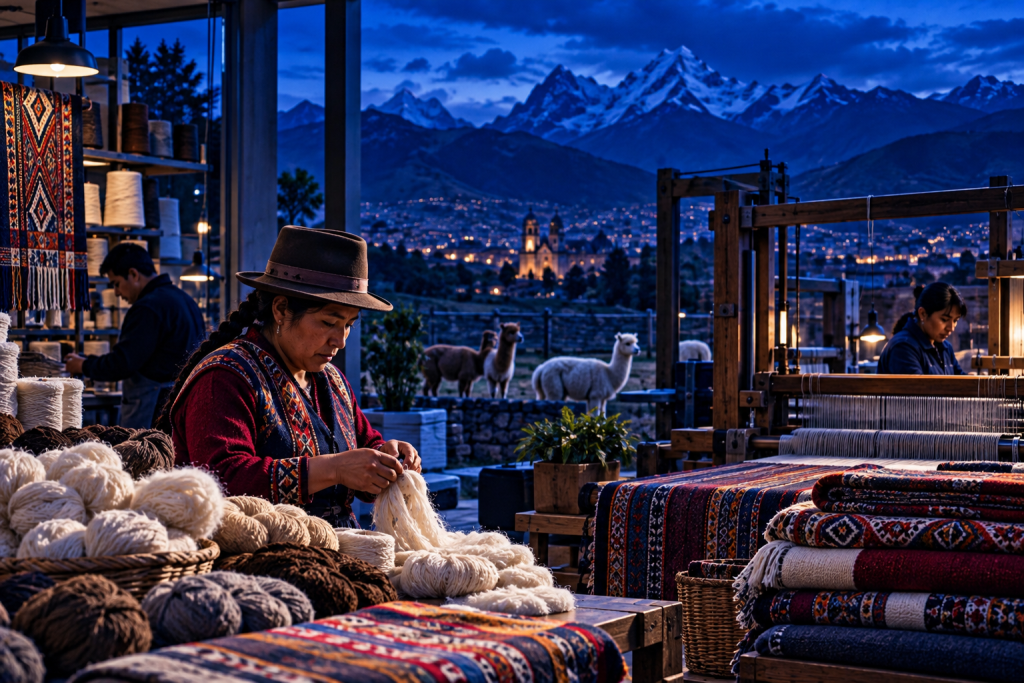
Peru has extensive traditions of weaving, ceramics, jewellery and decorative craftsmanship, giving specialist producers products that mass-market businesses cannot easily reproduce authentically. The commercial challenge is not to turn every handmade product into industrial manufacturing but to build professional business systems around the craftsmanship so that products can reach larger markets without losing the qualities that make them distinctive.
Packaging can become more professional, photography can improve, inventory can be organised and international fulfilment can become reliable while the production method itself remains traditional. A craft business can therefore operate with modern commercial infrastructure without abandoning the skills on which its products are based. This creates opportunities for designers, packaging companies, logistics providers and retailers to contribute around the original producer.
International retail can be particularly valuable for this type of business because customers in premium markets increasingly value provenance and individuality. Global Retail Directory can help specialist Peruvian suppliers become visible to buyers looking for authentic products or manufacturing capabilities, while allowing those businesses to present themselves as professional commercial partners rather than simply local craft producers.
Silver and Jewellery Connect Peruvian Materials with Luxury Retail
Peru’s mineral resources and metalworking traditions create opportunities within jewellery and decorative products, where silver can move from raw material through refining, craftsmanship, design and branding before reaching premium retail. The difference in final commercial value can be substantial because the customer is ultimately purchasing more than the underlying metal. Design, finishing, provenance and brand identity all influence how the finished product is perceived.
Jewellery is also particularly dependent on presentation. Packaging, lighting, store design and customer service can influence whether the product feels mass-market or premium, meaning the wider retail environment becomes part of the value proposition. A well-designed Peruvian jewellery brand can therefore compete through materials, craftsmanship and identity rather than attempting to imitate established luxury businesses from other markets.
International expansion introduces another layer of requirements. Brands need distribution, reliable fulfilment and eventually local project partners if they open physical stores or concessions overseas. GRD’s international structure can help connect growing Peruvian brands with the B2B companies required to support that expansion while simultaneously making Peruvian jewellery producers more visible to international retailers and buyers.
Peruvian Food Can Move from Culinary Recognition to Retail Brands
Peruvian cuisine has developed considerable international recognition, creating opportunities extending beyond restaurants. Ingredients, sauces, snacks, beverages, coffee, chocolate and other food products can benefit as consumers become more familiar with Peruvian flavours. A customer who first encounters an ingredient in a restaurant may later purchase it from a supermarket or specialist retailer, allowing culinary interest to become repeat consumer purchasing.
Manufacturers need professional processing and packaging if that transition is to happen at scale. Products must maintain quality while travelling internationally, comply with destination regulations and communicate effectively to customers who may know little about the original product. Restaurants can introduce the flavour, but manufacturing and retail infrastructure are what allow that introduction to develop into a sustainable consumer category.
Peru’s agricultural diversity provides further opportunities because the coast, mountains and Amazonian regions support different ingredients and crops. Coffee, cocoa, fruit, grains and specialist ingredients can potentially move into premium international food and wellness markets, but agricultural uniqueness alone is not enough. Quality control, processing, packaging and reliable supply are what turn an interesting ingredient into a product retailers can purchase consistently.
Coffee and Cocoa Show How Commodities Can Become Brands
Coffee provides a clear example of Peru’s opportunity to capture more value from agricultural production. Green coffee beans can be exported to international roasters, but Peruvian businesses can also roast, package and brand coffee themselves. Both models can succeed, yet they capture value at different stages and require different capabilities. Consumer branding introduces marketing, packaging, distribution and customer relationships, but it also creates the possibility of cafés, e-commerce and international retail partnerships around the original agricultural product.
The same principle applies to cocoa. Cocoa beans are ingredients, while finished chocolate is a consumer product requiring manufacturing, product development, packaging and branding. Premium chocolate can communicate origin particularly effectively, allowing regional cocoa varieties, production methods and relationships with growers to become part of the customer proposition rather than disappearing behind another company’s brand.
Tourism can strengthen both categories by introducing visitors to Peruvian coffee and chocolate while they are inside the country. E-commerce then allows those customers to continue purchasing after returning home, while specialist retailers provide additional routes into overseas markets. The journey from farm to brand demonstrates how retail can transform the economics of agricultural production.
Tourism Gives Peruvian Retail an International Audience
Tourism provides Peruvian businesses with access to customers from around the world before those businesses ever operate internationally. Visitors travelling through Lima, Cusco, the Sacred Valley, Arequipa and other destinations encounter Peruvian food, textiles, jewellery, crafts and consumer products throughout their journey, turning physical retail into an international discovery channel.
A tourist purchase can become valuable far beyond the original transaction when the customer remembers the brand and can continue purchasing online after returning home. Retailers therefore benefit from thinking beyond conventional souvenirs and developing products capable of creating longer-term relationships. Packaging, brand identity and digital accessibility all become important because the customer relationship may continue thousands of kilometres away.
Tourism also gives emerging Peruvian Iconic Brands an opportunity to build international recognition gradually. A company does not necessarily need to open a London, Paris or New York store before acquiring customers from those markets. Visitors can discover the brand in Peru first, and physical international expansion can follow later if sustained demand develops.
Cusco Shows How Heritage and Modern Retail Can Coexist
Cusco provides one of Peru’s clearest examples of tourism shaping commerce. Historic architecture, hospitality, restaurants, textile businesses, jewellery and craft retail interact within a city serving local residents as well as large numbers of international visitors. This gives businesses access to substantial tourist spending but also creates practical challenges because historic commercial properties cannot always be treated like modern shopping-centre units.
Access can be restricted, building layouts can be irregular and architectural features may need to be preserved. Retail design therefore requires sensitivity, and fixtures may need to be manufactured or installed differently from those used in modern commercial developments. A store can feel contemporary without erasing the character of the property or surrounding city, while the historic environment can actually strengthen the connection between premium Peruvian products and their origin.
This creates opportunities for specialist designers, manufacturers and Retail Installation Companies capable of adapting modern commercial requirements to complex historic environments. The customer may see an effortless boutique, while behind it sits careful coordination between property, design, manufacturing and installation.
Peru’s Global Identity Should Extend Beyond Machu Picchu
Peru’s international image is strongly connected with Machu Picchu, and that recognition is enormously valuable for tourism, but the country’s modern commercial economy is considerably broader. Lima is a major metropolitan consumer market, Arequipa has industrial capabilities, Callao connects Peru with international trade and businesses throughout the country participate in manufacturing, technology, agriculture and modern services.
Retail strategy should therefore avoid reducing every Peruvian product to historic imagery. Strong national branding can acknowledge cultural heritage while remaining contemporary, allowing brands to use origin as an advantage without turning every commercial proposition into a tourism product. Modern Peruvian design and traditional identity can coexist rather than compete.
For international buyers, recognising this wider picture is important. Peru can provide culturally distinctive consumer products, but it can also provide manufacturing, processing, commercial and supply-chain capabilities. Global Retail Directory helps present those businesses within an international B2B context rather than defining the country solely through its best-known tourist landmarks.
Grocery and Independent Retail Serve Different Consumer Needs
Supermarkets and modern grocery formats have become increasingly important within major Peruvian urban markets, providing domestic food manufacturers with opportunities to reach consumers at substantial scale. Supplying organised retail requires discipline because packaging dimensions, barcodes, delivery schedules and quality standards need to remain consistent, while promotional campaigns can create sudden increases in demand and fresh products introduce cold-chain requirements.
Independent stores and traditional markets nevertheless remain essential, particularly in communities where large organised retailers do not dominate. These businesses can provide manufacturers with broad geographic reach through wholesale and regional distribution networks, while emerging brands may find smaller retailers more willing to test new products before national chains commit valuable shelf space.
The two channels can therefore support different stages of growth. A manufacturer may build awareness through independent retail before entering supermarket networks, while established brands can use both channels to reach different consumers. Businesses providing packaging, warehousing, refrigeration and distribution become part of the same ecosystem regardless of which retail format ultimately sells the product.
E-Commerce Gives Peruvian Businesses Reach but Does Not Remove Geography
Digital commerce allows a brand based in Lima to reach customers elsewhere in Peru without immediately opening physical stores in every major city. This can be particularly valuable for emerging fashion, beauty, food, jewellery and craft businesses because it allows national demand to be tested before substantial investment is made in additional property. Social media and marketplaces can also introduce products to customers who might never encounter the business through conventional physical retail, giving smaller Peruvian companies access to a much wider audience.
The Andes, however, do not disappear because an order was placed online. Products still need to be stored, picked, packaged and physically delivered, and the complexity of that journey can vary considerably according to destination. Businesses need realistic delivery promises, packaging capable of surviving longer journeys and inventory systems that accurately show what is available. As order volumes increase, strategically positioned inventory or regional fulfilment can become more important, particularly when serving customers far from Lima.
This relationship between digital sales and physical fulfilment creates opportunities for businesses within GRD’s Transport & Logistics ecosystem. E-commerce does not make logistics less relevant; it makes reliable logistics even more important because the customer expects the digital promise to become a predictable physical delivery. Peruvian retailers capable of connecting strong online experiences with dependable fulfilment can therefore build national reach without reproducing the cost structure of a large physical store network.
Social Media Can Turn Small Peruvian Businesses into Recognised Brands
Social platforms provide emerging Peruvian businesses with another route toward customers, particularly within visually driven categories such as fashion, beauty, jewellery, food and craftsmanship. A small producer can demonstrate how products are made, communicate the origin of materials and build direct relationships with consumers without requiring the advertising budgets traditionally associated with national brand development. This can be especially powerful for products such as alpaca textiles, jewellery or specialist food where the story behind the product contributes directly to its appeal.
Rapid visibility can nevertheless create operational pressure. A business capable of producing 50 units may struggle if online attention suddenly creates demand for 5,000, while inconsistent stock information or slow fulfilment can damage customer trust just as quickly as successful marketing created it. Production planning, inventory management, packaging and customer service therefore need to develop alongside the audience. Marketing can create opportunity considerably faster than manufacturing can respond.
The strongest emerging brands consequently combine creativity with operational discipline. Social media may create the first international customer, but reliable manufacturing and distribution determine whether that customer returns. As Peruvian businesses reach this stage, greater visibility through Global Retail Directory can complement consumer-facing marketing by helping them establish the B2B relationships required for manufacturing, supply, distribution and eventual physical expansion.
Peru’s Beauty Industry Can Build on Distinctive Natural Ingredients
Peru’s biodiversity creates possibilities within beauty and personal care because botanical ingredients and natural materials can provide genuine differentiation in international markets. Consumers increasingly encounter products positioned around origin, traceability and distinctive ingredients, giving Peruvian businesses an opportunity to develop products whose connection with the country is commercially meaningful rather than merely decorative.
Successful beauty products, however, require considerably more than interesting ingredients. Formulation, testing, manufacturing, packaging, regulatory compliance and consistent quality are all essential before a product can develop into a credible consumer brand. Packaging also plays an important role because beauty is a highly visual retail category in which the container and presentation influence the customer’s first impression almost as strongly as the formulation itself.
For Peruvian businesses, the strongest opportunity lies in combining distinctive local resources with professional product development and manufacturing. The origin provides the story, while technical capability provides the credibility. GRD can support the B2B side of this development by making manufacturers, packaging suppliers and other specialist companies easier for international buyers and growing Peruvian brands to discover.
Domestic Brands Can Expand Across Latin America
Peruvian companies do not need to move directly from domestic operations to global expansion. Neighbouring Latin American markets can provide a more gradual international route, allowing brands to develop experience with cross-border logistics, regulation, property and customer behaviour before attempting expansion into more distant regions. Fashion, food, beauty and lifestyle businesses can all potentially use strong domestic recognition as the foundation for this progression.
Regional expansion still requires adaptation because Latin America is not one homogeneous retail market. Consumer preferences, purchasing power, regulations and property conditions differ between countries, and a store concept successful in Lima may need adjustment before being introduced elsewhere. The advantage lies in learning how to preserve a consistent brand while adapting the commercial model to individual markets.
Manufacturers can follow a similar progression. A Peruvian supplier serving domestic retailers may begin exporting to neighbouring countries before pursuing customers in Europe, North America or Asia. Each stage develops experience with international documentation, logistics and customer expectations, allowing the business to become progressively more capable of participating in global retail supply chains.
International Retailers Need Local Peruvian Partners
Foreign brands entering Peru need local execution even when their design standards and commercial strategy are controlled internationally. A global store concept still needs to fit a particular building, equipment needs to reach the location, electrical systems need connecting and local property requirements need to be understood. Once the store opens, maintenance and replacement components create continuing requirements that cannot always be managed efficiently from another country.
Local manufacturers can sometimes provide selected furniture or components rather than importing every element of a store. Peruvian businesses can also support surveys, installation, maintenance and project coordination, provided they can demonstrate the quality and reliability expected by international organisations. These partnerships can reduce lead times and make it easier to respond when physical conditions differ from the original design assumptions.
This is one of the most practical functions of Global Retail Directory. International retailers and project organisations can use GRD to discover Retail Installation Companies, Manufacturers & Suppliers and Transport & Logisticsbusinesses operating within Peru instead of beginning every market entry entirely through personal introductions. Capable Peruvian businesses gain international visibility at the same time.
Peruvian Manufacturers Need Greater International Visibility
Peru contains specialist producers whose capabilities can be relevant to buyers around the world. Textile companies, food manufacturers, jewellery producers, furniture businesses, packaging suppliers and craft producers can all potentially participate in international retail supply chains, yet excellent manufacturing capability does not automatically create international awareness.
A company can remain commercially invisible if overseas buyers do not know it exists or if its digital presence fails to communicate what it can actually produce. Websites developed primarily for domestic customers may contain limited technical information, while international procurement teams often need to understand production capabilities, materials, geographic coverage, quality standards and previous experience before beginning a conversation. Professional presentation therefore becomes part of international business development.
Visibility does not replace quality; it allows quality to be discovered. This principle is central to Global Retail Directory. By providing Peruvian manufacturers and suppliers with an international company profile, GRD can help buyers searching for relevant capabilities identify businesses that might otherwise remain outside their existing networks.
Sustainability Can Strengthen Peru’s Premium Position
Peru’s natural resources make environmental and social responsibility particularly relevant to products whose commercial value is closely connected with origin. International consumers and retailers increasingly ask questions about material sourcing, farming practices, animal welfare, labour conditions and environmental impact. For premium categories such as alpaca, cotton, coffee and cocoa, transparency can therefore become part of the value proposition rather than simply a compliance requirement.
Sustainability claims need evidence. Traceability, appropriate certification and documented production practices can help businesses demonstrate how materials were sourced and products manufactured, while efficient use of water, energy and materials can reduce operating costs as well as environmental impact. Manufacturers supplying major international organisations may increasingly encounter these questions during procurement rather than after a commercial relationship has already begun.
For Peruvian businesses competing through quality and provenance, responsible production can strengthen rather than weaken the premium proposition. A product whose origin is central to its identity benefits when the business can explain that origin credibly. Environmental performance and commercial performance do not always need to conflict, particularly where better resource efficiency also improves manufacturing economics.
Connecting Peru Through Global Retail Directory
Peru’s retail ecosystem extends from agricultural producers and craftspeople to industrial manufacturers, shopping centres, logistics businesses, retail installation specialists and consumer brands. These companies do not always interact directly, yet their capabilities frequently depend on one another. A fashion retailer may need textile production, a hotel or commercial project may require Peruvian furniture or decorative products, an international buyer may be searching for specialist alpaca manufacturing, while a Peruvian brand expanding overseas may need installation or logistics partners within another country.
The Global Retail Directory is designed to make these connections easier to establish. Manufacturers & Suppliers can present their production capabilities, Retail Installation Companies can demonstrate where and how they operate, Transport & Logistics businesses can become visible to companies needing physical distribution, and Iconic Brands provide another layer showing the consumer businesses whose growth creates demand throughout the wider industry. These categories are different, but they are interconnected by the same international retail ecosystem.
For Peruvian businesses, greater visibility can create opportunities well beyond the domestic market. For international buyers, GRD provides a structured way to discover companies within Peru rather than relying solely on generic searches or established contacts. The objective is not simply to create another list of companies; it is to make useful B2B capabilities easier to identify across countries, languages and sectors.
Peru’s Retail Opportunity Extends from Origin to International Consumer
The future of the retail industry in Peru will be shaped by modern consumer development in Lima, digital commerce, tourism and the continuing evolution of supermarkets and shopping centres, but some of the country’s most interesting opportunities begin much earlier in the supply chain. Alpaca, Pima cotton, silver, coffee, cocoa and other Peruvian resources already possess international recognition, and the larger commercial opportunity is to transform more of those resources into finished products, specialist manufacturing capabilities and brands.
Peru’s geography creates genuine operational challenges, yet it also gives the country extraordinary diversity. Lima provides metropolitan consumer scale, Callao connects the economy with international trade, Arequipa links Andean materials with textile manufacturing and Cusco demonstrates how tourism can introduce Peruvian products directly to international customers. Agricultural regions, workshops and manufacturers add further capabilities that are not always immediately visible when Peru is considered only as a consumer market.
For Global Retail Directory, that combination makes Peru particularly relevant. International retailers can discover Peruvian suppliers and project partners, while domestic manufacturers, specialists and brands can become visible to businesses elsewhere in the world. The opportunity is ultimately to connect Peruvian origin with international capability — allowing more of the value created by the country’s materials, skills and businesses to travel with the finished product all the way to the global retail customer.