
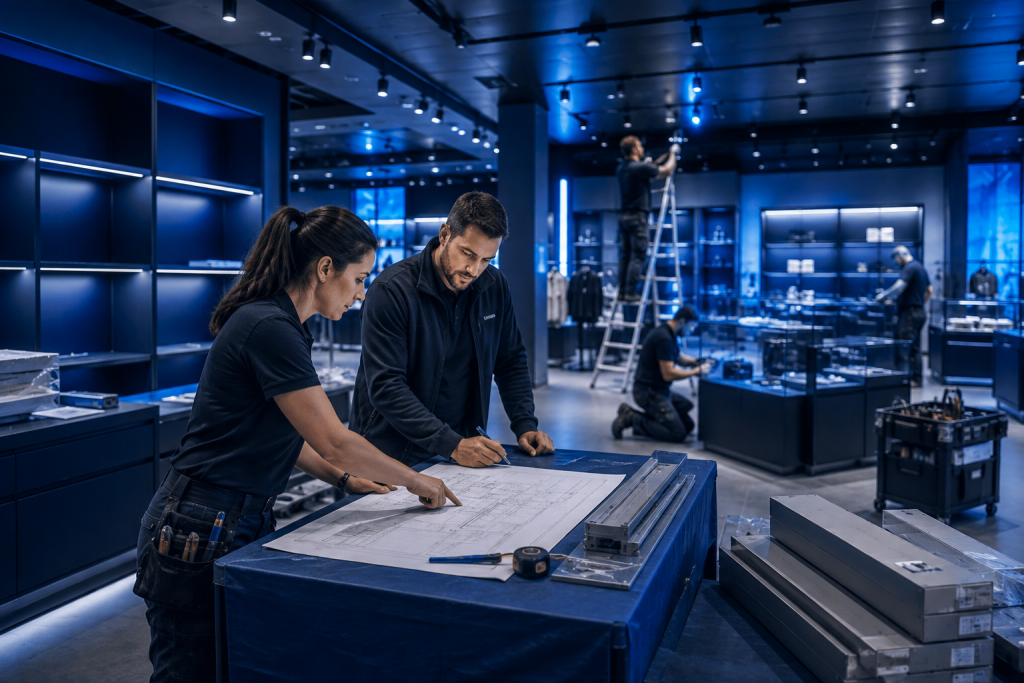
Professional retail installation companies play an essential role in transforming retail concepts, manufactured components and project plans into completed physical environments. From individual store upgrades to international rollout programmes involving hundreds of locations, installation teams provide the practical expertise required to deliver fixtures, displays, digital equipment, signage, merchandising systems and specialist retail environments accurately and consistently.

The modern retail industry is increasingly international. A retailer may develop a concept in one country, manufacture fixtures in another, coordinate logistics through several distribution centres and use installation partners across multiple markets. Successful delivery therefore depends on much more than simply finding somebody capable of assembling equipment. Retailers, brands, manufacturers and project managers need reliable installation companies that understand commercial environments, programme deadlines, site restrictions, health and safety requirements and the importance of maintaining consistent standards across every location.
The Global Retail Directory brings this fragmented international industry together through one worldwide platform. By connecting retail installation specialists with retailers, brands, manufacturers, suppliers, transport providers and project professionals, the directory helps businesses discover relevant industry partners across different countries and markets.
The Role of Professional Retail Installation Companies
Retail installation covers a broad range of specialist activities. Depending on the project, an installation company may be responsible for assembling and positioning fixtures, installing display equipment, implementing shop-in-shop concepts, fitting digital screens, completing merchandising systems, installing signage or supporting refurbishment and maintenance programmes.
The exact scope varies significantly between projects. A small store update may require only a limited installation team working for several hours, while a national rollout can involve multiple independent teams travelling between locations according to a carefully controlled programme.
Retail environments also create challenges that are different from many conventional construction sites. Installation work frequently takes place inside operational stores, shopping centres, airports, supermarkets, convenience stores, petrol stations and other locations where access, security and working hours may be restricted. Teams may need to work overnight or within narrow installation windows so that stores can continue trading normally.
Professional retail installation companies therefore combine practical installation skills with planning, communication and the ability to adapt to changing site conditions.
Retail Fixtures, Displays and Merchandising Installations
Physical fixtures remain fundamental to retail even as digital technology becomes increasingly important. Counters, shelving, freestanding display units, wall systems, promotional fixtures, branded furniture and specialist merchandising equipment all need to be transported, assembled, positioned and finished correctly.
For manufacturers, the quality of the final installation is particularly important because the installed fixture represents the finished product seen by the retailer and its customers. A high-quality manufactured display can still create a poor impression if it is incorrectly assembled, damaged during installation or positioned inaccurately.
This creates a strong relationship between manufacturers and installation companies. Installation teams need clear drawings, component identification and assembly information, while manufacturers benefit from receiving accurate feedback when recurring site or product issues are identified.
For international programmes, this relationship becomes even more important. Standardised installation information allows multiple teams in different locations to deliver a consistent result while photographic reporting gives manufacturers, project managers and clients visibility of completed work.
Digital Displays and Technology Installation
Technology has become an increasingly visible part of modern retail environments. Digital signage, commercial displays, interactive equipment, information screens and other connected technologies are now found across supermarkets, shopping centres, electronics stores, fashion retailers, transport locations and many other commercial environments.
Installing these systems can require coordination between several specialist businesses. Physical mounting, equipment positioning, power availability, network connectivity, content systems and final testing may each involve different responsibilities.
Retail installation companies working with digital equipment therefore need to understand the boundaries of their agreed scope while still being able to coordinate effectively with other project partners.
The installation itself is only one stage. Equipment needs to be positioned accurately, cables managed professionally and the completed system tested according to project requirements. On large programmes, consistent installation methods are essential because a small repeated mistake can become a significant problem when multiplied across hundreds of stores.
Shop-in-Shop and Branded Retail Environments
Shop-in-shop installations allow brands to create their own defined retail environments within larger stores. These projects can range from relatively simple branded display areas to sophisticated installations incorporating bespoke furniture, lighting, digital technology, signage and specialist finishes.
Because several organisations may be involved, coordination becomes critical. The retailer controls the host environment, the brand defines the customer experience, manufacturers produce the physical components, logistics companies deliver them and retail installation teams bring everything together on site.
Installation windows can be particularly restricted in busy retail locations. Teams may need to complete work overnight and leave the area fully operational before trading begins the following morning.
For brands operating internationally, finding suitable installation partners in different markets can also be challenging. Local knowledge, geographical coverage, appropriate qualifications and previous retail experience can all influence the selection of an installation company.
This is one reason why a worldwide industry platform can be valuable. Instead of relying entirely on existing contacts, businesses can discover installation specialists operating within the countries and sectors relevant to their projects.
Multi-Site Retail Rollouts
Large-scale rollout programmes are one of the most demanding areas of professional retail installation.
A rollout may involve dozens, hundreds or even thousands of locations. Every site can have different access arrangements, trading hours, layouts and local conditions, yet the finished installation is expected to remain consistent across the entire programme.
Planning therefore becomes as important as physical installation. Materials need to arrive at the correct locations, installation teams need accurate schedules and site information, and project managers need reliable completion reporting.
Experienced retail installation companies understand that the success of a rollout depends on repeatability. Installation methods should be established early, teams should receive consistent information and problems identified during the first locations should be communicated before they are repeated elsewhere.
Photographic reporting, completion documentation and clear escalation procedures can significantly improve control across large programmes. When multiple installation teams are involved, these processes help maintain a consistent standard even when stores are geographically separated.
Retail Maintenance, Repairs and Store Updates
Retail installation does not end when a new fixture or store environment is completed. Retail estates require ongoing maintenance, repairs, replacements and updates throughout their operational life.
Fixtures become damaged, digital equipment needs replacing, merchandising layouts change and brands introduce new campaigns. Retailers may also refresh existing stores rather than undertake complete refurbishments.
Installation companies with nationwide or regional coverage can therefore provide ongoing support beyond the original rollout. This can include reactive maintenance, planned upgrades, replacement installations and smaller store modifications.
For retailers managing large estates, having access to reliable installation partners can reduce downtime and simplify the coordination of maintenance programmes across multiple locations.
The Global Retail Directory’s Retail Installation category is designed to make these companies easier to discover by bringing installation specialists together within one dedicated international business network.
Connecting Installation with Transport and Logistics
Installation and logistics are closely connected. Even the best installation team cannot complete a project if the required equipment does not arrive at the correct location, in the correct condition and at the correct time.
Retail equipment can also present unusual transport requirements. Large fixtures, fragile displays, high-value technology and bespoke manufactured components may require careful handling and timed delivery directly to installation teams.
For complex programmes, transport schedules and installation schedules should therefore be considered together. Delivering equipment too early can create storage problems at stores, while late delivery can result in wasted installation labour and missed project deadlines.
This relationship between installation and logistics is one of the reasons the Global Retail Directory includes both sectors within the same platform. Businesses can discover installation specialists alongside transport and logistics providers capable of supporting retail projects.
Working with Manufacturers and Suppliers
Manufacturers and suppliers form another essential part of the retail installation ecosystem.
Retail fixtures and equipment need to be designed not only for appearance and functionality but also for practical transportation and installation. Packaging, component identification, assembly methods and installation instructions can significantly affect the efficiency of work on site.
Strong communication between manufacturers and installers can identify improvements that benefit future projects. Installation teams experience products in real-world retail environments and can provide useful feedback about assembly, access, fixing methods and recurring site challenges.
The Global Retail Directory therefore connects manufacturers and suppliers with the installation and logistics companies responsible for delivering their products into finished retail environments.
Choosing Retail Installation Partners
Selecting an installation company should involve more than comparing a single price.
Retailers, brands and project managers may need to consider geographical coverage, relevant experience, team capacity, insurance, qualifications, reporting systems and the company’s ability to support the required programme.
A company suitable for a single local installation may not necessarily have the resources required for a national rollout. Conversely, smaller specialist teams can provide valuable expertise for technically demanding or highly specialised projects.
Clear company information makes this selection process easier. Businesses should be able to understand where an installation provider operates, what services it offers and how to contact the company directly.
This is precisely the role of a professional industry directory: creating visibility while allowing project decision-makers to identify businesses relevant to their requirements.
Building a Worldwide Retail Installation Network
Retail is increasingly interconnected across international markets. Brands expand into new countries, manufacturers supply equipment across borders, logistics companies operate international networks and installation specialists support projects far beyond their local markets.
The challenge is often not a lack of capable businesses. The challenge is finding them.
The Global Retail Directory is being developed as a worldwide B2B platform connecting retail installation companies, transport and logistics providers, manufacturers, suppliers and iconic brands through one international industry network.
Companies can create professional business profiles, present their services and increase their visibility to businesses searching for industry partners. With multilingual accessibility and worldwide coverage, the platform is designed to make international connections easier across the retail sector.
Whether a business is searching for an installation company for a single project, building a network of regional partners or preparing an international rollout, the Retail Installation category provides a dedicated place to discover companies working across this specialist industry.
For installation businesses themselves, joining the directory creates another opportunity to become visible to retailers, brands, manufacturers, agencies, project managers and other industry professionals searching for trusted partners around the world.