
Retail Industry in Rwanda
The retail industry in Rwanda is developing within an economy that is working to strengthen domestic manufacturing, improve regional trade connections and create new opportunities for local businesses. Kigali is the country’s principal commercial centre, combining traditional markets, supermarkets, shopping centres, independent retailers and a growing range of modern consumer services. Beyond the capital, cities such as Musanze, Rubavu, Huye and Rusizi contribute different commercial activities shaped by agriculture, tourism, cross-border trade and regional demand.

Rwanda offers a distinctive perspective on African retail because its commercial development is closely connected with efforts to increase local production and reduce dependence on imported finished goods. The country’s Made in Rwanda initiative supports domestic value creation, while industrial development programmes encourage manufacturing in areas such as textiles, packaging, food processing, construction materials and consumer products. Coffee and tea remain important international exports, but the wider opportunity lies in developing more finished products, stronger local brands and manufacturing capabilities that can serve domestic and international customers.
For Global Retail Directory, Rwanda represents an emerging commercial market where Retail Installation Companies, Manufacturers & Suppliers, Transport & Logistics providers and Iconic Brands can contribute to the development of a more connected retail ecosystem. International retailers entering Rwanda require local services and reliable distribution, while Rwandan manufacturers need opportunities to present their capabilities to potential customers beyond their existing networks. Understanding these relationships reveals how retail development can support manufacturing, logistics and commercial partnerships throughout East Africa.
Kigali Is the Centre of Rwanda’s Modern Retail Development
Kigali provides Rwanda with its largest concentration of organised retail, business services, commercial property and international activity. The city combines supermarkets, independent shops, traditional markets, hospitality businesses and modern shopping environments serving residents, professionals and visitors. Unlike the enormous retail districts found in some larger African economies, Kigali’s commercial landscape operates on a more compact scale, allowing neighbourhood retail and modern developments to exist alongside one another.
The capital’s retail environment reflects different consumer requirements. Traditional markets remain important for food, clothing and everyday products, while supermarkets and specialist retailers serve customers seeking organised shopping environments and wider product selections. Restaurants, cafés, technology retailers, pharmacies and convenience businesses contribute to a commercial landscape extending beyond conventional shopping centres. As consumer expectations develop, businesses increasingly need to consider presentation, customer experience, product availability and the efficiency of their physical premises.
This creates opportunities for companies supporting retail infrastructure. New shops require counters, shelving, refrigeration, lighting, signage, security equipment and payment technology, while existing premises need maintenance and refurbishment. Retail Installation Companies capable of delivering professional shopfitting and commercial interiors can become valuable partners to domestic retailers and international businesses establishing operations in Kigali. Local manufacturers can also contribute furniture and fixtures, creating commercial connections between retail development and Rwanda’s wider industrial ambitions.
Made in Rwanda Is Encouraging Domestic Production
The Made in Rwanda initiative is an important part of the country’s industrial development strategy. Rather than relying entirely on imported finished products, Rwanda is working to strengthen domestic manufacturing, improve competitiveness and encourage businesses to add value to locally available materials. This approach connects industrial policy with consumer markets because products manufactured domestically can supply shops, supermarkets, construction projects and other commercial customers.
The opportunity extends across several industries. Clothing, leather products, packaging, processed foods, furniture and construction materials can all contribute to domestic supply chains when appropriate manufacturing capacity exists. Local production may also reduce some transportation requirements, although competitiveness still depends on quality, production costs, reliable materials and the ability to meet customer expectations. The policy aims to develop stronger value chains rather than simply replacing imports regardless of commercial suitability.
For Manufacturers & Suppliers, this creates opportunities beyond selling finished consumer products. A company producing metal components could potentially supply retail shelving, while a woodworking business might manufacture display furniture or commercial counters. Packaging producers can support domestic food brands, and textile businesses can develop products for retailers, hospitality companies and international customers. As manufacturing capabilities develop, the relationship between domestic production and organised retail can become increasingly important.
Rwanda’s Coffee Industry Connects Agriculture with International Retail
Coffee is one of Rwanda’s internationally recognised agricultural products and an important connection between rural production and global consumer markets. Coffee cultivation, washing, processing, grading and export activities involve businesses operating across different stages of the supply chain. The final product may eventually reach specialist coffee shops, supermarkets and consumers in markets far beyond East Africa.
The commercial value of coffee depends on more than the original agricultural production. Processing quality, consistency, traceability, packaging and branding influence how products are positioned internationally. Businesses selling roasted and packaged coffee can potentially capture additional value compared with exporting raw agricultural commodities alone, although doing so requires investment in production equipment, distribution and market development. Rwanda’s National Agricultural Export Development Board continues to support coffee quality and international market development.
For Rwanda’s retail ecosystem, coffee creates opportunities across several industries. Packaging manufacturers can produce consumer-ready containers, logistics companies can coordinate international shipments, and local brands can develop products for domestic supermarkets and hospitality businesses. Specialist retailers abroad may also seek relationships with Rwandan producers, demonstrating how agricultural manufacturing can become part of an international consumer-brand supply chain.
Tea Production Supports Manufacturing and Export Opportunities
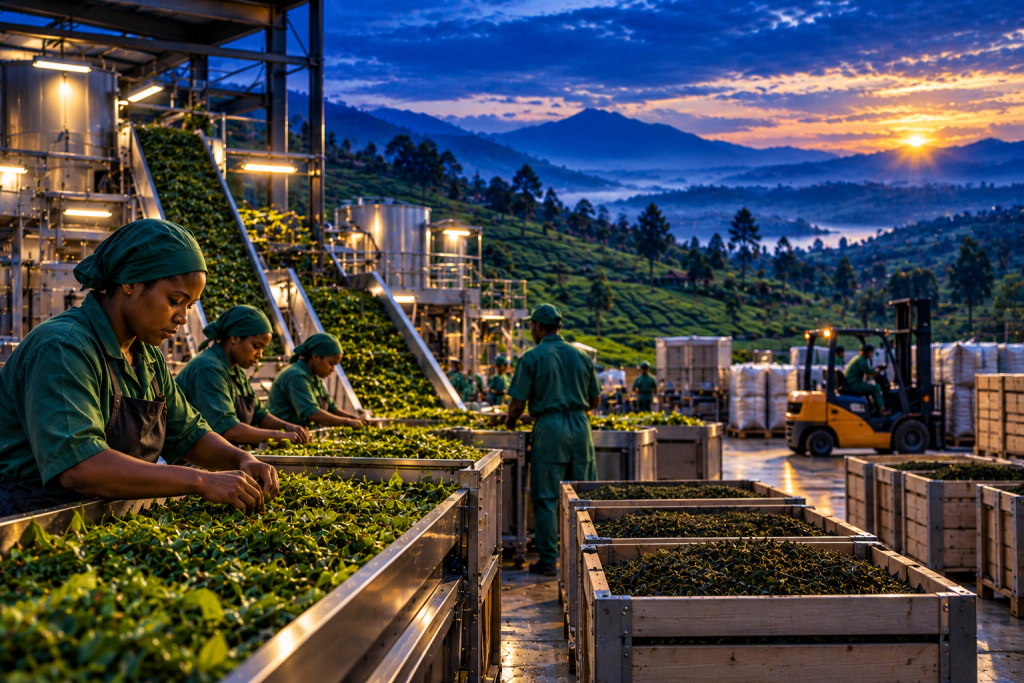
Tea is another important component of Rwanda’s agricultural export economy. Production takes place in suitable highland environments, where plantations and processing facilities transform harvested leaves into products for domestic and international markets. The industry connects agricultural employment with industrial processing, quality management and international trade.
Tea processing demonstrates the importance of manufacturing within agricultural value chains. Leaves require controlled handling and processing before they become commercially usable products, while grading, packaging and distribution influence how they reach different customers. Export markets may require particular standards and product specifications, making quality control and reliable supply essential. Rwanda’s agricultural export authorities continue to develop the sector’s international competitiveness and longer-term strategy.
The industry also offers opportunities for greater consumer-brand development. Packaged Rwandan tea can potentially reach international supermarket shelves under domestic or partner brands, creating additional demand for packaging, design, printing and distribution. For Global Retail Directory, this demonstrates how a single agricultural industry can connect Manufacturers & Suppliers, Transport & Logistics businesses and consumer brands within a wider commercial ecosystem.
Kigali’s Industrial Development Is Creating New Manufacturing Opportunities
Rwanda has been developing industrial infrastructure to support manufacturing investment and provide businesses with access to suitable operating environments. The Kigali Special Economic Zone is an important part of this approach, offering serviced industrial land and infrastructure intended to support manufacturing and export-oriented activities. Its development reflects the country’s intention to create stronger domestic industrial capabilities rather than depending exclusively on commercial imports.
Manufacturing opportunities extend across light industry, packaging, textiles, leather, construction materials and other sectors. These activities can supply domestic consumers while also creating opportunities for international business relationships. However, manufacturing growth requires more than industrial buildings. Companies need machinery, trained workers, reliable utilities, materials, quality-control systems and access to customers capable of purchasing their products consistently.
Retail can provide one of those customer markets. A manufacturer producing plastic components may supply consumer packaging, while metalworking and woodworking businesses can support furniture and commercial interiors. Food processors need packaging and distribution, and textile manufacturers can supply clothing retailers or hospitality businesses. As Rwanda’s industrial base develops, the connections between manufacturing companies and commercial buyers become increasingly important.
Textiles and Fashion Can Strengthen Rwandan Consumer Brands
Clothing and textiles represent an area where Rwanda can connect manufacturing development with domestic consumer demand and international brand opportunities. Garment production requires design, materials, cutting, sewing, finishing and quality control, creating a supply chain that can involve numerous specialist businesses. Local fashion designers and manufacturers can contribute products reflecting Rwandan identity while also responding to wider consumer trends.
For retailers, domestic garment production can offer opportunities to develop local collections and work more closely with manufacturers. However, successful commercial production requires consistent sizing, quality, delivery schedules and pricing. Smaller workshops may specialise in limited collections, while larger production facilities can potentially support repeat orders or international customers. The country’s industrial policy identifies textiles and leather among the areas for manufacturing development.
Fashion also creates opportunities for Iconic Brands to emerge from local markets. A Rwandan label may begin through independent retail, exhibitions or direct customer relationships before expanding through e-commerce and regional distribution. As the business grows, it may require packaging suppliers, photographers, retail fixtures, warehousing and logistics partners. The brand itself becomes the visible consumer product, but numerous other businesses contribute to its commercial development.
Rwanda’s Landlocked Geography Makes Logistics Essential
Rwanda has no direct coastline, making international transportation a particularly important consideration for businesses importing or exporting physical products. Goods moving by sea generally need to travel through ports in neighbouring countries before continuing along regional transport corridors. This creates additional coordination requirements compared with markets where major consumer and manufacturing centres sit directly beside international seaports.
The Northern Corridor through Kenya and other regional routes provide important connections with international trade networks. Rwanda has also worked with regional partners to improve cargo coordination, customs processes and transportation efficiency. These relationships matter because delays or additional transport costs can affect the final price of imported goods and the competitiveness of products manufactured for export.
For Transport & Logistics companies, Rwanda presents opportunities in freight forwarding, road haulage, customs services, warehousing and distribution. A retailer importing store fixtures needs reliable delivery planning, while a coffee exporter requires appropriate handling and international shipment coordination. Businesses capable of managing regional transport requirements can therefore become essential partners for manufacturers, retailers and international project organisations.
Warehousing and Distribution Support Kigali’s Retail Supply Chain
Retail businesses need reliable access to inventory regardless of whether products are manufactured locally or imported. Warehousing provides the connection between production, international transportation and final delivery to shops or customers. In Rwanda, this function becomes particularly important because imported goods may already have travelled substantial distances before arriving at their domestic distribution point.
A well-organised warehouse can support multiple commercial activities. Consumer products can be stored before distribution to supermarkets, while furniture, equipment and retail fixtures can be received and allocated to individual projects. Inventory management helps businesses understand available stock and prepare deliveries according to customer requirements rather than reacting only when products are urgently needed.
As organised retail and e-commerce develop, distribution services can become more specialised. Some companies may require pallet storage and bulk deliveries, while others need smaller orders, packaging and direct customer fulfilment. These requirements create opportunities for logistics businesses capable of supporting different industries without assuming that every customer needs the same warehouse model.
Regional Cities Create Different Commercial Opportunities
Although Kigali dominates Rwanda’s modern commercial activity, regional cities contribute important markets with their own economic characteristics. Musanze benefits from its position near major tourism destinations, while Rubavu has commercial connections with the Democratic Republic of the Congo. Huye contributes education, services and regional commerce, and Rusizi provides another important cross-border commercial environment.
These markets differ from Kigali in population, purchasing patterns and distribution requirements. Retail businesses operating regionally may depend more heavily on smaller stores, local suppliers and transport connections with surrounding communities. Tourism can create demand for hospitality, food and specialist products, while border activity supports businesses involved in trade and distribution.
For companies expanding beyond the capital, understanding these differences matters. A store format designed for central Kigali may not be commercially appropriate in a smaller regional market. Retail Installation Companies, suppliers and logistics providers therefore need to adapt equipment, delivery schedules and project planning to the actual conditions of each location.
Tourism Connects Rwandan Products with International Consumers
Rwanda’s tourism industry creates opportunities for businesses selling locally produced goods and services. Visitors travelling for wildlife experiences, conferences and cultural tourism encounter hotels, restaurants, specialist shops and other commercial environments where domestic products can be presented to international customers.
Tourism provides an opportunity for local manufacturers and brands to reach consumers who may never previously have encountered their products. Coffee, tea, textiles, crafts and design-led goods can become part of the visitor experience. Packaging and presentation are important because products purchased during travel may need to be transported internationally or purchased again after the customer returns home.
Hospitality also generates demand for commercial suppliers. Hotels and restaurants require furniture, lighting, signage, equipment and ongoing maintenance, while refurbishments create opportunities for local installers and specialist manufacturers. The relationship between tourism and retail therefore extends beyond souvenir shopping into a broader commercial supply chain.
E-Commerce Creates Opportunities Beyond Physical Stores
Digital commerce provides Rwandan businesses with additional ways to reach customers without relying entirely on conventional shop locations. Social media, online catalogues, messaging services and dedicated e-commerce platforms can support product discovery and customer communication, particularly for smaller businesses seeking to expand their audience.
However, online sales still require physical operations. Products need to be stored, packaged, delivered and sometimes returned. Reliable addresses, payment arrangements, transport availability and customer confidence all influence whether digital transactions become commercially successful. These practical requirements can be particularly important when serving customers outside Kigali.
E-commerce can therefore create opportunities for packaging manufacturers, delivery companies, warehouses and technology providers. A local clothing brand may attract customers online but still require reliable production and fulfilment. Digital visibility expands the potential market, while the supporting physical supply chain determines whether the business can serve that market consistently.
East African Trade Creates Opportunities for Rwandan Businesses
Rwanda participates in regional trade arrangements including the East African Community and COMESA, while the African Continental Free Trade Area provides a wider framework for developing trade relationships across the continent. These arrangements are intended to support market access and commercial integration, although businesses still need to understand the applicable rules, documentation and product requirements.
Regional trade is particularly important for a relatively small domestic consumer market. Manufacturers seeking greater production volumes may need customers beyond Rwanda, while retailers can source products from neighbouring economies when local production does not meet their requirements. Cross-border commercial relationships therefore influence manufacturing investment, product availability and the development of distribution networks.
For international buyers, Rwanda can represent one potential sourcing or commercial partnership market within a wider East African strategy. The country’s businesses may provide specialist products, local services or regional market knowledge. Better access to reliable company information can help buyers identify suitable partners rather than depending entirely on existing contacts.
Retail Installation Companies Can Support Rwanda’s Commercial Growth
Physical retail development creates requirements that cannot be fulfilled through online marketing or product distribution alone. Stores need to be constructed, fitted out and maintained, while international brands often require their established designs to be adapted to local premises and practical operating conditions.
Retail installation can involve shelving, furniture, lighting, signage, technology, refrigeration and specialist equipment. These components may come from different manufacturers and arrive at different times, requiring coordination between suppliers, transport companies and installation teams. Accurate planning becomes particularly important when imported fixtures need to travel through international supply chains before reaching a Rwandan store.
Local Retail Installation Companies can provide practical knowledge of property conditions, workforce availability and regional operations. International retailers may also need reliable partners for maintenance and refurbishment after a store opens. This creates opportunities for businesses capable of combining technical installation skills with professional project management and dependable reporting.
Connecting Rwandan Businesses Through Global Retail Directory
Rwanda’s commercial ecosystem includes businesses that could benefit from stronger visibility beyond their existing customer networks. Coffee processors, tea producers, clothing manufacturers, packaging suppliers, logistics providers, retail contractors and emerging consumer brands all contribute capabilities relevant to domestic and international retail.
The Global Retail Directory provides a specialist B2B environment where these companies can present their services and capabilities. Manufacturers & Suppliers can describe their production activities, Transport & Logistics businesses can demonstrate their geographic coverage, Retail Installation Companies can become visible to project organisations, and Iconic Brands can participate in a wider network connecting retail with the businesses supporting it.
GRD operates across 31 language versions and is designed to support local, regional and international business discovery. A Rwandan manufacturer does not need to operate worldwide to join, just as a local contractor does not need projects outside Kigali. The purpose is to create another professional route through which relevant businesses can be discovered, while allowing companies to present the markets and services they genuinely support.
Rwanda’s Retail Future Depends on Stronger Commercial Connections
The future of the retail industry in Rwanda will be influenced by the development of Kigali, regional consumer demand, domestic manufacturing and the country’s ability to strengthen international trade relationships. Modern retail environments can create opportunities for suppliers and contractors, while traditional markets and independent businesses will continue serving important everyday consumer requirements.
Rwanda’s manufacturing ambitions provide another dimension. Coffee and tea demonstrate established connections with international markets, while textiles, packaging, food processing and other industrial activities offer opportunities for greater domestic value creation. Logistics remains essential because the country’s geographic position requires reliable regional transportation and careful coordination of international supply chains.
For Global Retail Directory, Rwanda demonstrates how an emerging retail market connects agriculture, manufacturing, transport, installation and consumer brands. The opportunity is not simply to build more shops, but to connect the businesses producing goods, moving products, developing brands and creating the commercial environments where customers purchase them. As those connections strengthen, Rwandan companies can become increasingly visible within East Africa and the wider international retail industry.